
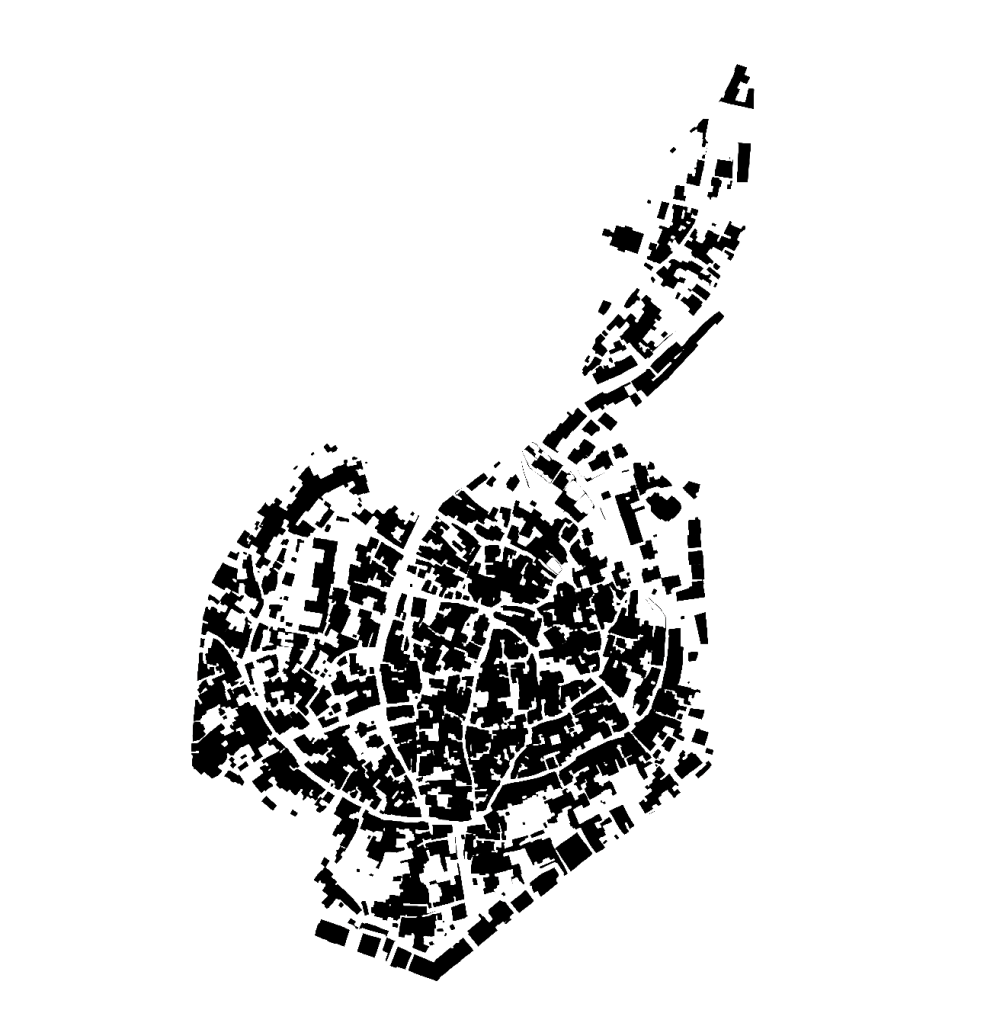
Historical Background
The history of Kond is deeply intertwined with the broader history of Yerevan and the region. It has been known since at least the 17th century, when the Yerevan area was controlled by the Persians. Because of its location on a hill, it was called Kond (Կոնդ) in Armenian, meaning “long hill,” and Tappebashi (تپهباشی) in Persian, or Tepebaşı (Tepebaşı) — also pronounced Tapabashi — in Turkish, all meaning “top of the hill.” It was one of the three main original quarters of the city of Yerevan, along with Demir-Bulagh (Karahank) and Shahar, and was home primarily to Armenian artisans and merchants. During the period of Persian rule, the Geghamian family of meliks (i.e. Armenian nobles) ruled the area.
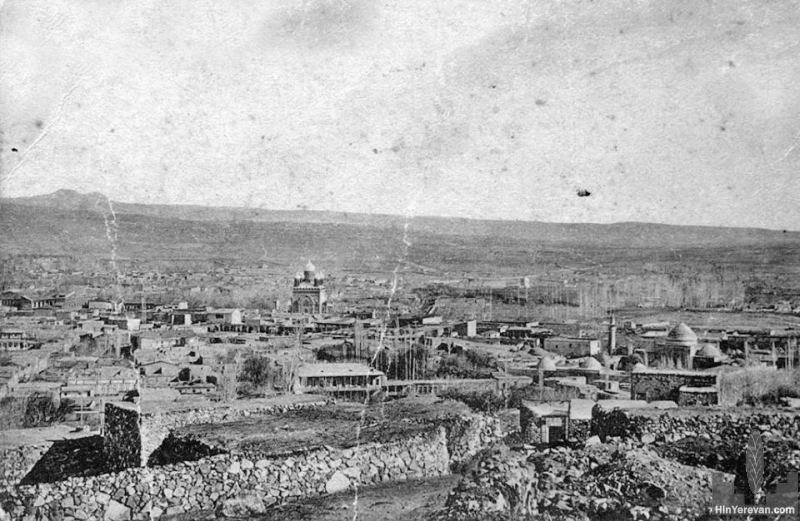
In the 19th century, after the Russian conquest of the region in 1827, Yerevan began to change, but Kond largely retained its old way of life. Unlike the grand neoclassical buildings that began to appear in the city center, Kond remained a quarter of winding streets and hidden courtyards, and traditional houses. The quarter remained multi-ethnic from the time of Persian rule: in addition to Armenians, both local and from Persia and western Armenia, it was home to Persian, Turkish, Tatar (i.e. Azerbaijani), and Bosha (i.e. Armenian Roma) populations. After the genocide of 1915, Kond became a home for the refugees.
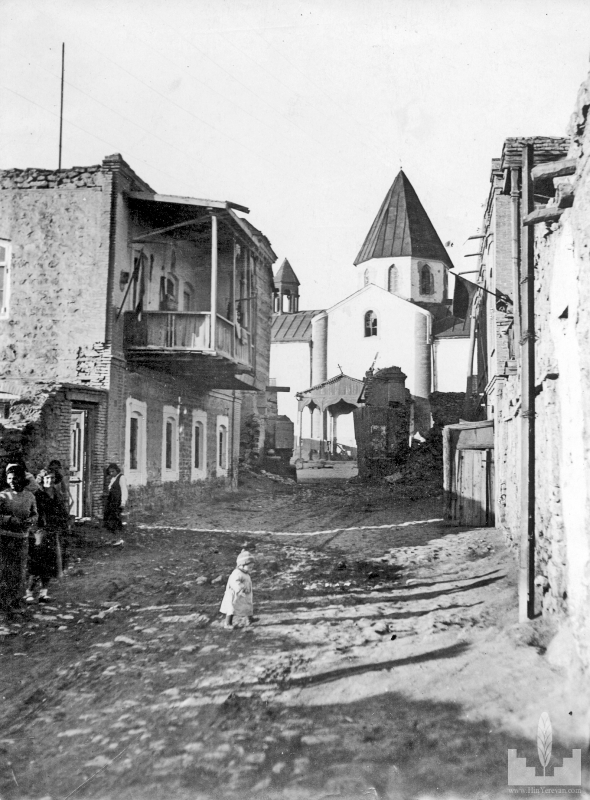
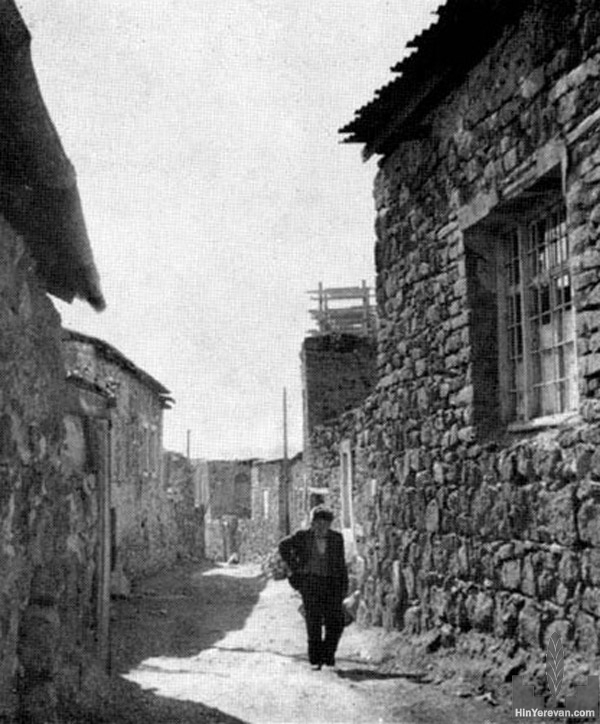
During the Soviet era, much of historic Yerevan was demolished to make way for architect Alexander Tamanyan’s master plan of wide avenues and large public squares. Kond, however, was never fully integrated into these urban renewal projects, leaving it as one of the last areas where pre-Soviet Yerevan could be experienced. Some Soviet-era structures did emerge, often adapting older buildings rather than replacing them entirely. For example, small Soviet extensions and staircases can still be seen attached to 19th century houses, creating a layered, eclectic architectural landscape.



Architectural and Cultural Landmarks
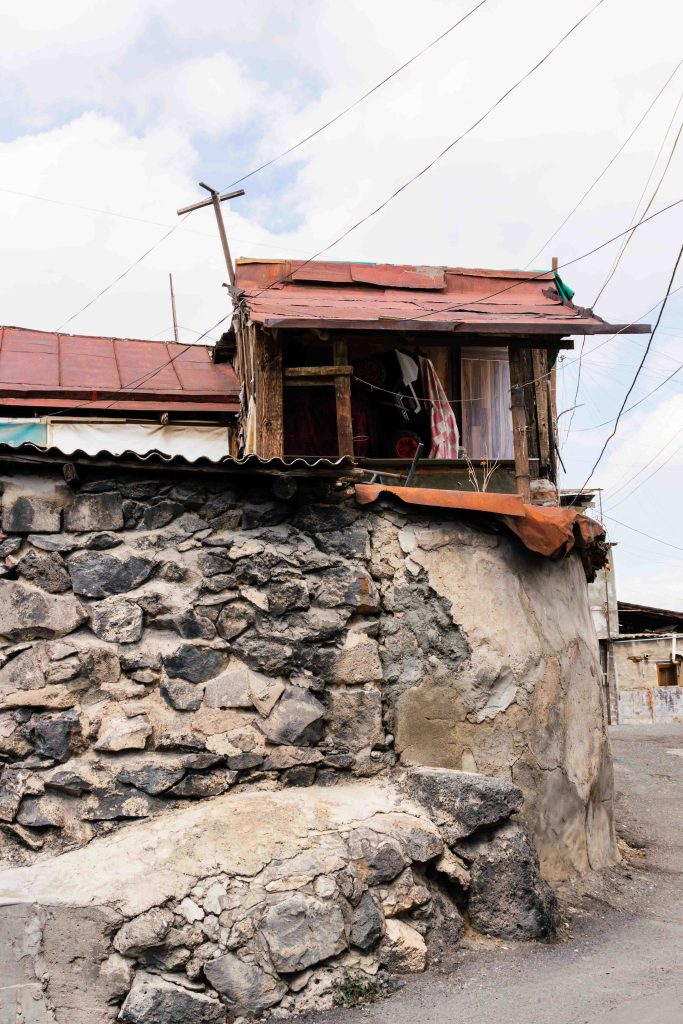
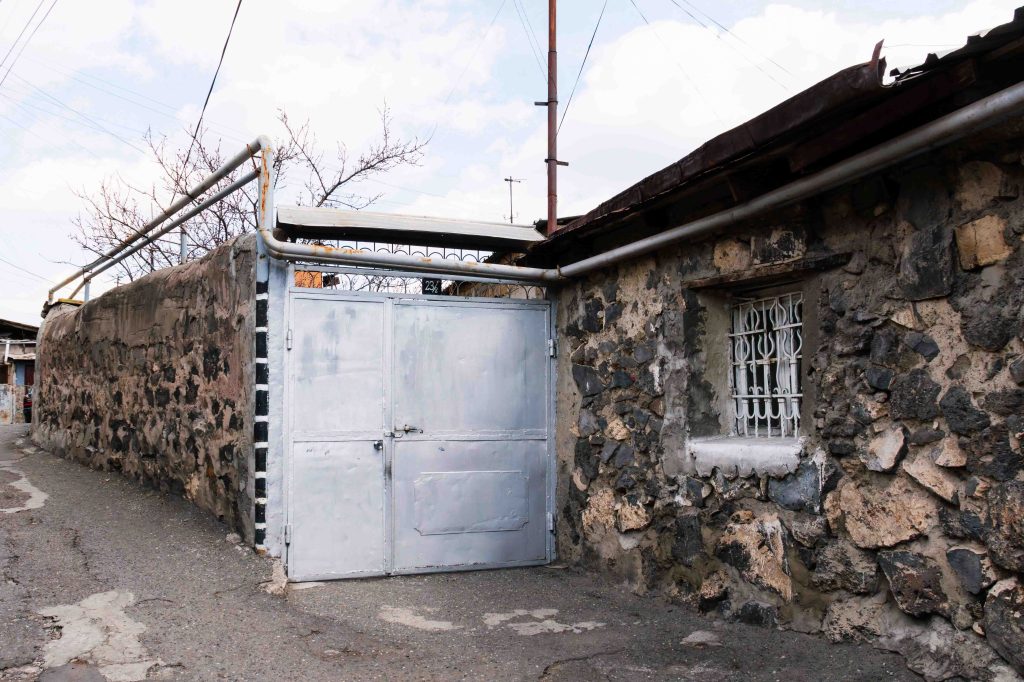
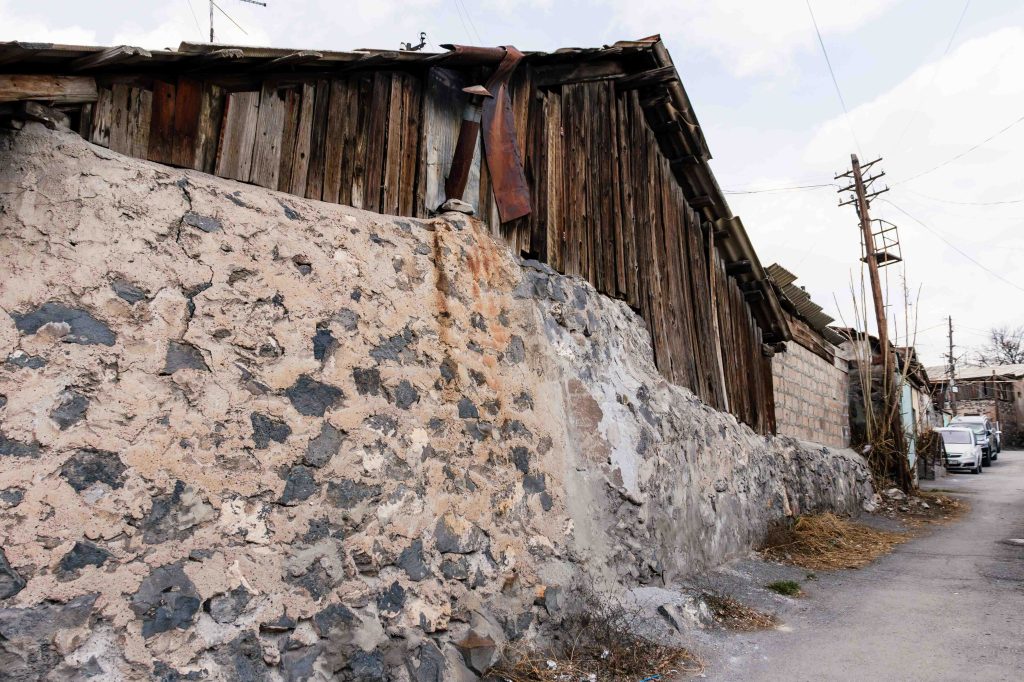
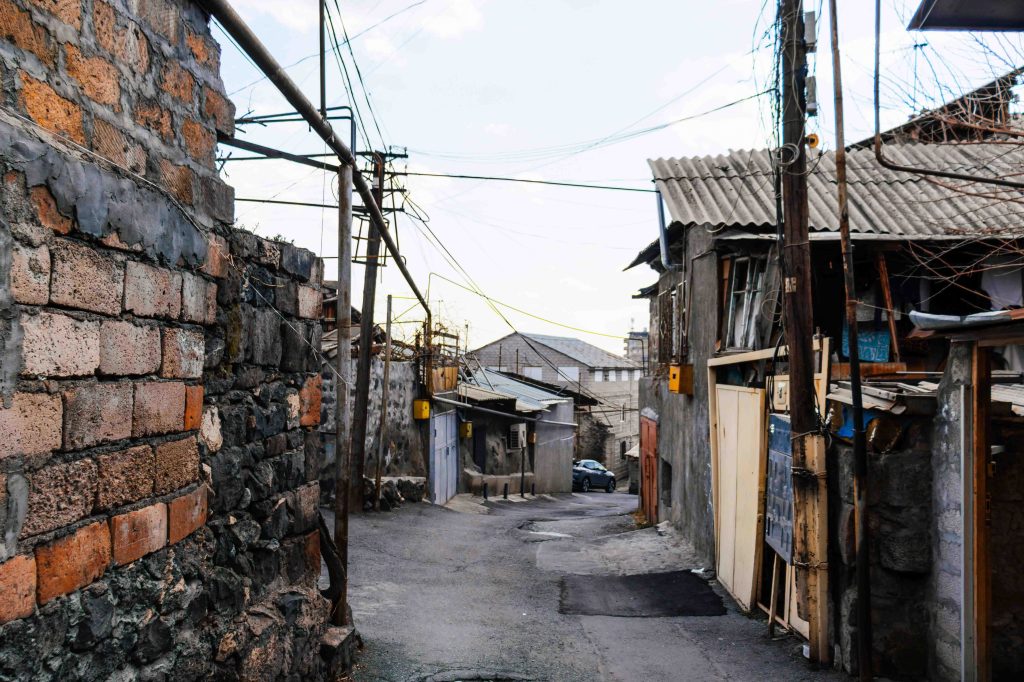
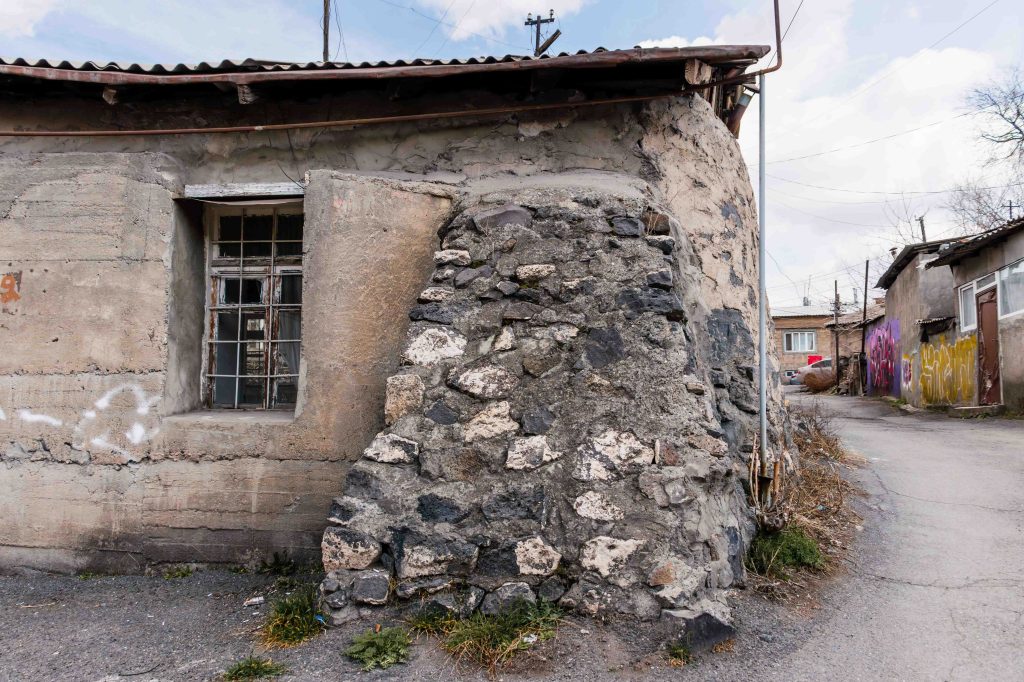
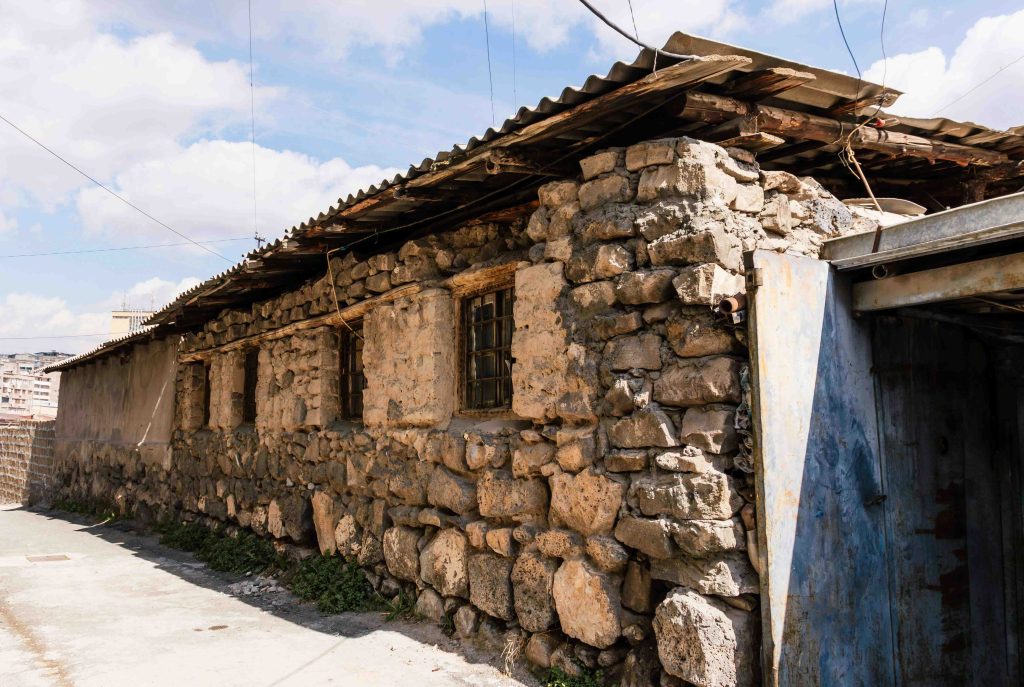
One of Kond’s most distinctive features is its vernacular layout, an organically evolved planning with locally adapted buildings made of traditional materials such as brick, tuff, basalt, and adobe. The result is a maze of streets, some of which are very narrow, creating an environment that is in stark contrast to Yerevan’s later urban development. Many houses have been expanded over generations, with new layers of construction added to old stone walls, blending Armenian, Persian, and Soviet influences.
Several buildings in Kond are of particular historical and cultural interest:
The Mosque (1687)
location: 40.181163, 44.500401
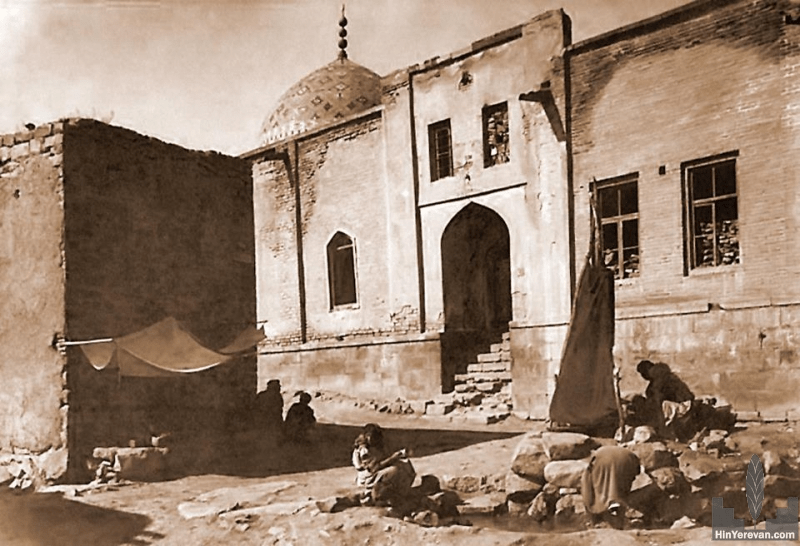
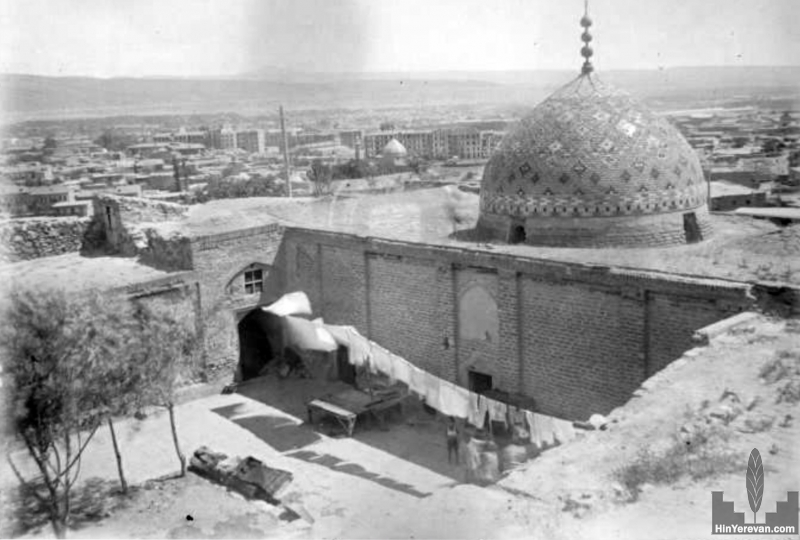
Built in 1687, the Kond Mosque is one of the few surviving Islamic monuments in Yerevan, reflecting the Persian influence on the city’s architecture. After the genocide of 1915, the mosque also served as a refuge for several families. In the late 20th century, the main dome collapsed, leaving only the thick walls, parts of the outer perimeter roof, and a smaller dome. Though no longer in religious use, it remains a rare link to the quarter’s past. Today, there is a cute café in the building, so it is possible to observe not only the outer space, but also the inner courtyard of the mosque.
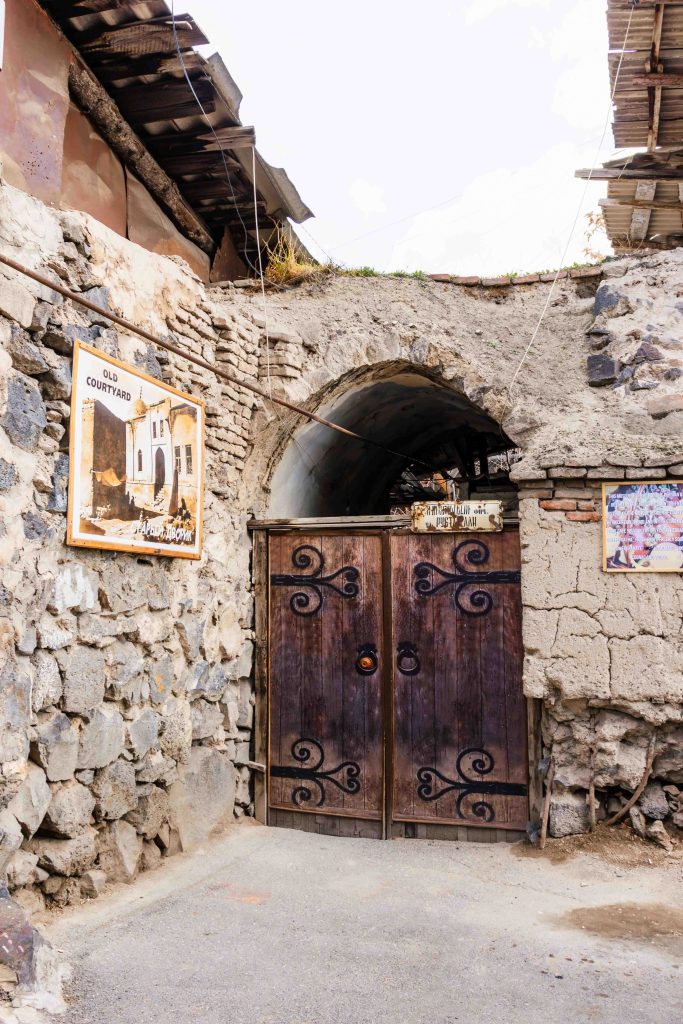
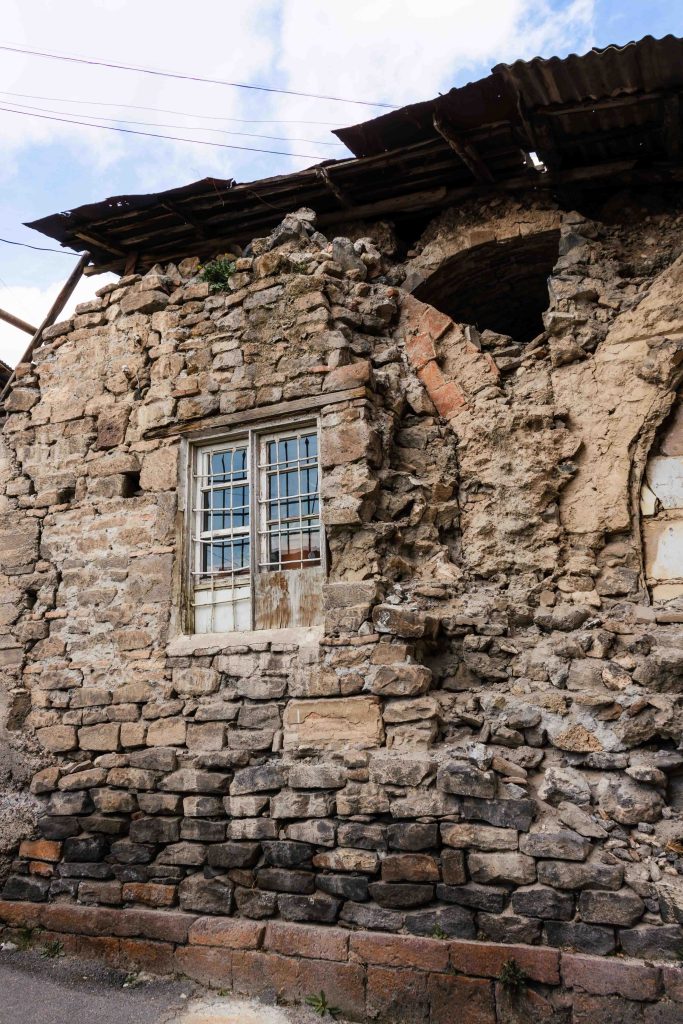
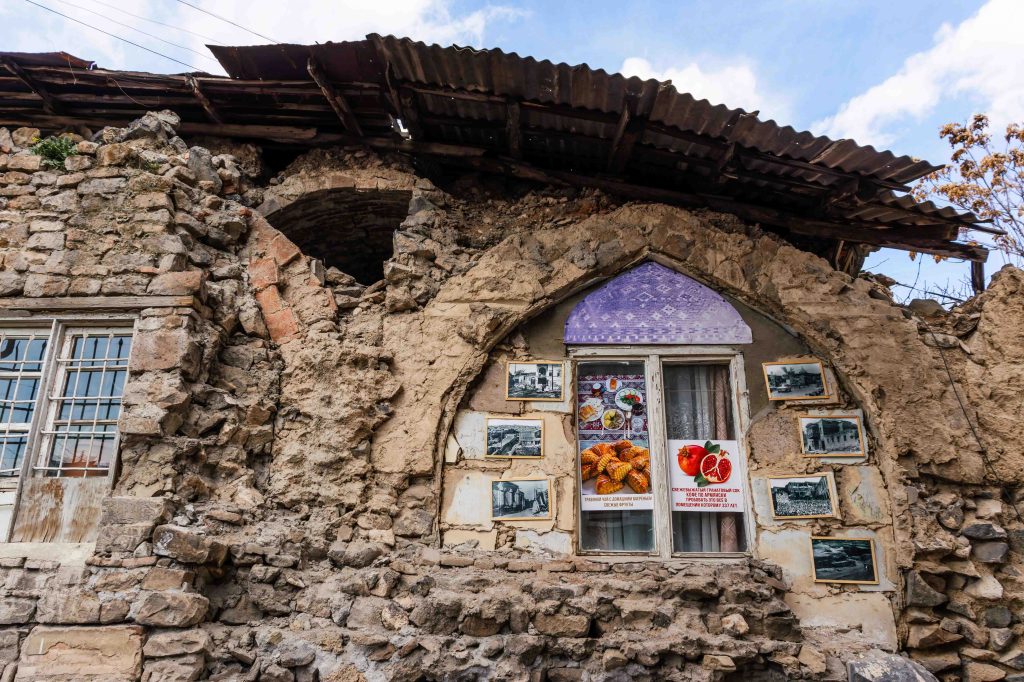
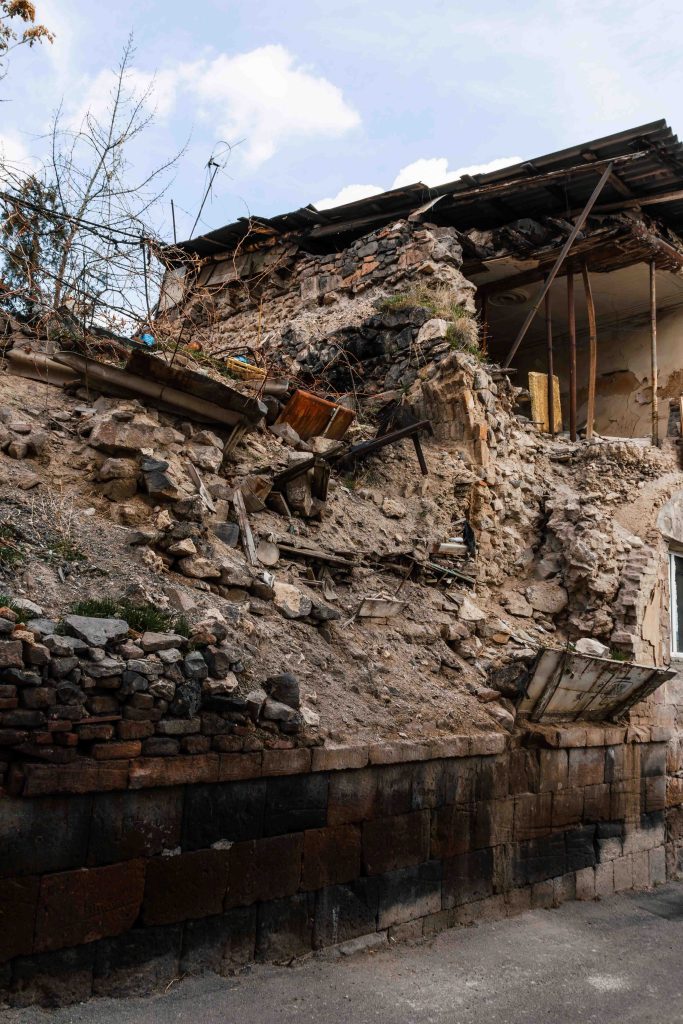
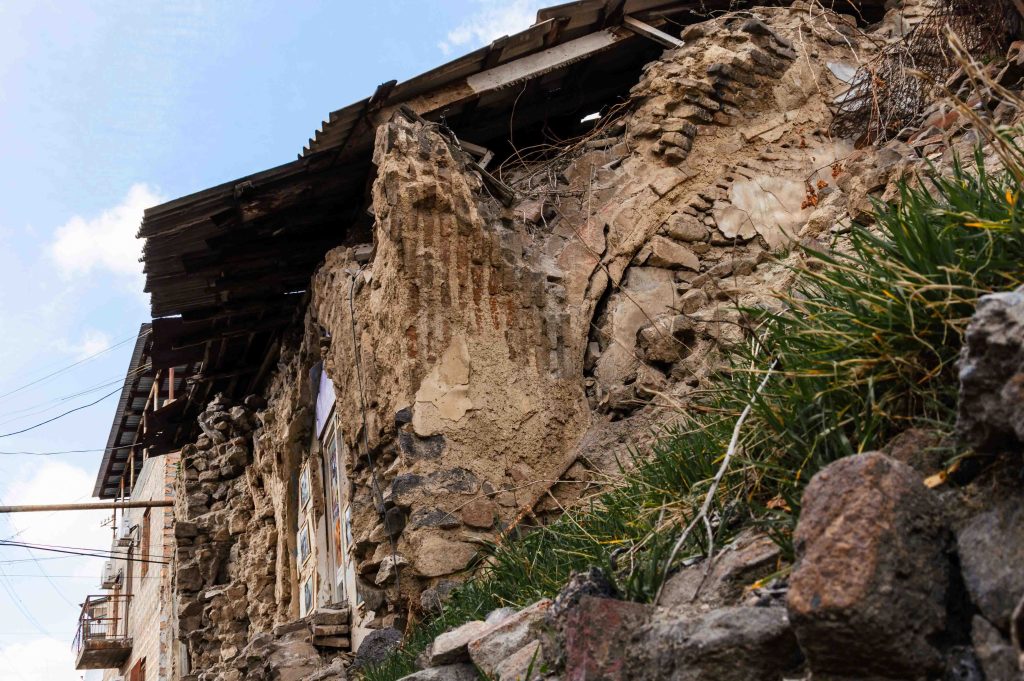
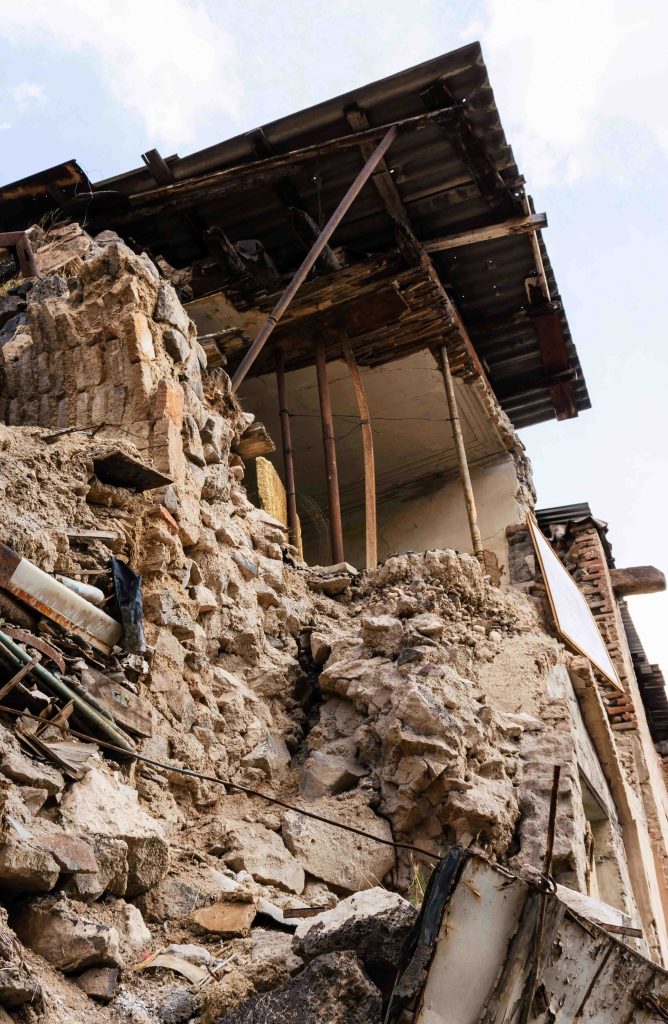
Mullah’s House, 17th century
location: 40.180853, 44.502530
A house for the mullahs of the nearby mosque. The building is interesting due to the possibility to overview different historical layers through different type of laying. Today there is placed a nice café.
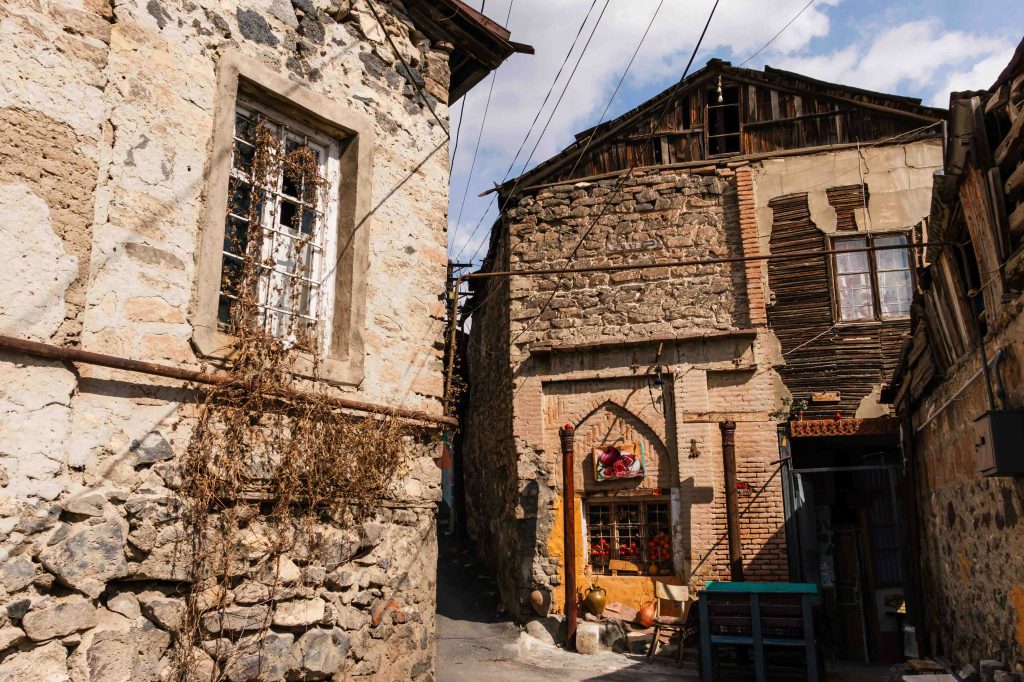
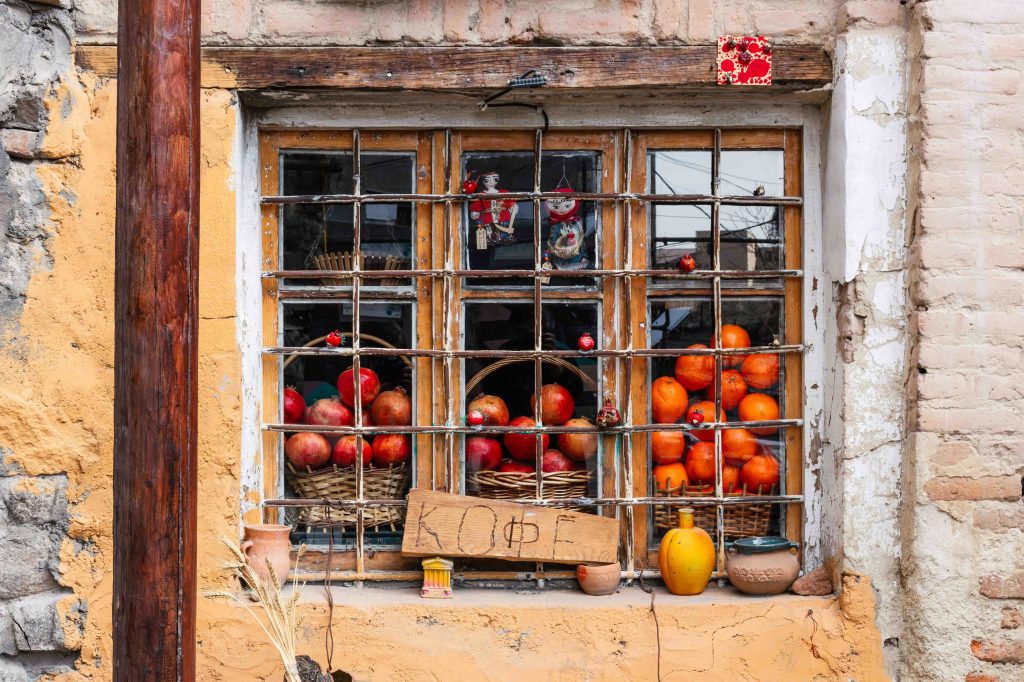
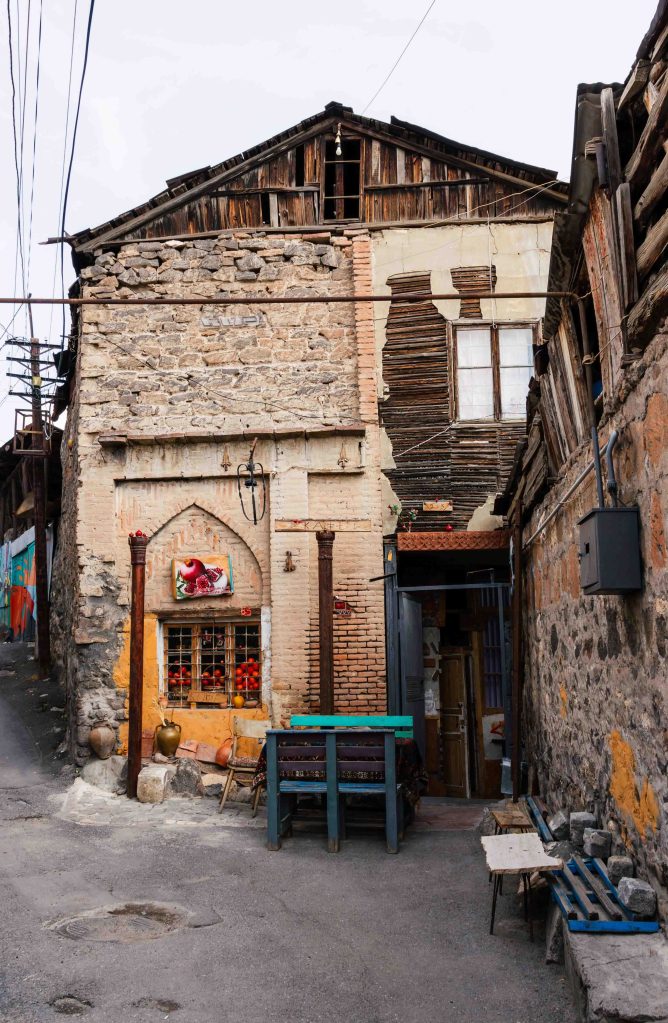
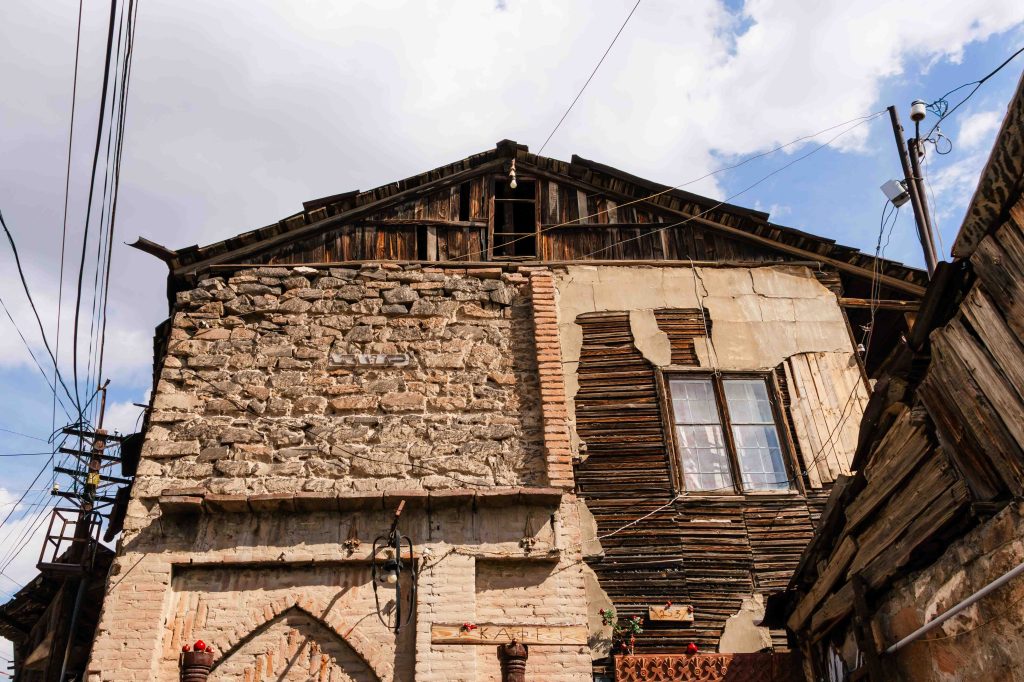
The St. Hovhannes Church
location: 40.185311373064664, 44.50396425060901
Located on the outskirts of Kond, this ochre-brown tuff church dates from 1710. It was rebuilt on the site of an earlier 7th century church that was destroyed by a violent earthquake in 1679. The new church from the 18th century remained open since then, even during the Soviet era, and was restored in 1979.
Hyusyans House
location: 40.183524935320484, 44.50062856171573
A small house with a family museum inside, worth a visit to see how a typical historical house in Kond looks like from the inside.
Graffiti
location: everywhere
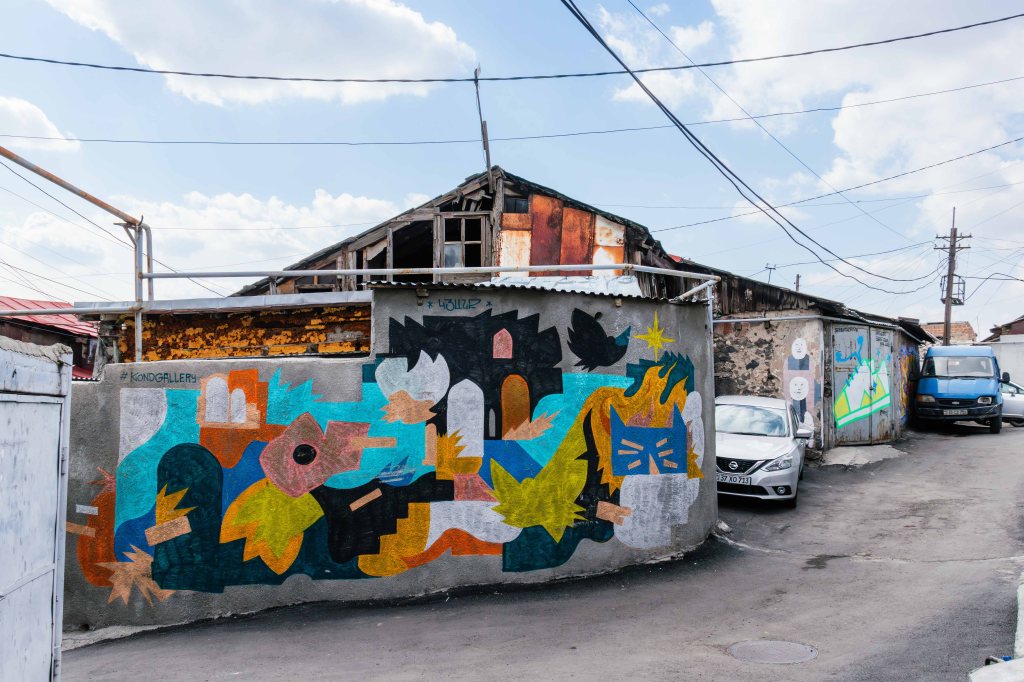
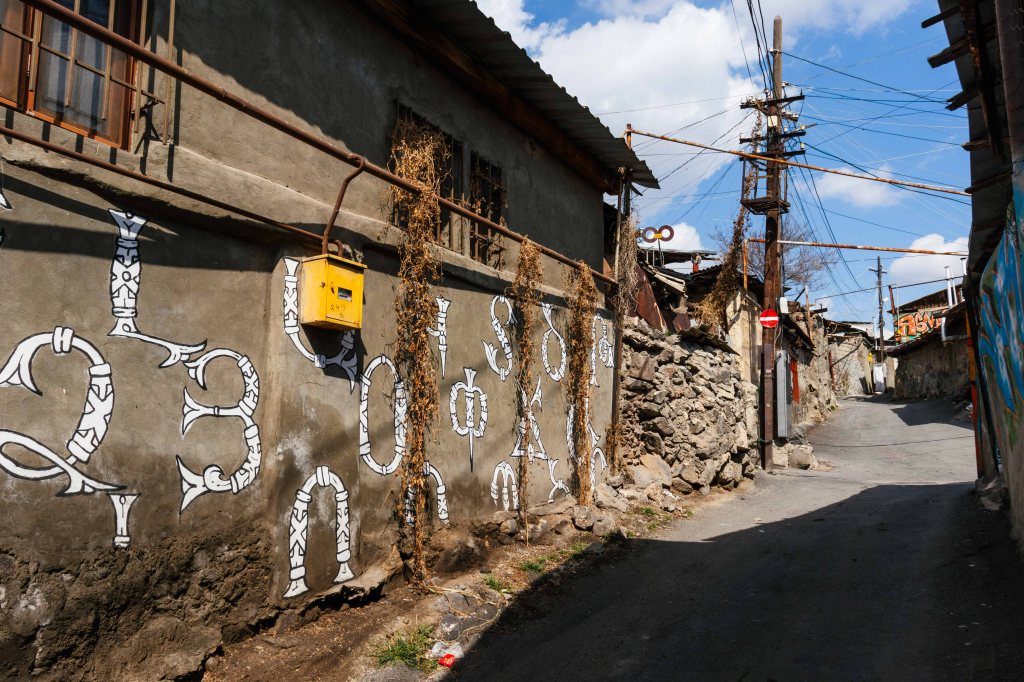
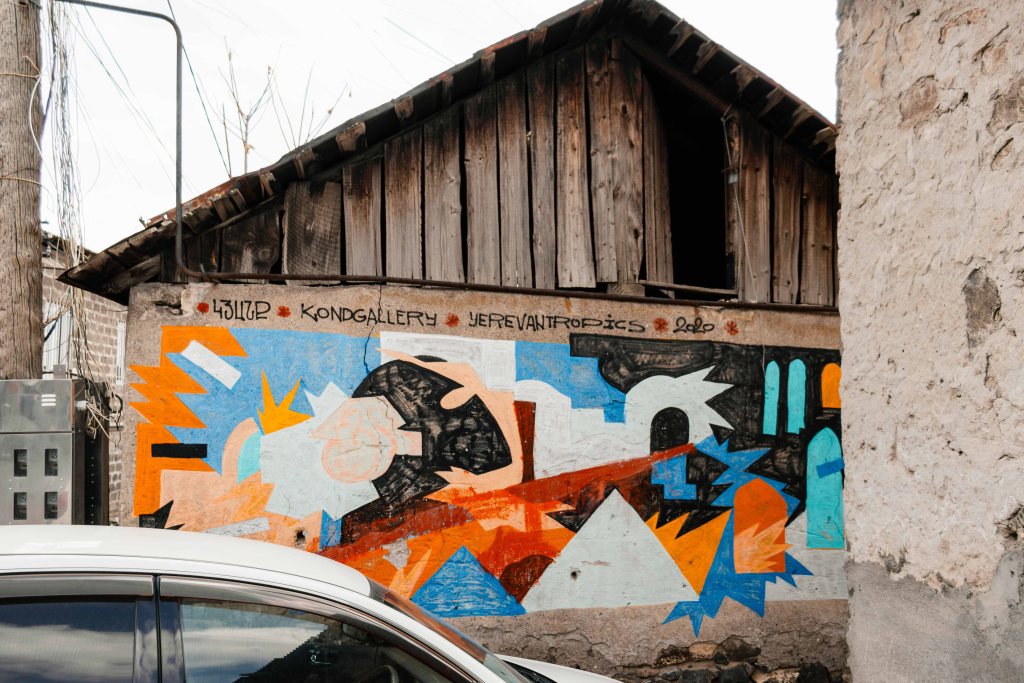
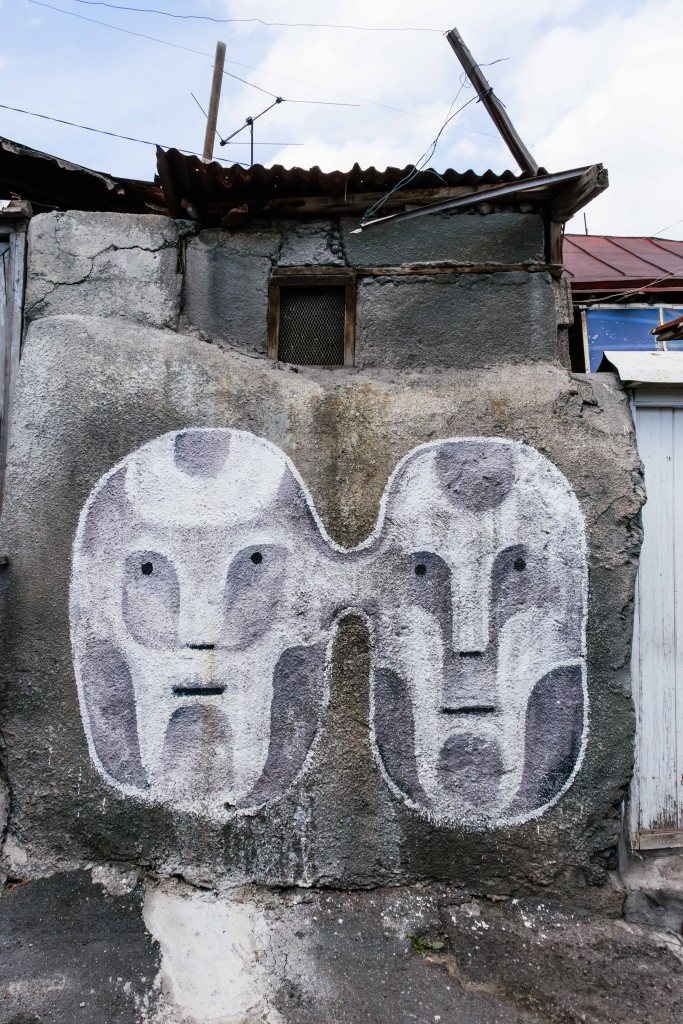
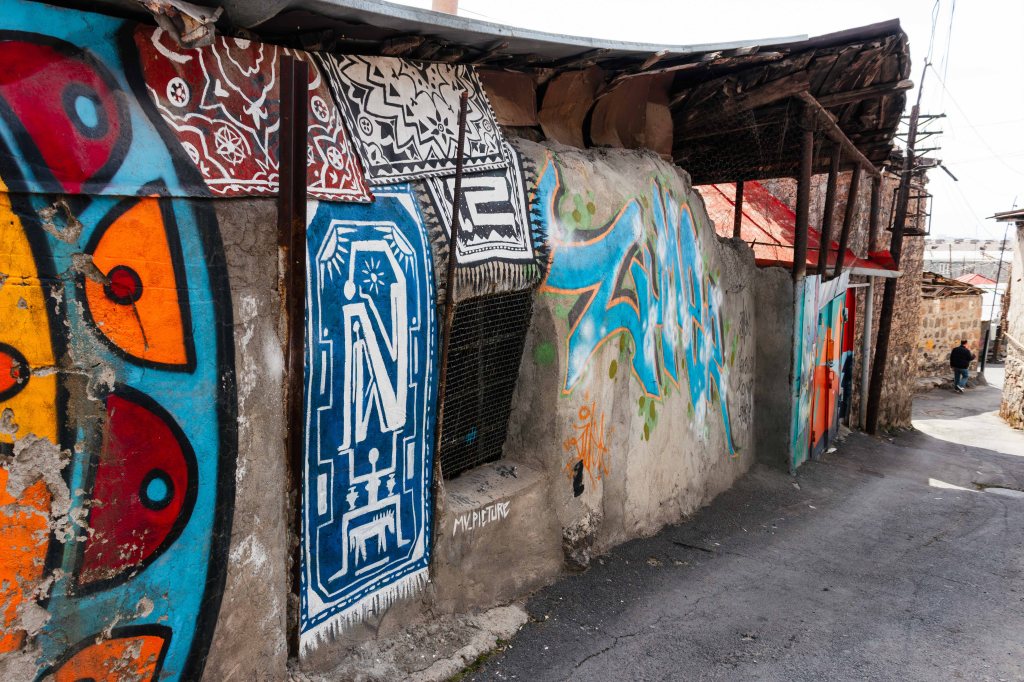
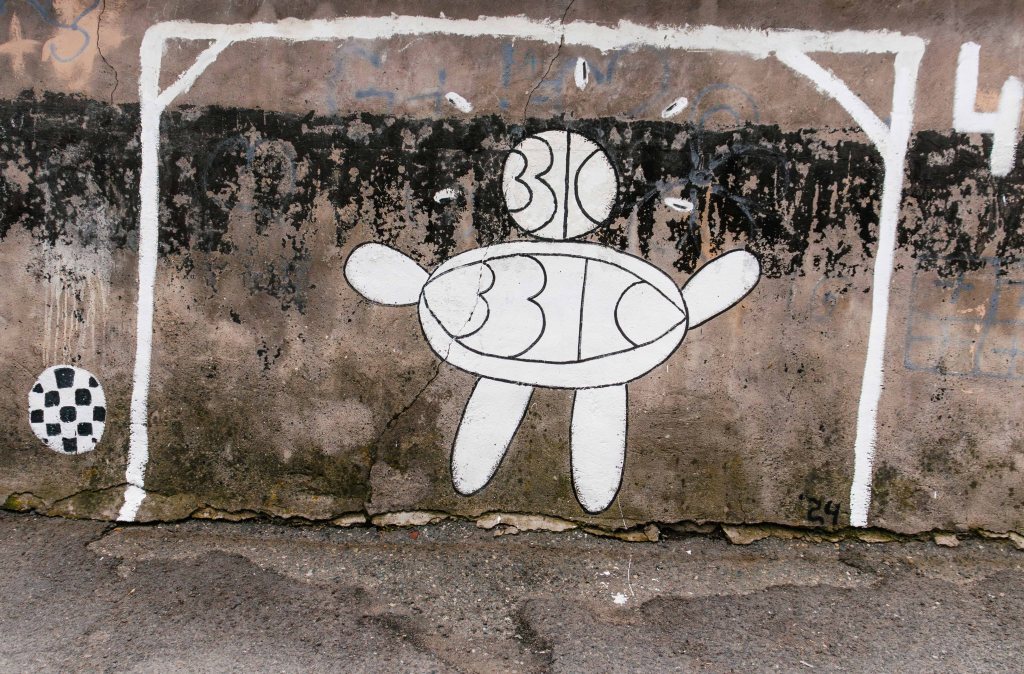
Several graffiti of Kond are attributed to kondgallery, which is a part urban art project yerevantropics launched by Sergey Navasardyan. It was started in 2018 and aimed at transforming Kond into a vibrant center for contemporary urban art. The initiative blends street art with the district’s historical charm, fostering artistic collaboration and revitalizing the area through murals and sculptures, while drawing attention to cultural preservation amid urban development.
Several graffiti of Kond are attributed to kondgallery, which is a part of urban art project yerevantropics launched by Sergey Navasardyan. The project was started in 2018, with the aim of transforming Kond into a vibrant center of contemporary urban art. The initiative combines street art with the historical charm of the district, encourages artistic collaboration and revitalizes the area through murals, while drawing attention to cultural preservation in the midst of urban development.

Kond Today and Its Future
Despite its historical significance, Kond faces an uncertain future. As Yerevan continues to modernize, discussions about redevelopment have intensified. Some consider Kond an area in need of renewal, while others advocate for its preservation, fearing that new construction could erase one of the last tangible links to Yerevan’s past. Today, Kond remains a vibrant historical space, home to a close-knit community that has preserved its traditions despite waves of modernization. Unlike many preserved historical neighborhoods that have become pure tourist destinations, Kond is still a residential neighborhood where daily life unfolds much as it has for centuries.
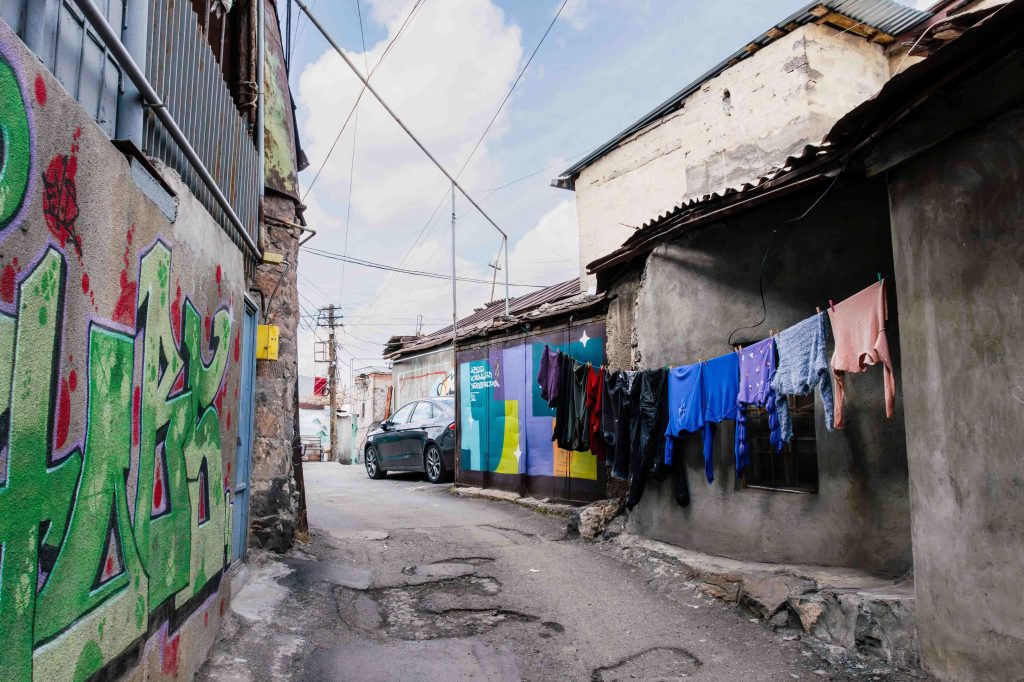
Efforts to document and protect Kond’s heritage are ongoing, with local activists, historians, and architects working to raise awareness of its cultural value. One of the most significant recent initiatives was undertaken by Re School, an international educational project dedicated to heritage conservation and revitalization. In 2022–2023, Re School conducted an extensive study of Kond and developed a master plan aimed at preserving the quarter’s architectural identity while incorporating sustainable restoration methods. Their research highlighted the importance of adaptive reuse, community engagement, and cultural programming as essential tools for Kond’s future.
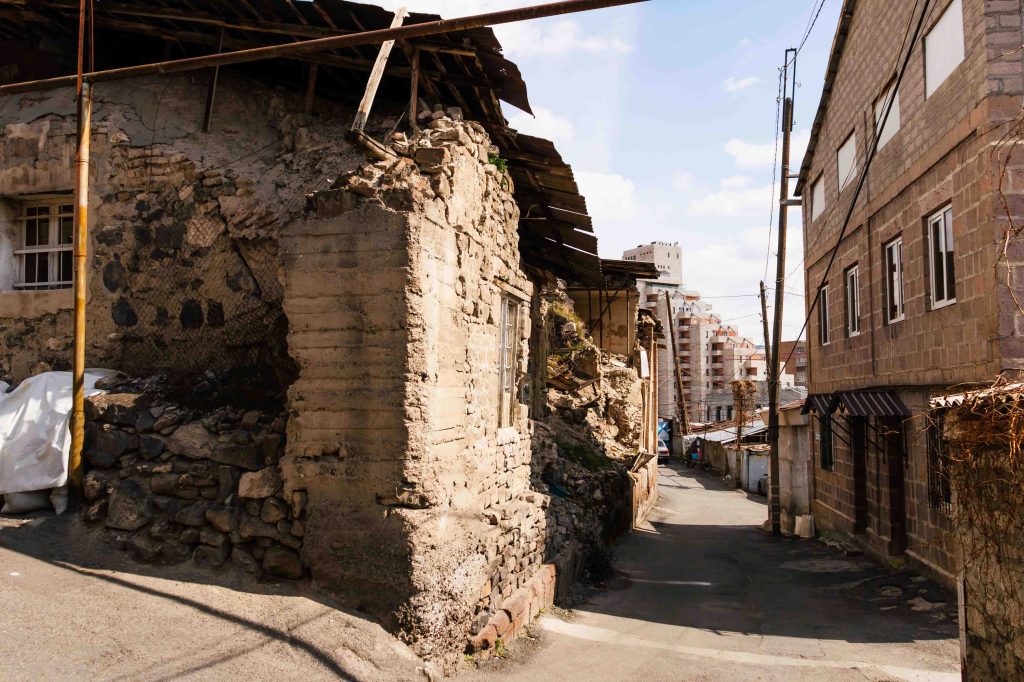
At the government level, in March 2021, Armenia’s Urban Development Committee launched an international competition for Kond’s rehabilitation concept, focusing on preserving its historic character while introducing modern urban functions. The results of the second stage of the competition were announced in April 2025, but the top-scoring proposal, which emphasized soft adaptation and heritage preservation, did not meet the required threshold. As no winner was declared, a new competition process is underway, so the future of Kond is still in question.
This calendar was created to highlight the cultural and historical significance of Kond and to promote awareness and appreciation of its unique heritage in the face of urban development. The key partner in the calendar development was the 301: The Land of Wisdom Foundation, which supports initiatives to preserve and develop Armenian culture. An integral part of the project was Re-School, an educational project dedicated to the preservation and revaluation of cultural heritage. The production of the calendar was carried out by the bureau MARKA, a project specializing in the promotion and research of cultural heritage.



Text and photography by Elena Lisitsyna
Historical photos from hinyerevan.com
 bureau MARKA