
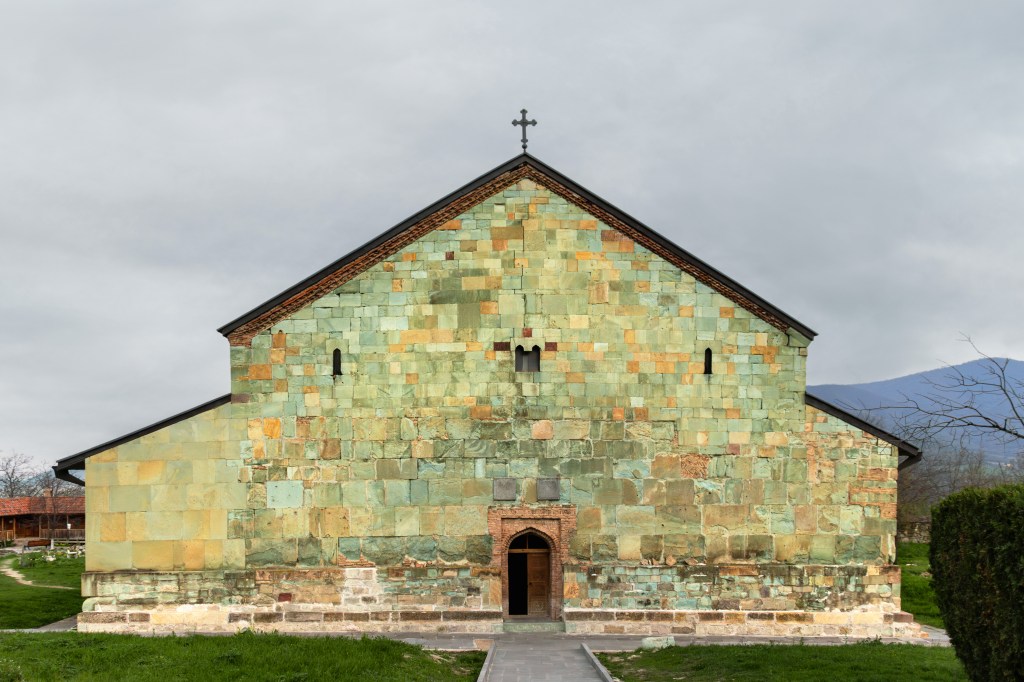
478–493
location: 41.38917864003958, 44.51295287719081
The basilica was the predominant structure for Christian churches in both eastern and western Georgia, i.e. in Iberia and Lazica, until the middle of the 6th century. Moreover, although Iberia was under the suzerainty of the Sasanian Empire (Persia, present-day Iran), the end of the 5th and 6th centuries was the time of its active church building, as the Sasanians failed to spread Zoroastrism in Iberian territory. Although there are several earlier basilicas, Bolnisi Sioni remains is the earliest construction that has survived completely, not as a ruin.
The name “Sioni” refers to Mount Zion in Jerusalem and seems to have been used in the Georgian Orthodox Church to denote important churches and/or churches associated with the Virgin Mary. The Basilica of Bolnisi was supposed to be a cathedral in the centre of one of the new dioceses established by the King of Iberia, Vakhtang Gorgasali, in the second half of the 5th century.
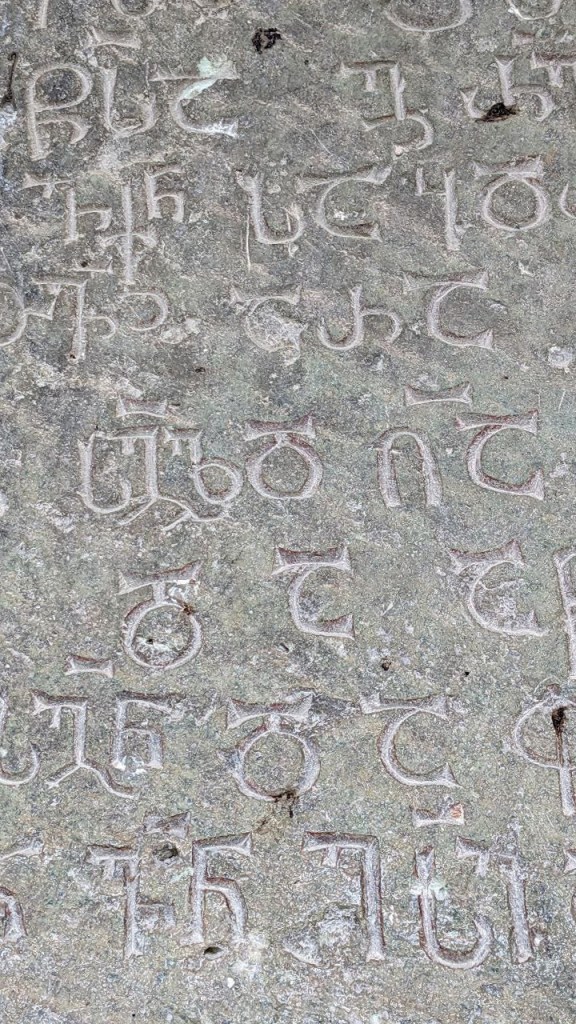
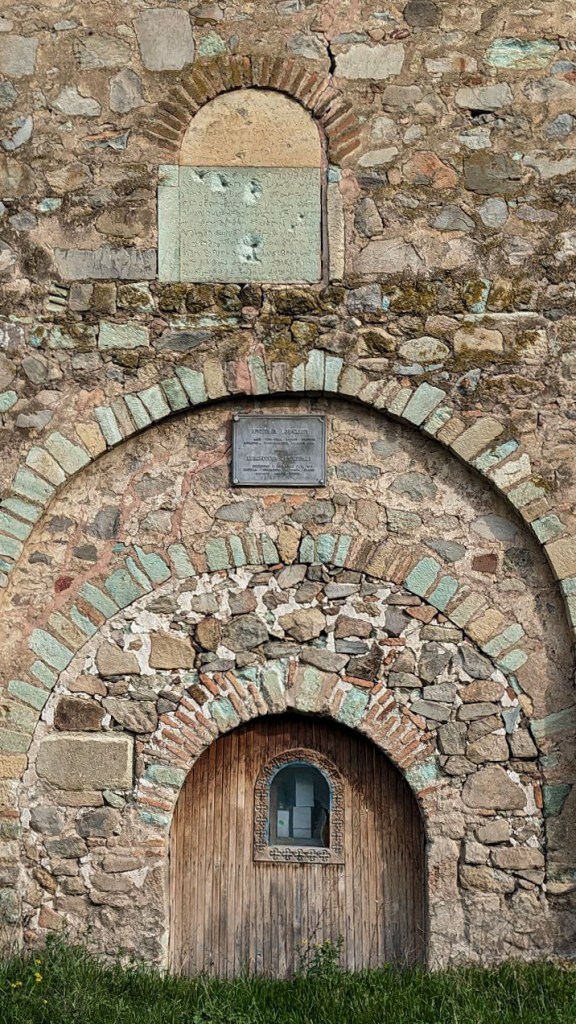
Unlike most early medieval architecture, the exact date of Bolnisi Sioni’s construction is known — the period between 478 and 493. This dating is based on an inscription above the northern entrance. It refers to the reign of the Persian king Peroz and states that construction began in the 20th year of his reign and lasted 15 years. Scholars interpret these dates differently, with the most accepted range being 478-493. As well as helping with dating, this reference points to a strong Persian influence in the region.

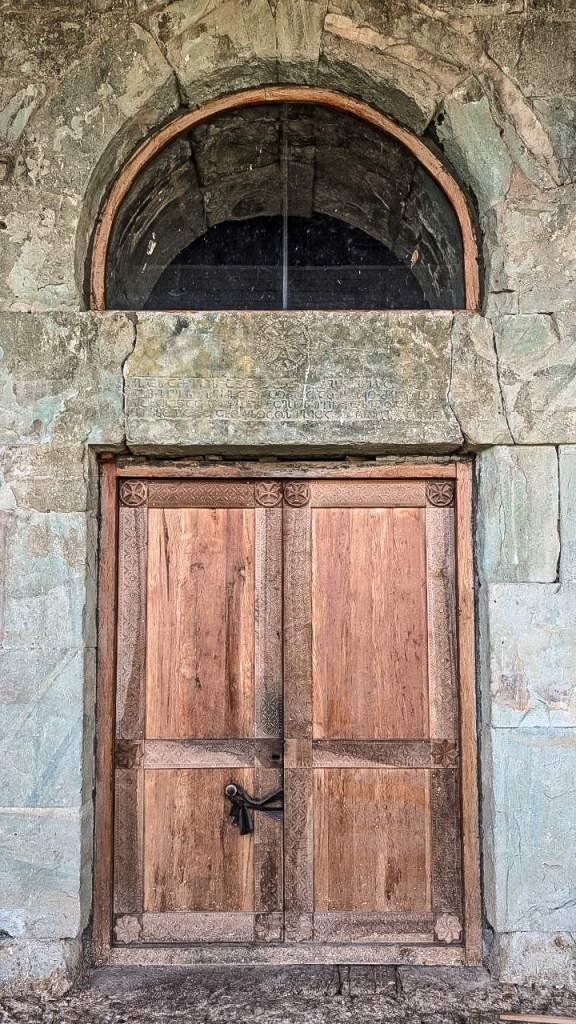
Two other inscriptions on the outer walls of Bolnisi Sioni also mention key figures and donors involved in the construction, such as Bishop David and Parnavaz (Parsman) and Azarukht — probably a noble couple — providing historical context for the building’s timeline. In addition to the valuable historical information, all three inscriptions are noteworthy because they show the earliest example of the Georgian language and its earliest script — Asomtavruli, the early version of which was characterised by letters of equal height.
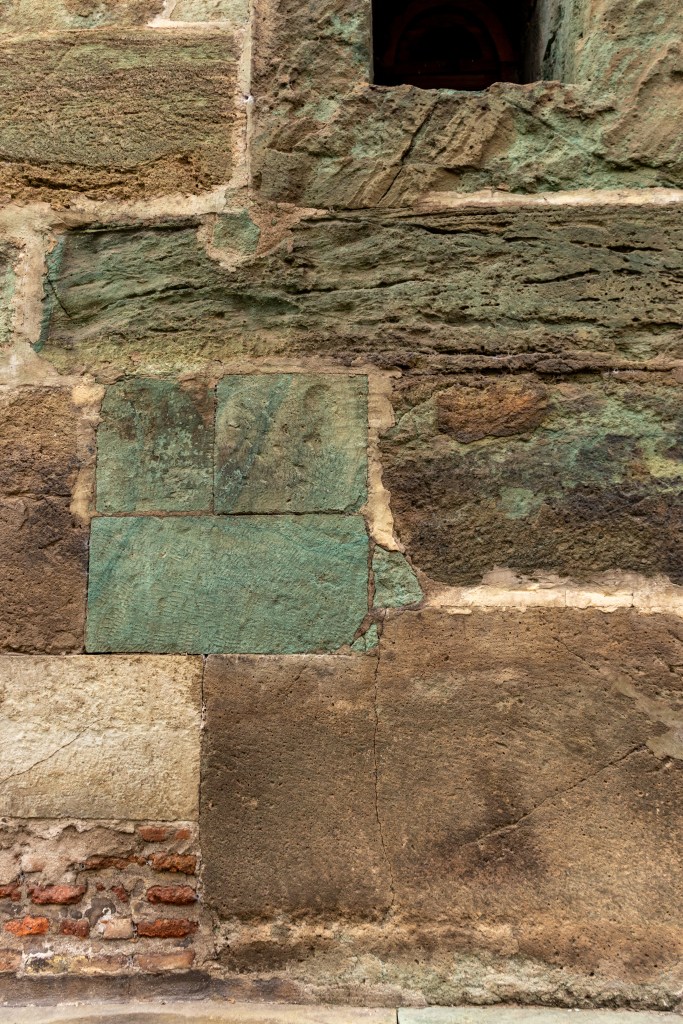
At first glance, the exterior of the basilica is striking for its unusual colour. This is because Bolnisi Sioni was built using large blocks of the unique local turquoise green tuff.
The structure of the basilica has three naves, five pairs of cruciform pillars and a single projecting semicircular apse.
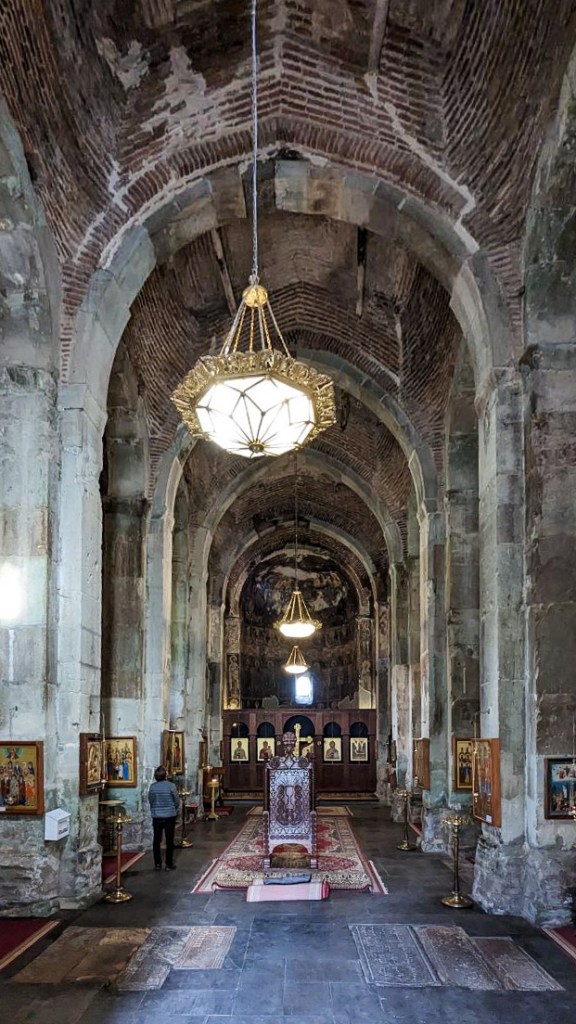
There are several additions to the main body of the building. To the north, the basilica has an open gallery that runs the length of the basilica.
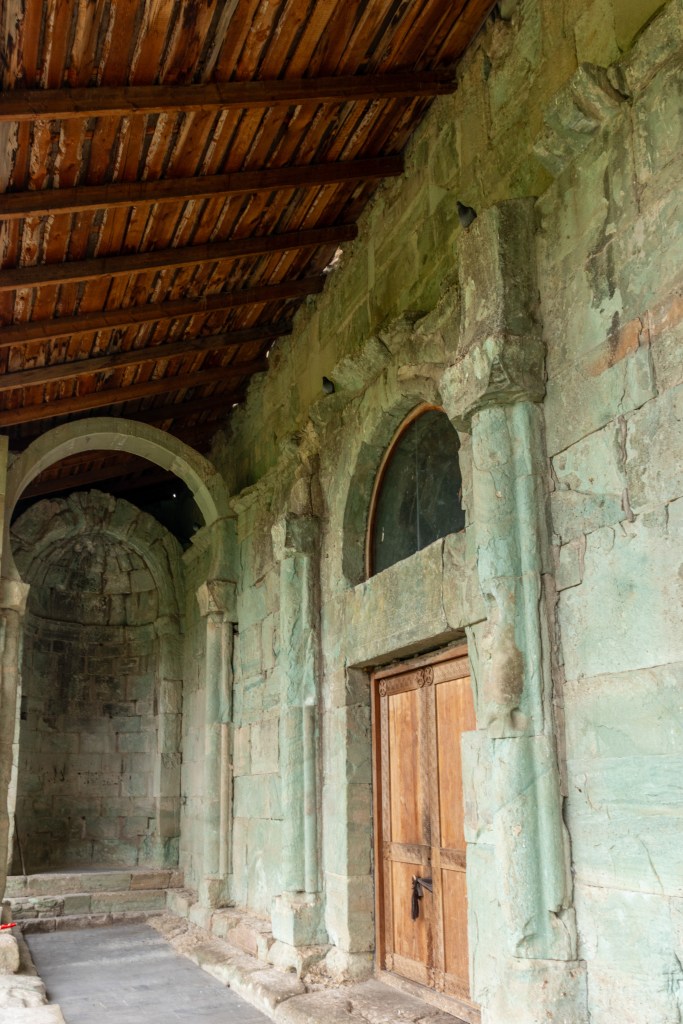
On the south side there is a porch and a chamber in the second half of the basilica, adjacent to the south-east corner. The chamber is thought to have been a baptistery and is unusual in that it has two apses, one to the west and one to the east.
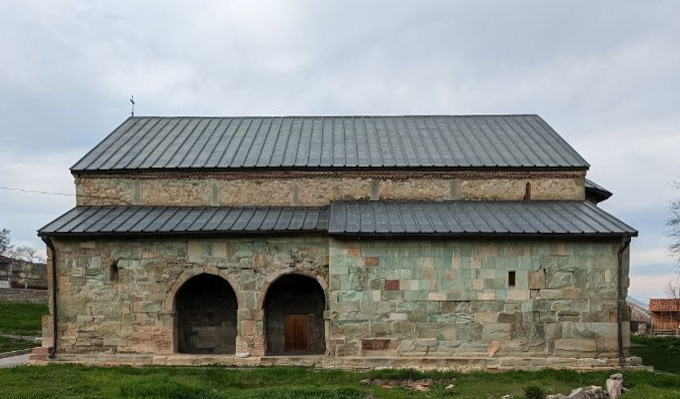
There is also a protruding chapel adjacent to the main body of the basilica. It is located on the eastern side, north of the main apse, and has a rectangular shape with a recessed apse.
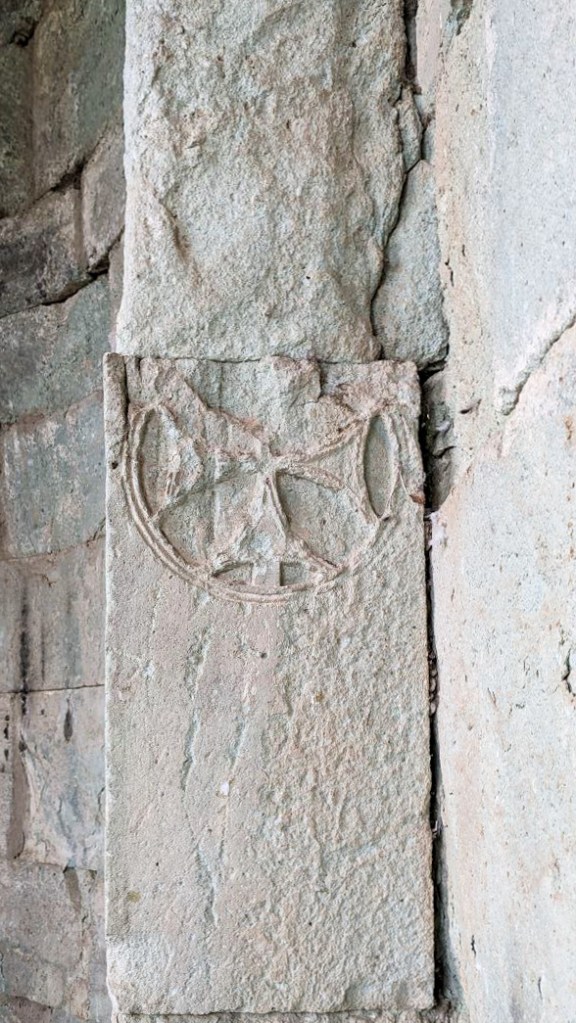
The cathedral is also famous for its decorative stone carvings. The exterior is decorated with geometric patterns, crosses, plant and animal motifs. These elements, while sparse, are significant as some of the earliest examples of decorative carving in Georgian ecclesiastical architecture. The north gallery features more elaborate detailing, with pilasters and capitals decorated.
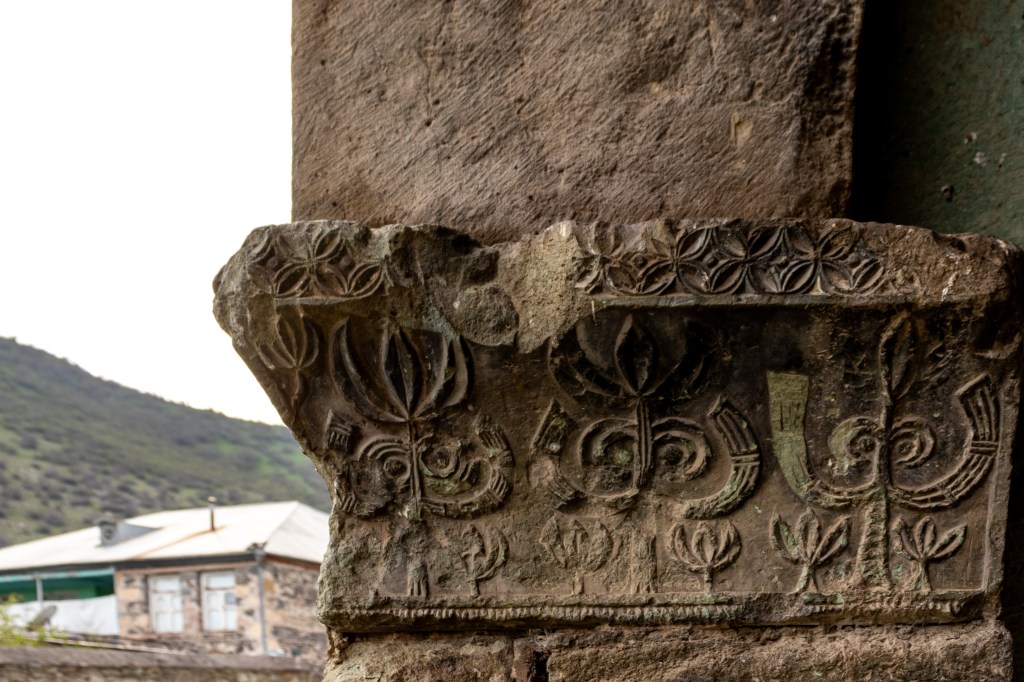
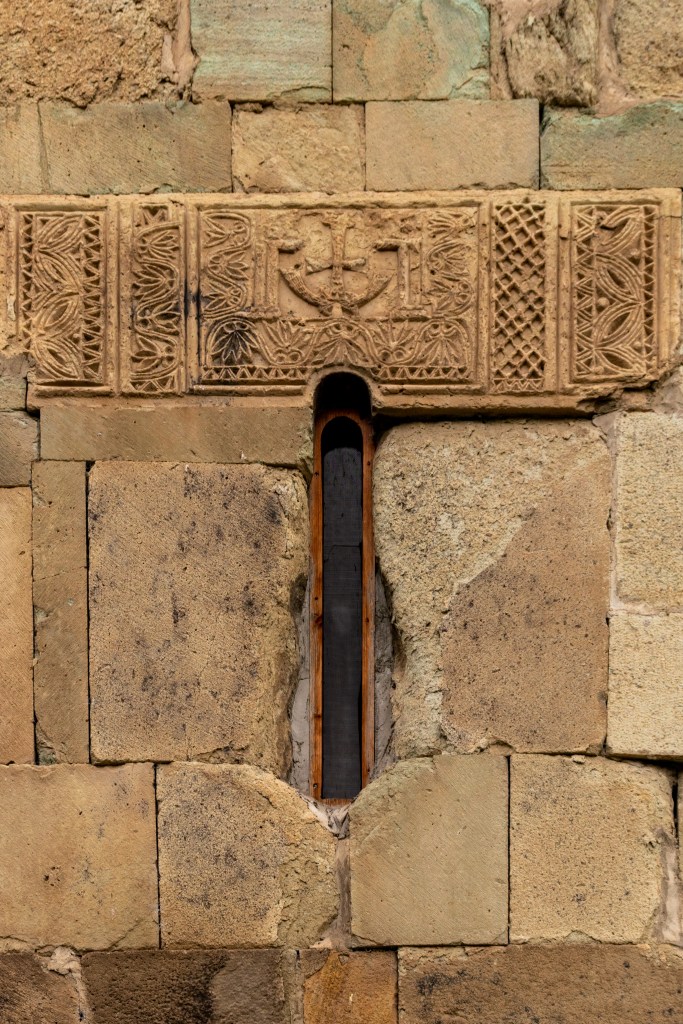
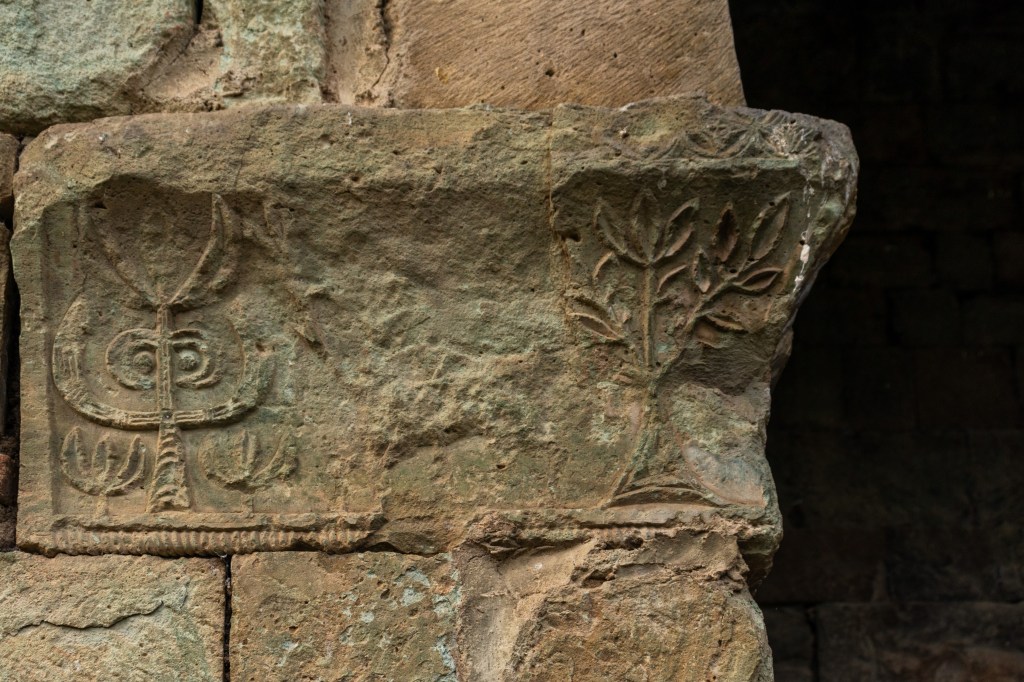
While some animal images have clear references to the Christian tradition (e.g., peacocks), others are considered to be associated with Sasanian (Persian) art.
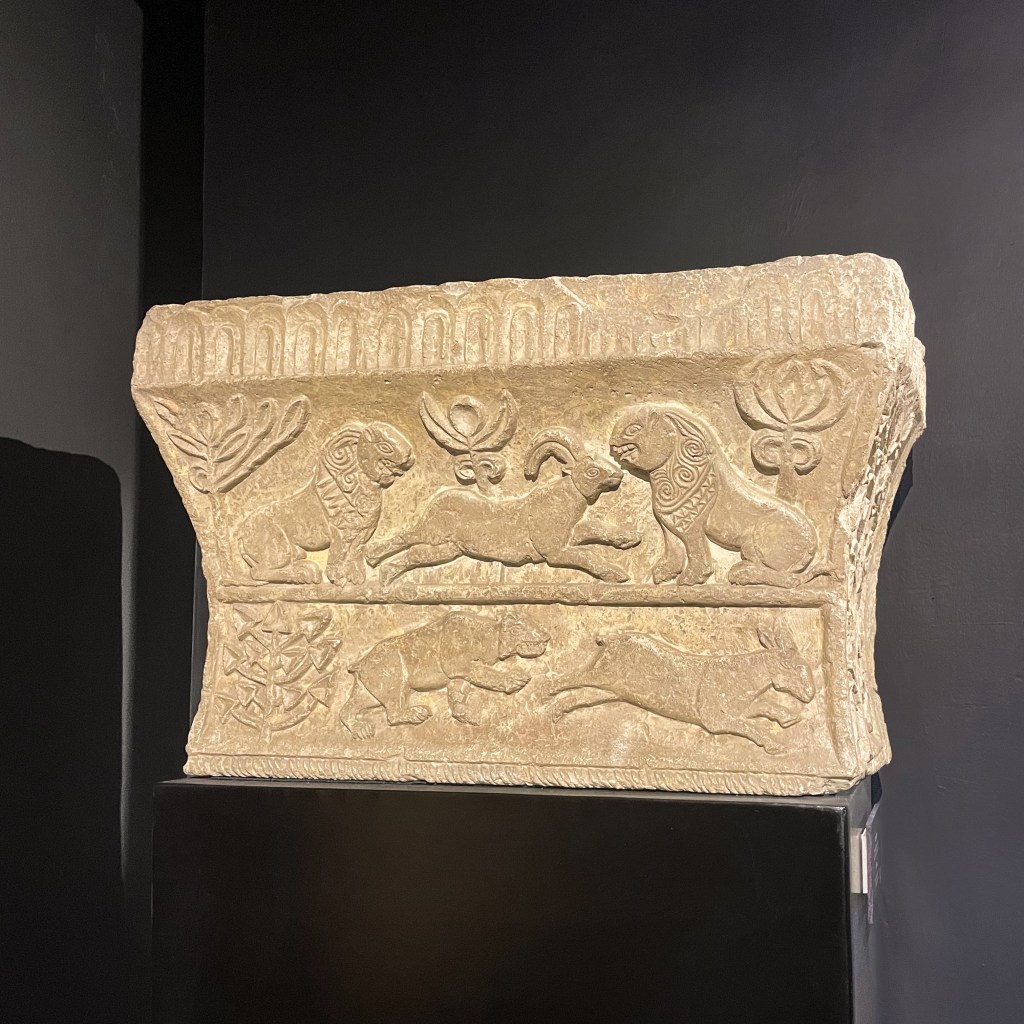
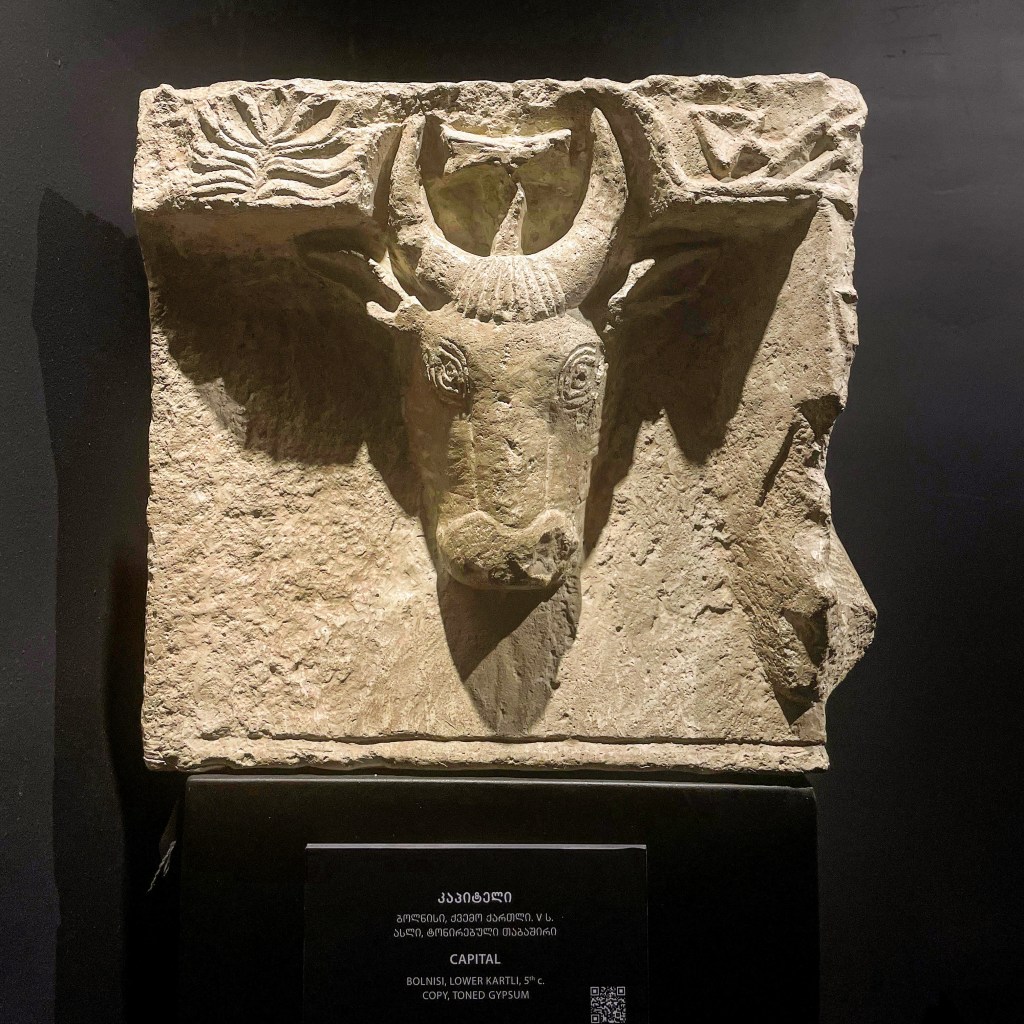
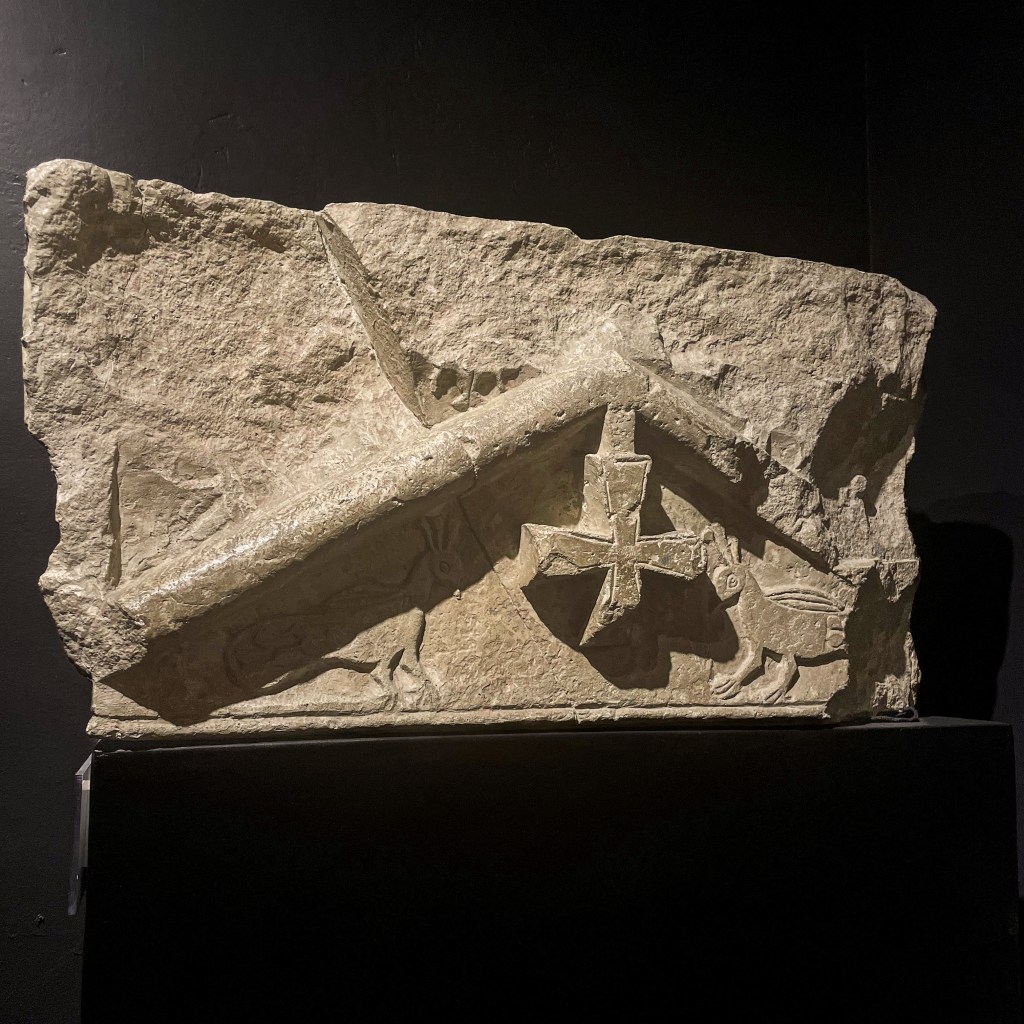
copies of a capitals from Bolnisi Sioni in the Shalva Amiranashvili State Museum of Arts of Georgia
The carvings include the famous Bolnisi Cross — a cross-pattée ornament. Actually, there are two similar crosses on the walls of Bolnisi: one is above the central apse window, i.e. on the eastern side, and another one is above the northern entrance (a copy, the original stone with the cross and the inscription under it is preserved in the Georgian National Museum).
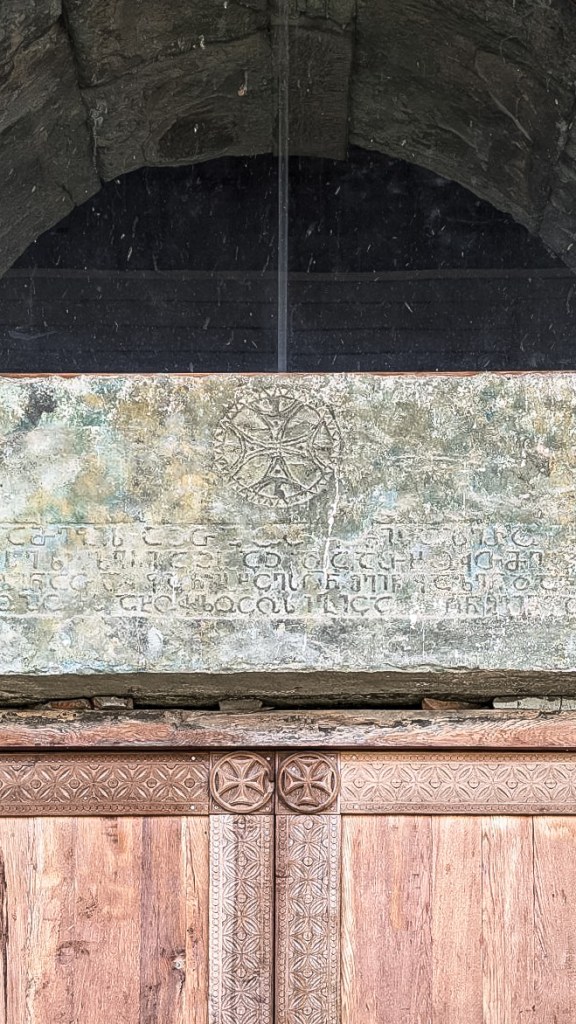

The pattée type of cross is characterized by the specific shape of the arms: they are narrower in the middle and wider at the edges, widening in a curve or a straight line. The name pattée comes from the French and can be literally translated as “footed”, because such cross arms resemble “foot”, like a pad of an animal. As for the Bolnisi cross, it has become a national symbol of Georgia and is depicted in the four squares of its flag.
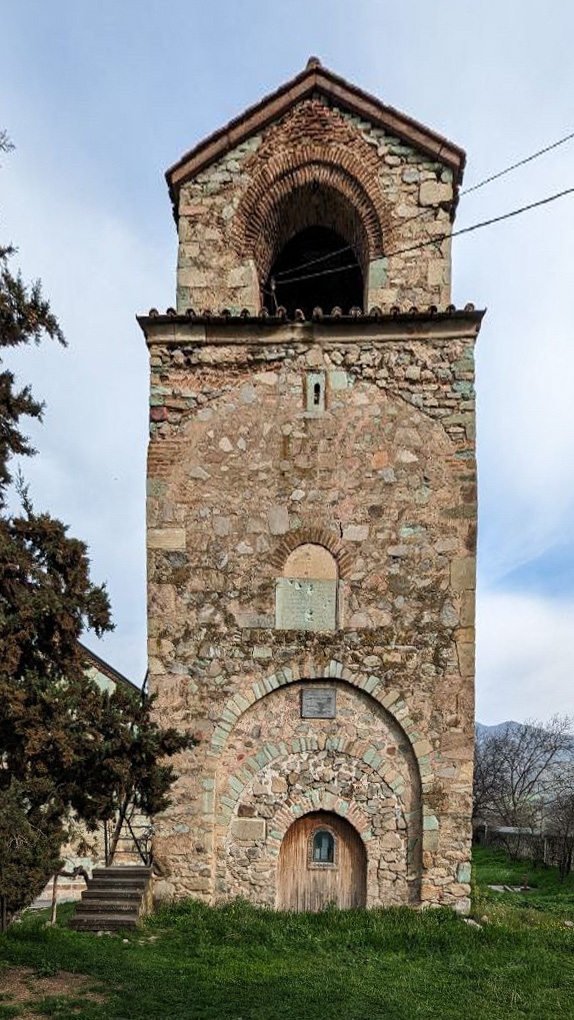
Damaged in the Middle Ages, Bolnisi Sioni was restored in the middle of the 17th century by Queen Miriam. The bell tower was built in the 1680s.
Sources and Further Reading
Khoshtaria, D. Medieval Georgian Churches: A Concise Overview of Architecture. Tbilisi, 2023.
Chubinashvili, G. N. “Bolnisi Sioni.”, in: Izvestiya Instituta yazyka, istorii i material’noy kultury imeni akademika N. Ya. Marra, Tbilisi, 1940, Issue 9. [in Russian]
text by Elena Lisitsyna
photos by Elena Lisitsyna and Elena Makarova
 bureau MARKA