
16th century
location: 42.002172422102426, 45.66049036053883
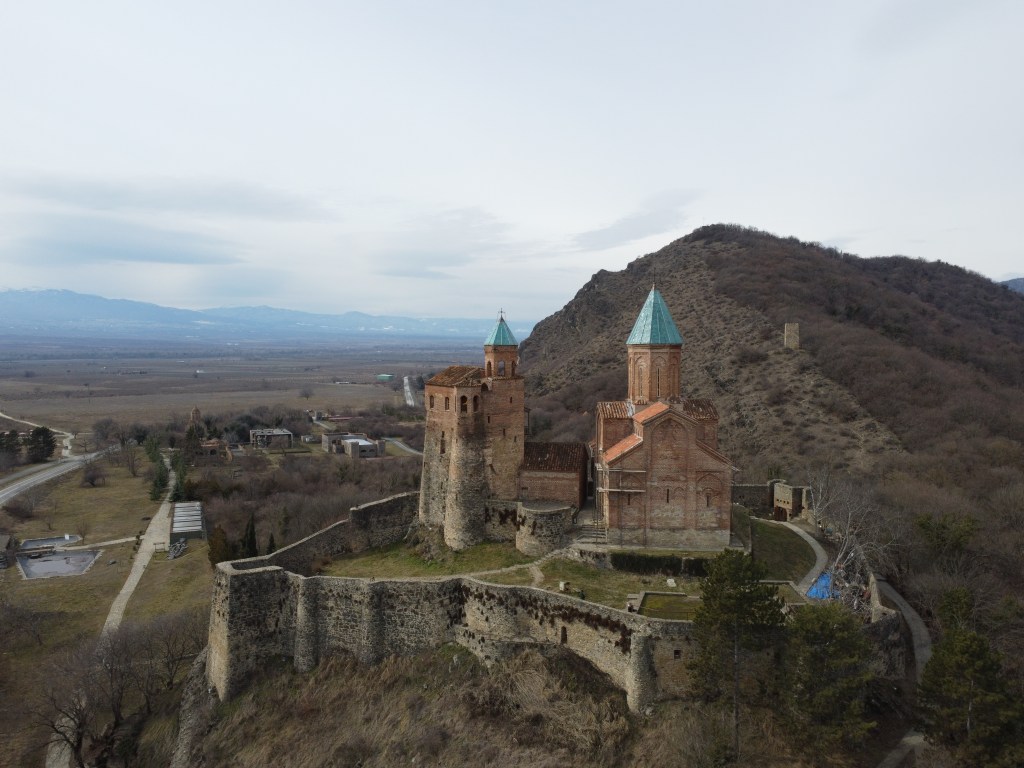
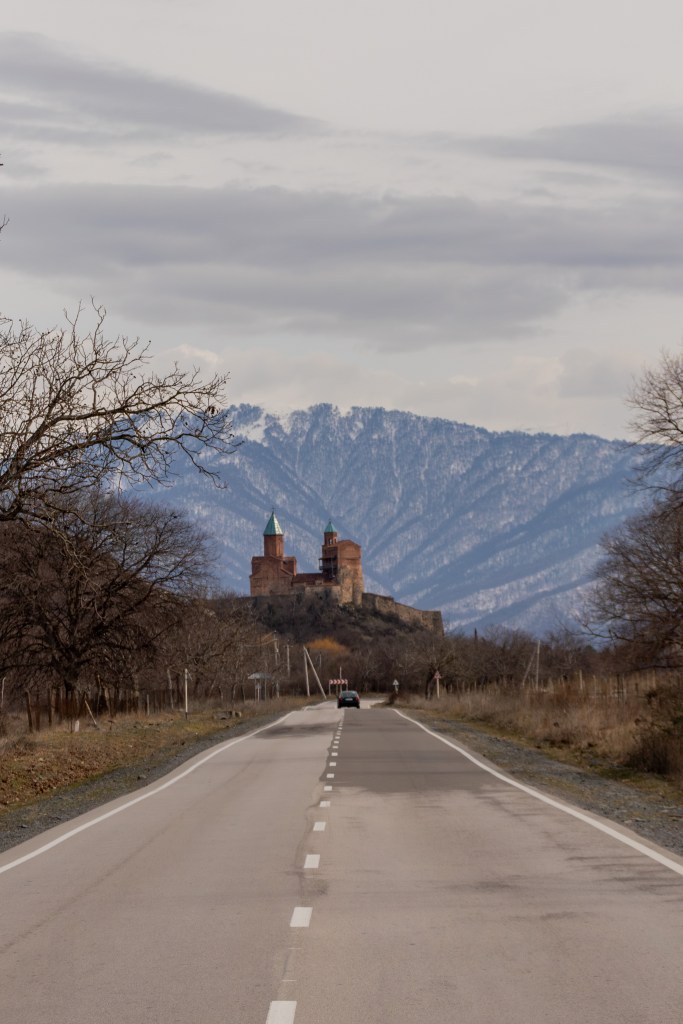
Gremi Citadel is located in the Alazani valley of Kakheti region. It was was part of the town of Gremi, which served as the capital of the Kingdom of Kakheti in the 16th and 17th centuries. In addition to the fortified church complex, it included a royal residence and a trading district, as Gremi was an important trading center on the Silk Road until its devastation by the Persian army in 1615 of Shah Abbas I. However, the citadel and its church survived.
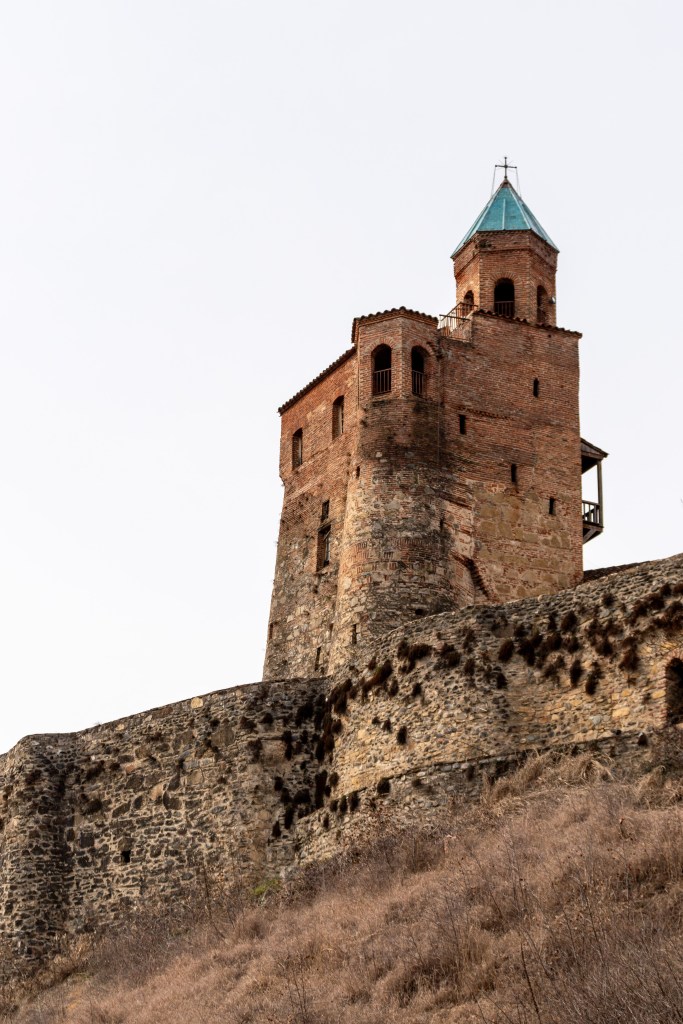
The Gremi Citadel complex consists of defensive walls, watchtowers, a palace, a bell tower, and the prominent Church of Archangels. The citadel walls were fortified with battlements and rectangular towers, designed to protect the royal palace and the church. The bell tower, located near the church, is a three-story structure with arched openings. Beneath the church are a wine cellar and secret passages.
The Church devoted to the archangels Michael and Gabriel was built in 1565 on the initiative of King Levan of Kakheti (1518/1520-1574). The church exemplifies the transitional phase of late Georgian medieval ecclesiastical architecture, combining traditional cross-in-square forms with Persian-influenced decorative elements. Its design features a high dome on a drum supported by four interior piers, with an overall vertical orientation that reflects the distinctive upward aspiration characteristic of Kakhetian architecture. The church has three entrances, while its three apses are recessed, resulting in a ground floor with a clear rectangular plan. Although the original dome covering has not survived, debris found near the church indicates that the roof was originally glazed tiles, adding to the decorative appeal of the structure.
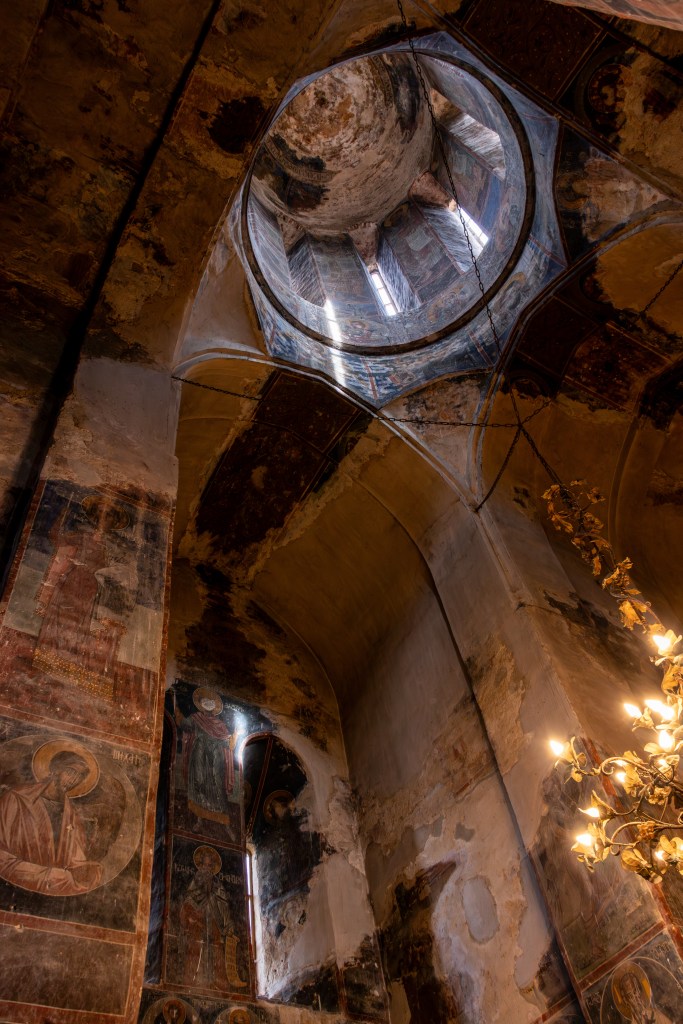
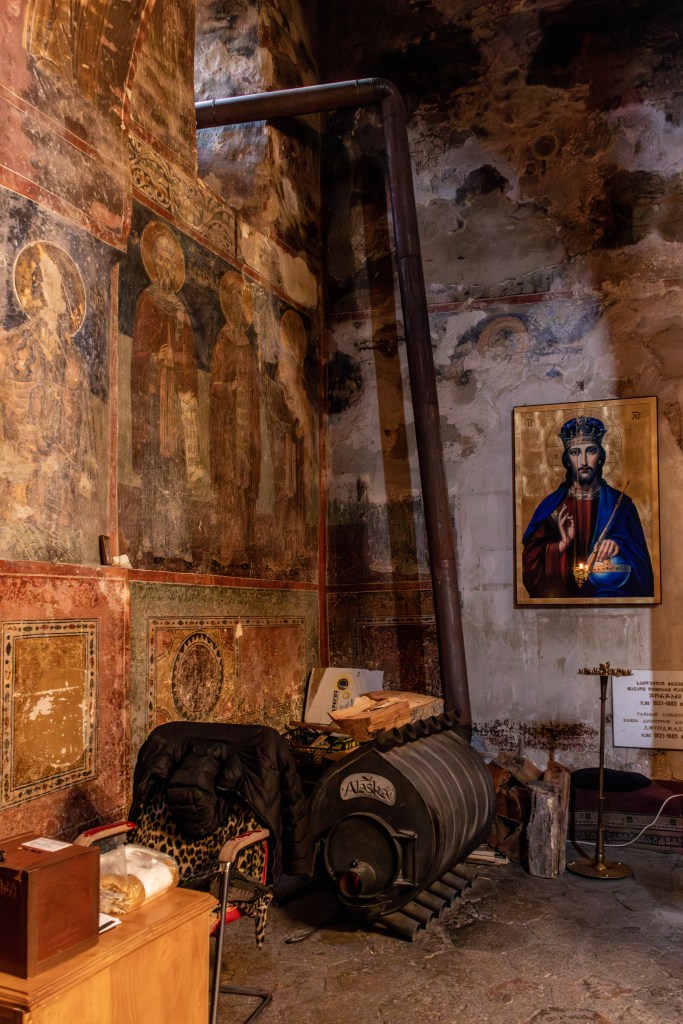
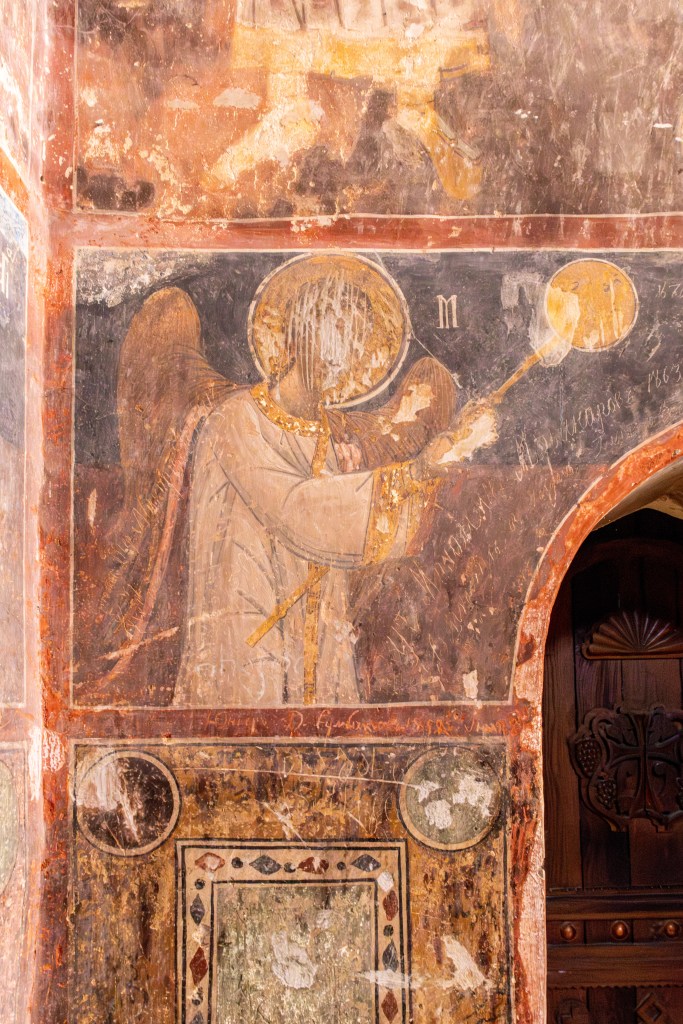
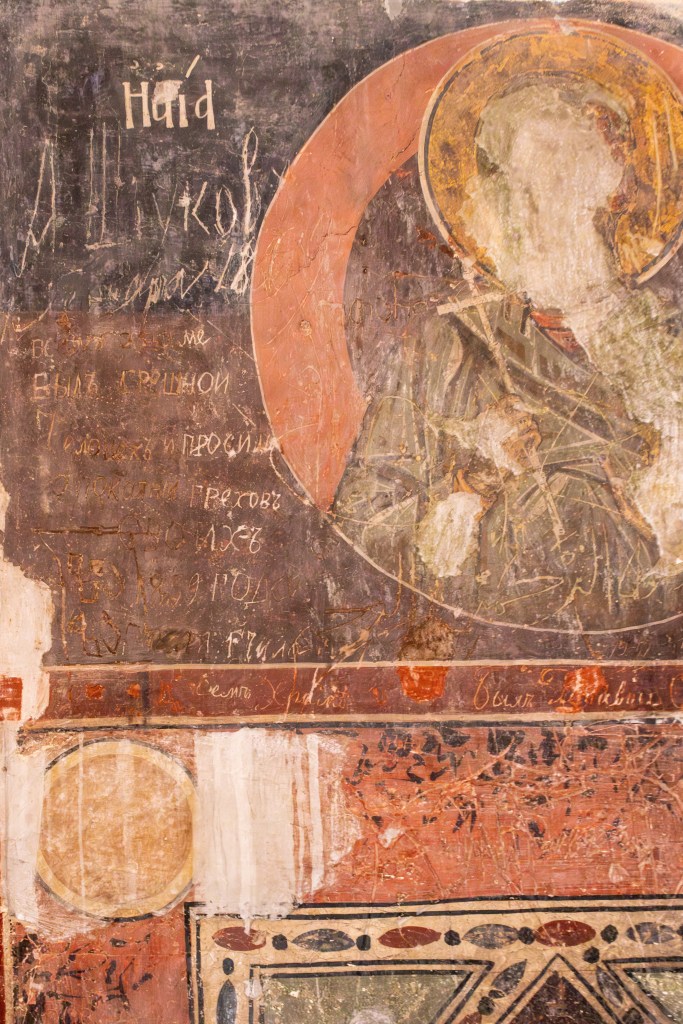
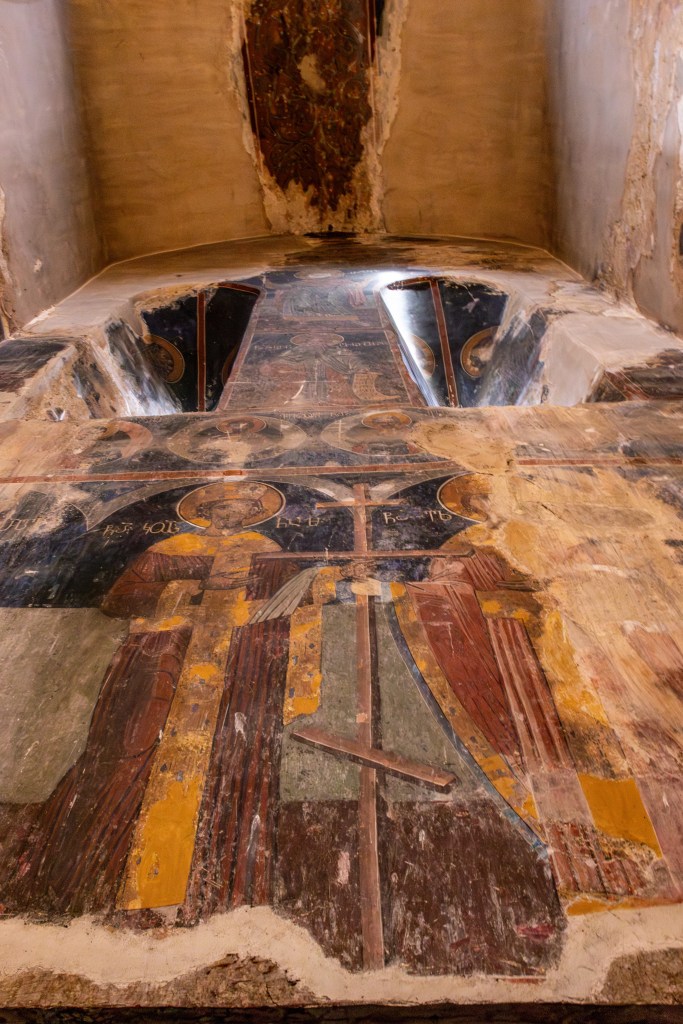
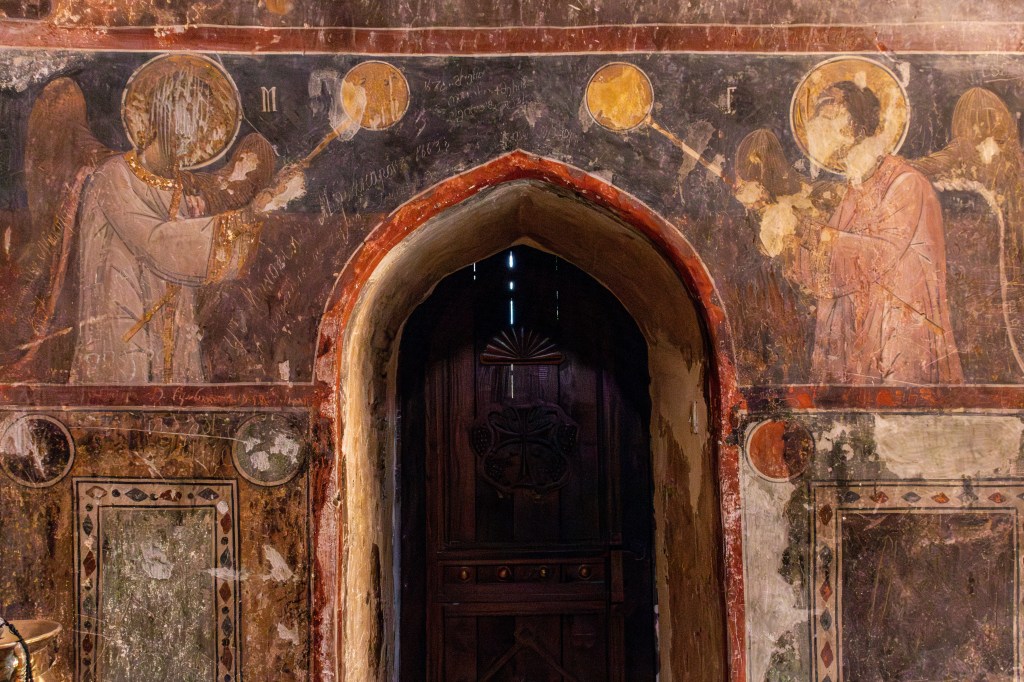
The main building material is brick, therefore the exterior of the church lacks any carved decoration. Instead, there are rectangular, arched and cross-shaped recesses in the facades. Each façade is divided into three main fields, the middle high and the side low, each with its own system of arches. Similar exterior decoration is found in other churches commissioned by the King Levan of Kakheti, his wife Queen Tinatin and their son King Alexander (1574–1605), namely the churches of Akhali Shuamta, Chikaani and Shikhiani. . These exterior decorations, together with the pointed arches inside the church, are considered a feature of a clear influence of Iranian architecture due to the political and cultural penetration of eastern Georgia by the Safavid Empire in the 16th and 17th centuries. The interior walls are covered with frescoes, completed in 1577, as indicated by a special inscription on the frescoes.

Sources and Further Reading
Chubinashvili, G. N. Arkitektura Kakhetii [Architecture of Kakheti]. Tbilisi, 1959. [in Russian]
Khoshtaria, D. Medieval Georgian Churches: A Concise Overview of Architecture. Tbilisi, 2023.
text by Elena Lisitsyna
photos by Daniil Makarov and Elena Lisitsyna
 bureau MARKA