
586–630s
location: 41.83865539233918, 44.73353460684662
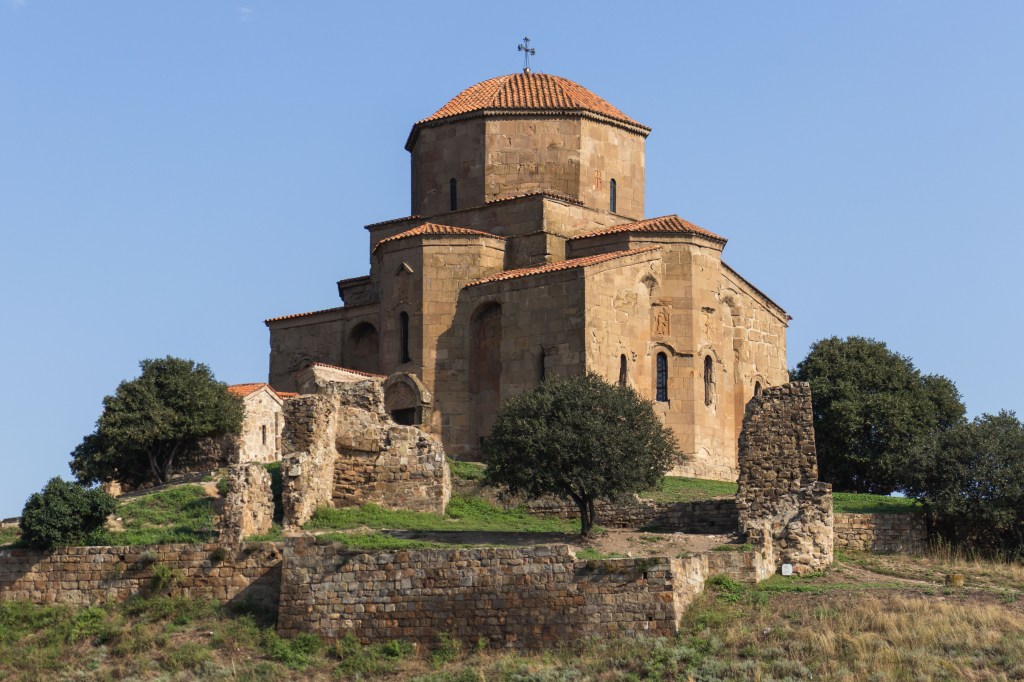
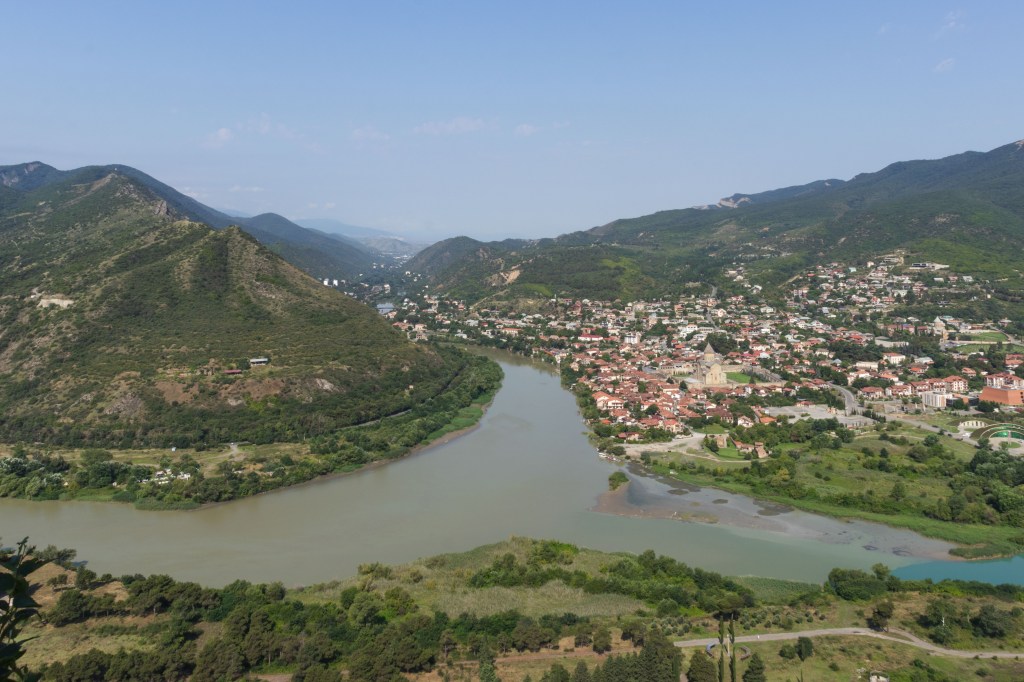
The Jvari Monastery stands on a rocky hilltop 656 meters above the ancient city of Mtskheta, with a panoramic view of the confluence of the Mtkvari and Aragvi Rivers. It is surrounded by a defensive wall of which fragments remain.
The site has a strong historical and religious significance. It is believed that Saint Nino, who brought Christianity to Georgia in the early 4th century, placed a cross on this site to replace a pagan shrine.
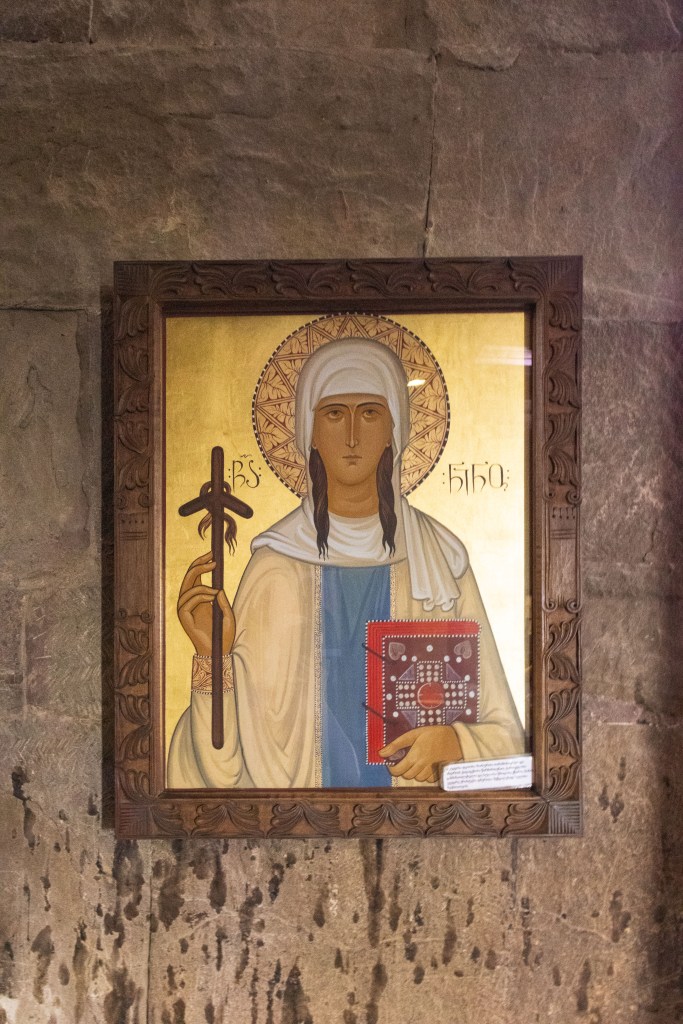
This explains the name of the place — in Georgian, jvari means “cross”. This cross attracted pilgrims because it was believed to perform miracles. In 545–568, Prince Guram of Iberia built a small church near the cross. Later, his son Stephanos I built a larger church, which covered the cross inside the church. It is most likely that most of the church was built between 586 and 605, but was not completed until the 630s. It is exactly this church that stands today, widely known as the Jvari Church.
The church is made of finely hewn yellowish sandstone. The real uniqueness of the Jvari church is its architectural design, which is found only in the South Caucasus. It is sometimes defined as the “Jvari-Hripsime type” because the two earliest examples of this architectural layout are the Jvari Church near Mtskheta, Georgia, and the St. Hripsime Church at Vagharshapat, Armenia, both built in the early 7th century.
The basis of this church structure is the tetrachronch, i.e. a building with four apses (the word tetrachronch can actually be translated from the Greek as “four shells”). The peculiarity of the “Jvari-Hripsime” type, which is considered to be of Byzantine origin, is that there are four niches between the apses, a cruciform floor plan, but no supporting columns. Four cylindrical niches between the apses lead to the auxiliary rooms — pastophoria, i.e. rooms for church equipment, adjacent to the apses. The core of the Jvari central space is a wide central bay, but the whole building is slightly elongated due to two additional spaces in front of the eastern and western apses.
There are only a few churches of this type in Georgia: Ateni Sioni and churches in the monasteries of Dzveli Shuamta and Martvili. The creation of such a distinctive church design is considered to be one of the peculiarities of early Georgian ecclesiastical architecture and is considered to have had a great influence on further Georgian architecture. However, the development of this type of church design was stopped by the Arab invasion in the South Caucasus. After that, the tetraconch design was still used in the construction of Georgian churches, but not in the same “Jvari-Hripsime-type” tradition. At the time of the Georgian Golden Age, the cross-domed church structure became dominant in the region.
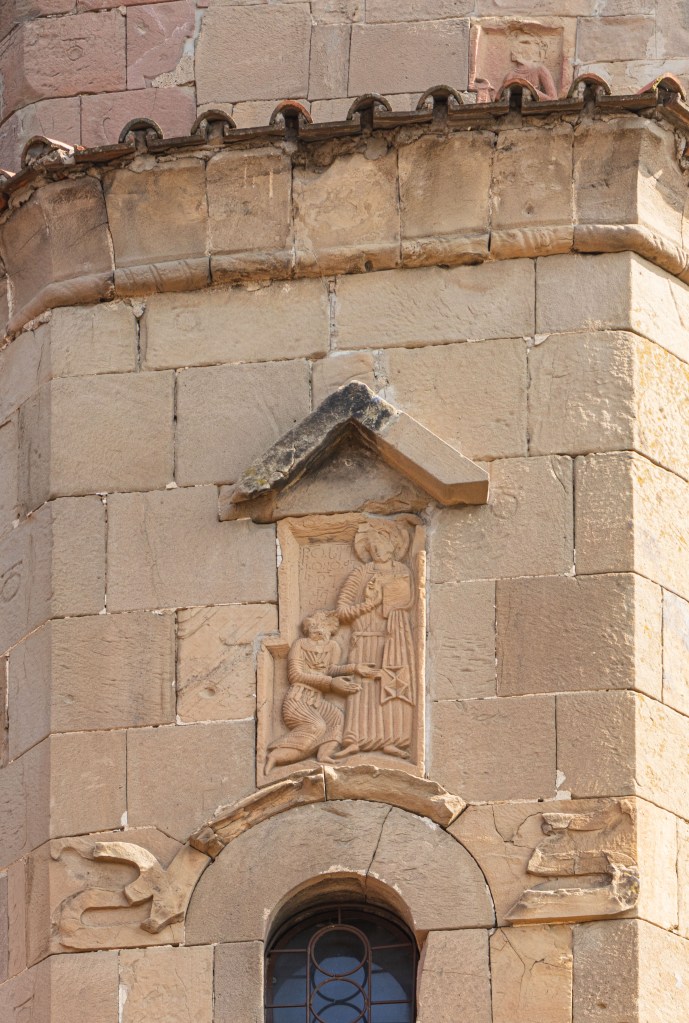
The other peculiarity of the Jvari church is its external relief decorations. Due to the location of the church on a hill, the reliefs are only on the eastern and southern facades. They show not only religious symbols and patterns, but also the donors of the church. On three facets of the east facade there are reliefs depicting Stephanos I, his brother Demetrios and Adarnase, the heir of Stephanos, with his son. Along with the sculptures, there are additional inscriptions in Asomtavruli, the oldest script of the Georgian language.

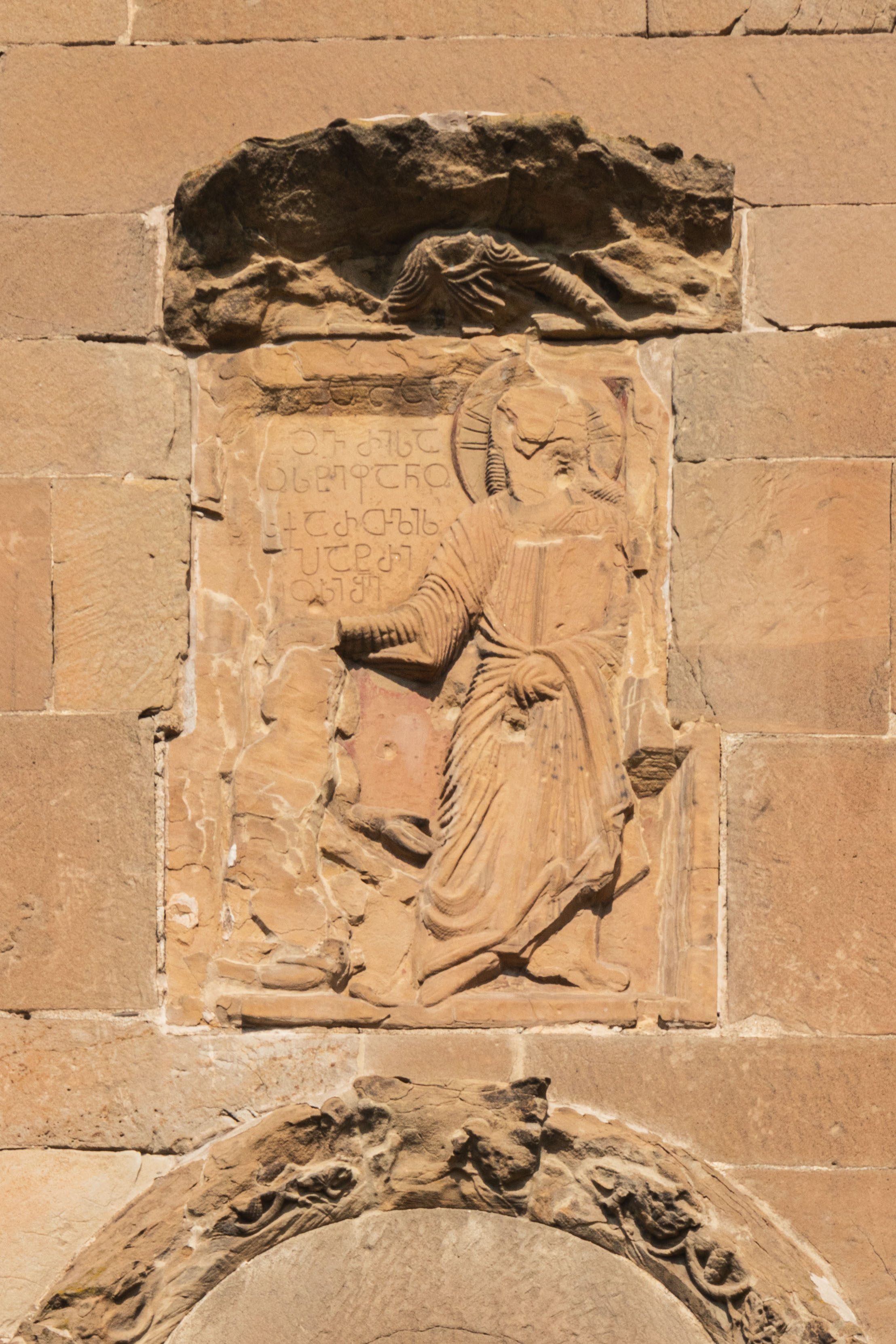
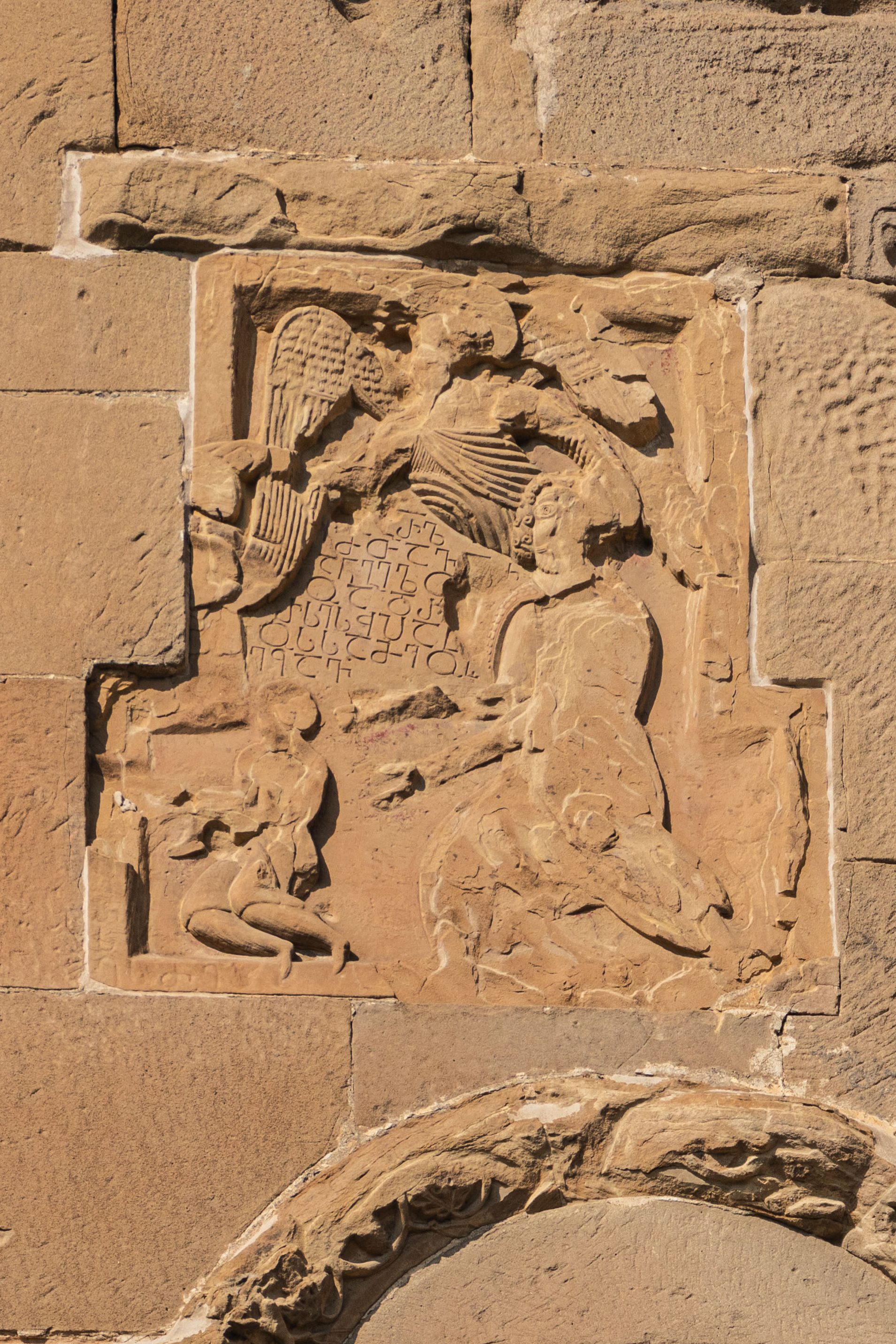
Above the main entrance, on the southern facade, there is a relief with Kobul-Stephanos kneeling before St. Stephen.
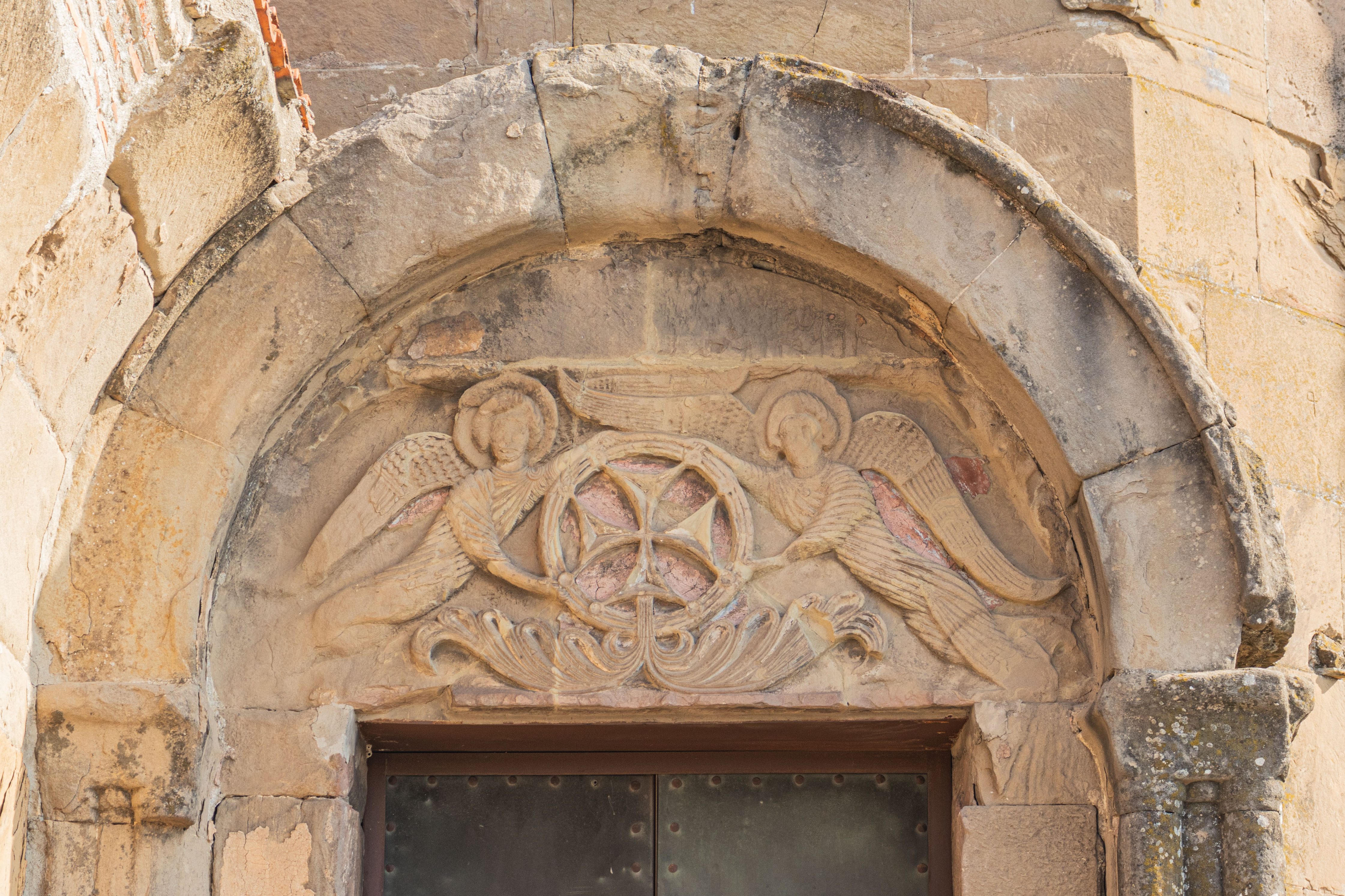
Below, just above the entrance, there is the relief of the Ascension of the Cross, where two angels hold the cross of the cross-pattée type (it is characterized by the specific shape of the arms: they are narrower in the middle and wider at the edges, like an animal’s pad; the earliest Georgian example of cross-pattée locates in Bolnisi Sioni basilica).
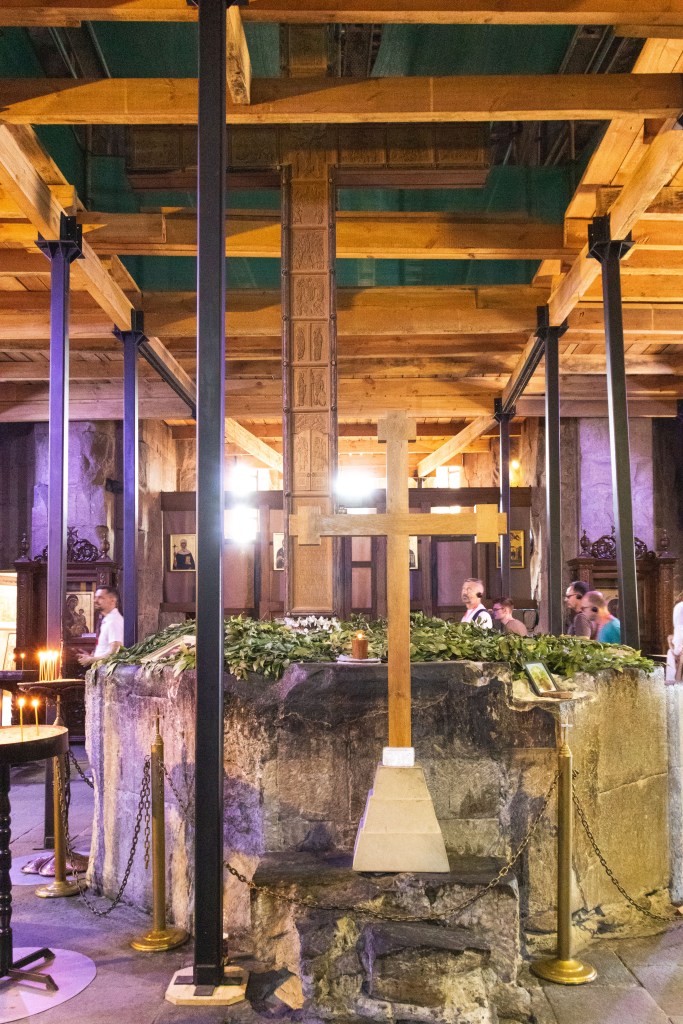
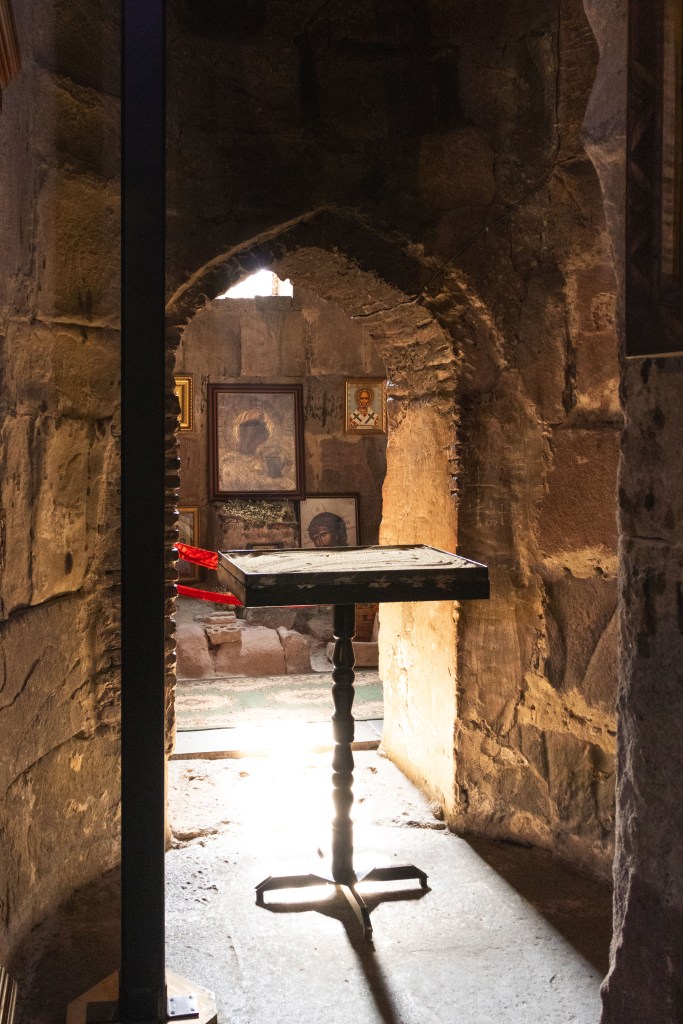
Inside the church there is no decoration. However, there is an octagonal base for a large cross, which serves as a reminder of the Cross of St. Nino, the focal point of the church. The original cross of St. Nino is now preserved in the former Tbilisi Cathedral, the Sioni Church in the Old Town of Tbilisi.
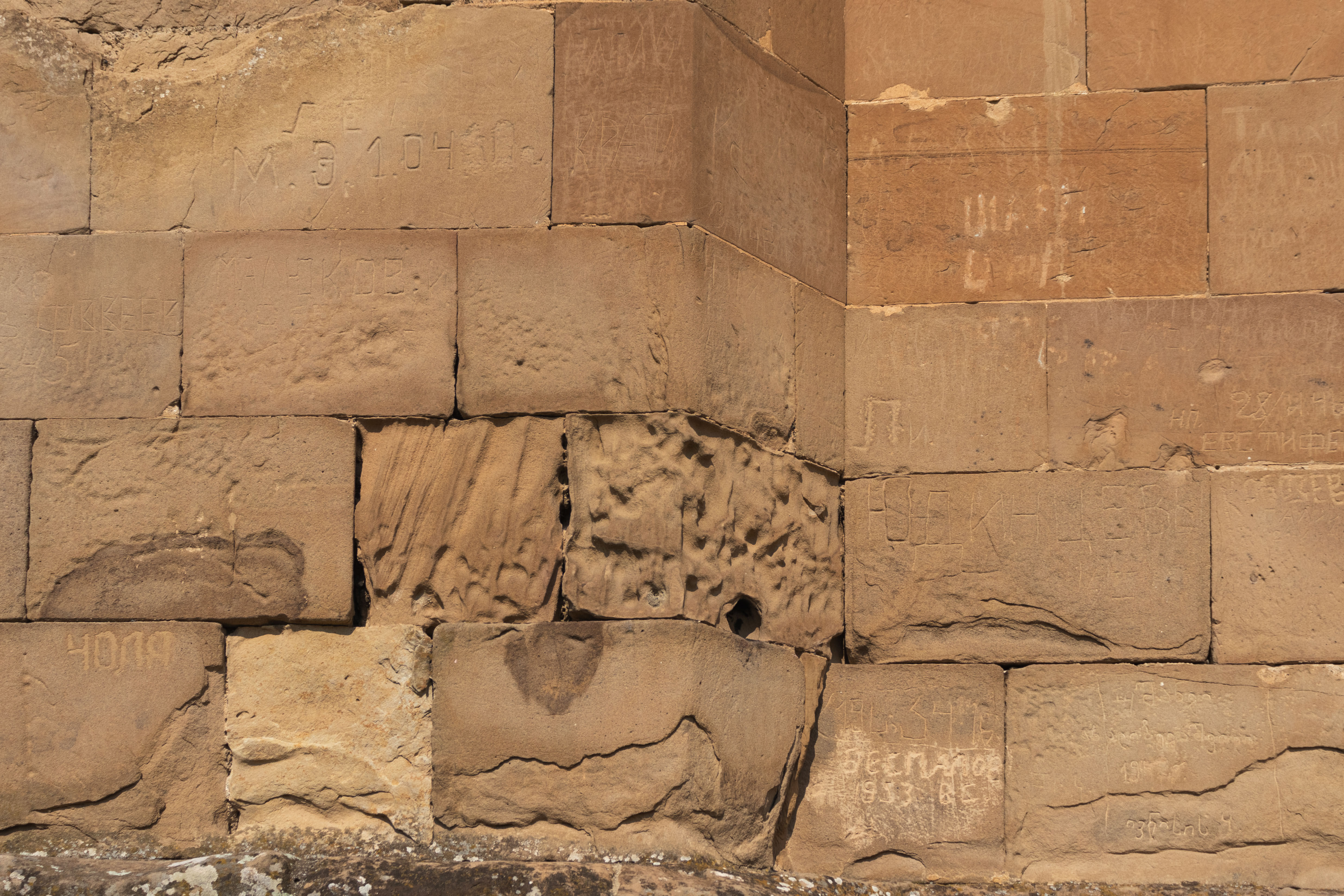
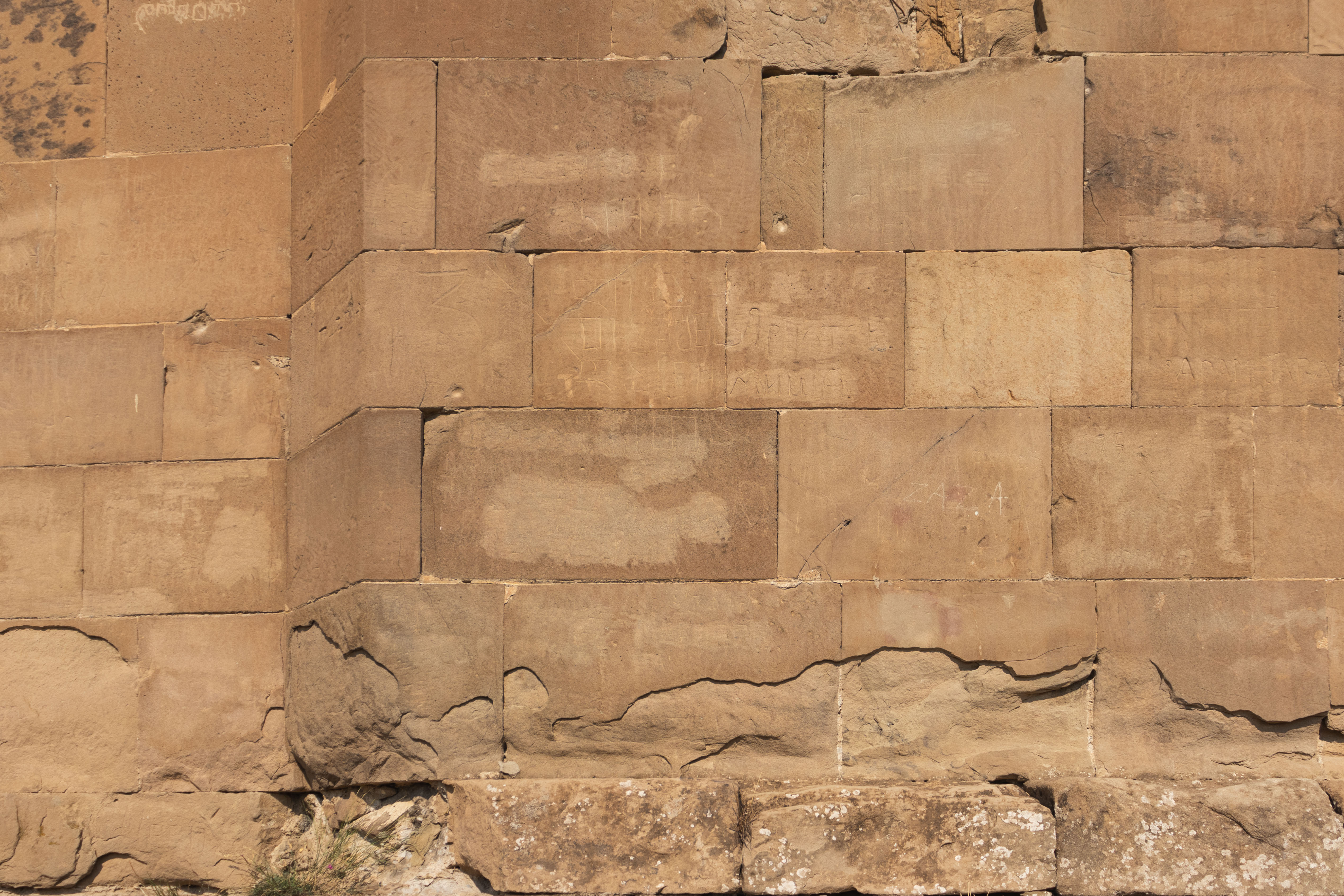
The exterior also contains non-ecclesiastical “decorations”, the graffiti made by people who wanted to mark their visit to this place, many of them dating back to the 20th century. However, during contemporary restoration work, such graffiti on the medieval walls is often considered vandalism and scrubbed away. Such actions seem unfortunate because they destroy a part of the monument’s own history, the history of how the building has been appreciated by the people who have visited it through the ages.
In 1994 the Jvari Monastery, together with the Svetitstkhoveli Cathedral and the Samtavro Monastery, was included in the World Heritage List.
Sources and Further Reading
Khoshtaria, D. Medieval Georgian Churches: A Concise Overview of Architecture. Tbilisi, 2023.
Vinogradov, A. Yu. Ocherki arkhitektury Vizantii i Kavkaza [Essays on the Architecture of Byzantium and the Caucasus]. Moscow, 2023.
text and photos by Elena Lisitsyna
 bureau MARKA