
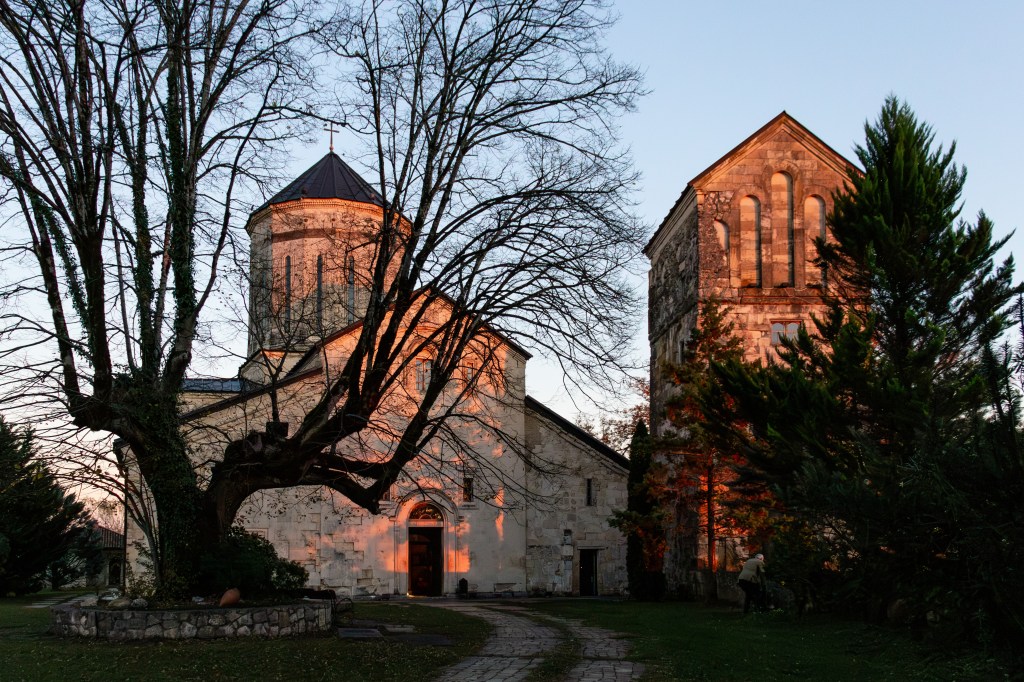
7th century, rebuilt in the 10th century
location: 42.40557423771004, 42.37800113527394
Martvili Monastery is located in the Samegrelo region of western Georgia. It is situated on a hill with a commanding view of the surrounding landscape. The monastery was built on a site that was once a pagan center of worship, where local tribes performed rituals around a sacred oak tree. After Georgia adopted Christianity, the tree was cut down and a church was built in its place. Therefore, the ancient name of the place was still Chkondidi, which translates as “big oak”. This name is still used to define the local eparchy of the Georgian Orthodox Church. The main church of the Martvili monastery became the cathedral of the Chkondidi eparchy during the reign of George II of Abkhazia (922–957).
Its main church, dedicated to the Virgin Mary, dates back to the 7th century. It was built as a relatively free copy of Jvari, so it is one of the five Georgian examples of church architecture of “Jvari-Hripsime-type”. In the course of history the church underwent significant restorations and changes, so that its external part is much more different than it probably was in the beginning.

It is noteworthy that the church was later extended and rebuilt, trying to fit the rectangular shape of the church, common in medieval Georgian architecture. Such modifications can be easily seen by comparing the stones from the outside and from the inside of the building on the southern and northern sides. Also the dome and the tholobate are not part of the original construction. There are also slight modifications on the eastern facade.
Originally, the church was built from hewn blocks of yellow and pink tones. The floor is mostly original. As in Jvari, there were originally four apses with 3/4 niches between them, leading to the corner chambers. During the reconstruction, the south-western and north-western niches and the entrances to the chambers were changed. Later, on the western side, a separate narthex and a choir were built. The second floor of the narthex was used for book storage. When the church was rebuilt into a rectangular shape and the roof system was changed, rooms of different heights and shapes were added in all parts of the building, i.e. in the spaces above the vaults and above the corner rooms, which were later covered with a roof. That is most likely that these changes were made around the 10th–11th century and could be attributed during the initiative George II of Abkhazia, which corresponded to restore the church and transformed it into a cathedral.
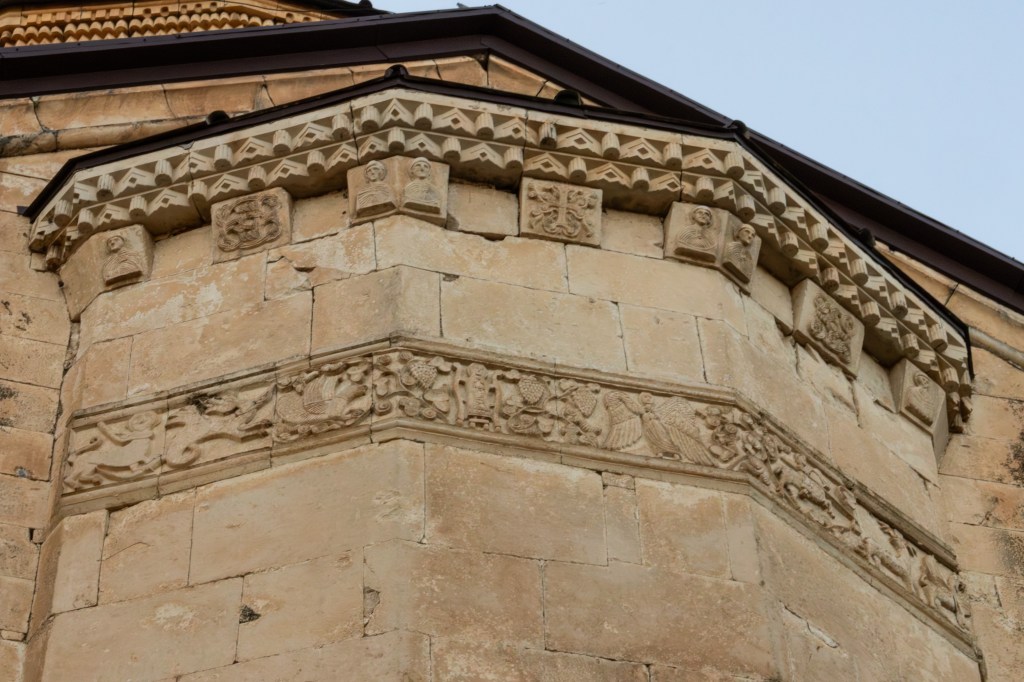
Martvili Cathedral is peculiar for both its external and internal decoration. In contrast to Jvari, where relief figures occupy a considerable part of the walls as separate elements, the external decoration of Martvili consists mainly of 2 friezes, located on the eastern and western facades. It is difficult to study their details as they are too far away from the eye at a height of about 32 cm. The friezes serve as frames for several religious scenes, united with floral patterns. In addition to the friezes, there are brackets above them that contain separate plates with relief busts and floral patterns. Among the other images, there are several that symbolize the conversion to Christianity or the triumph of the Christian faith. These are, for example, the reliefs on the western façade: Biblical scenes of Daniel in the Lion’s Den and Samson wrestling the Lion, or scenes from the lives of the saints, which are three horsemen with spears, one stabbing a man (probably St. Mercurius or St. Demetrius of Thessaloniki) and two stabbing a dragon, which should be St. George and probably St. Theodore Tyron.
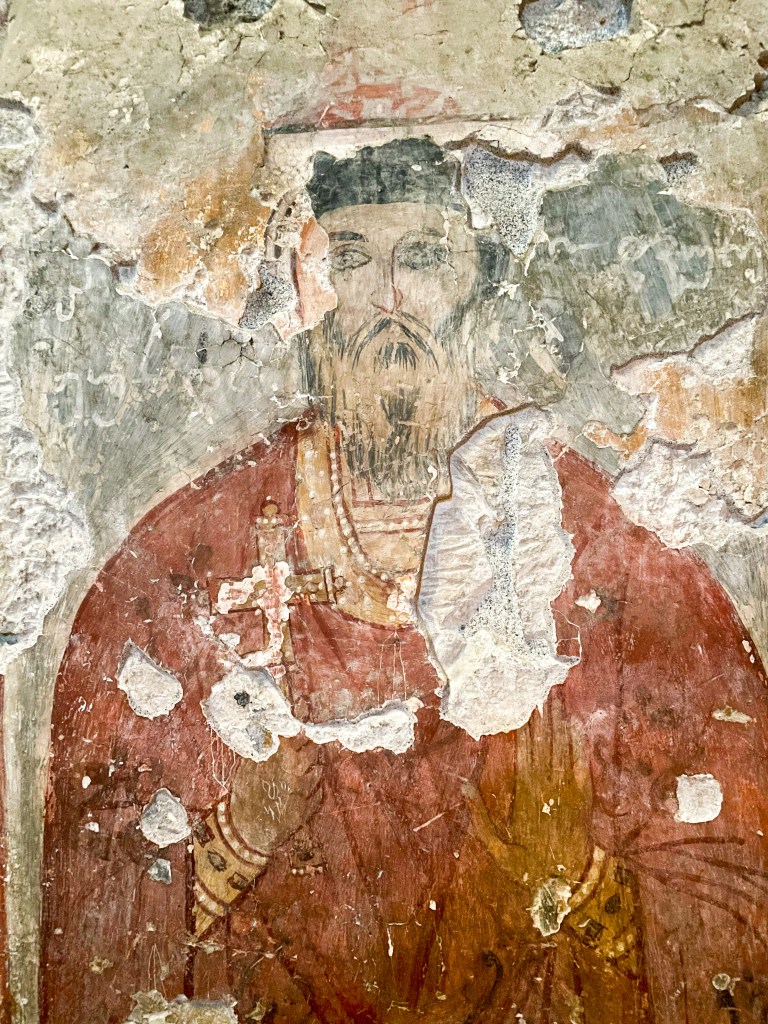
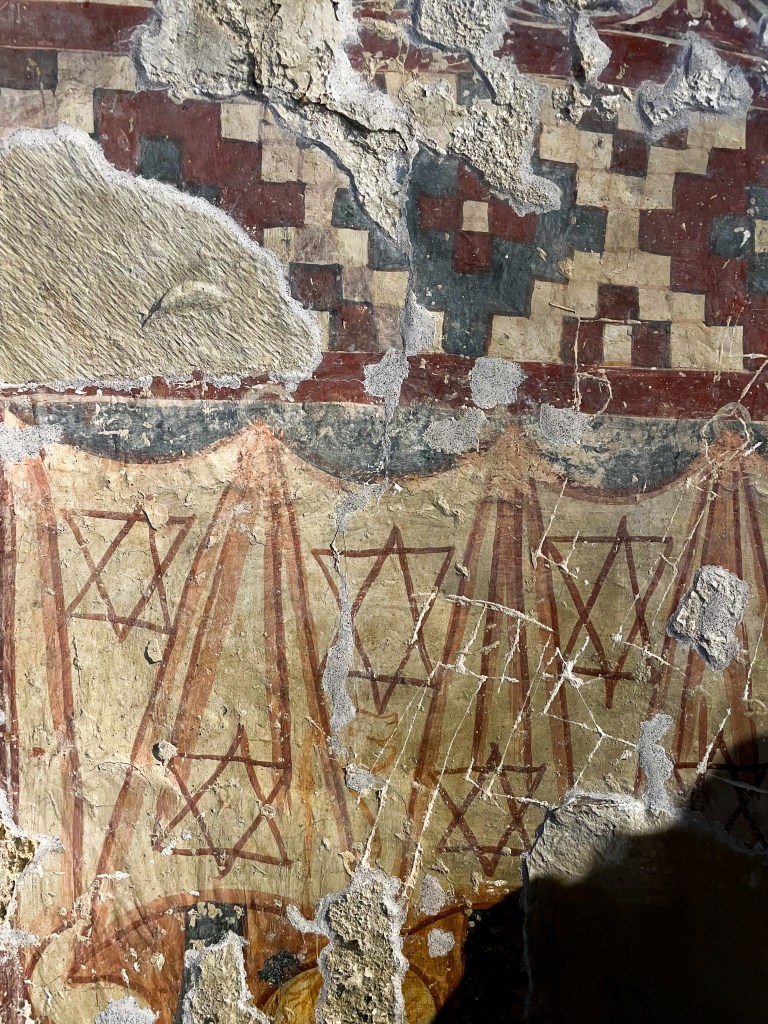
The interior decoration contains layers of frescoes from several centuries.
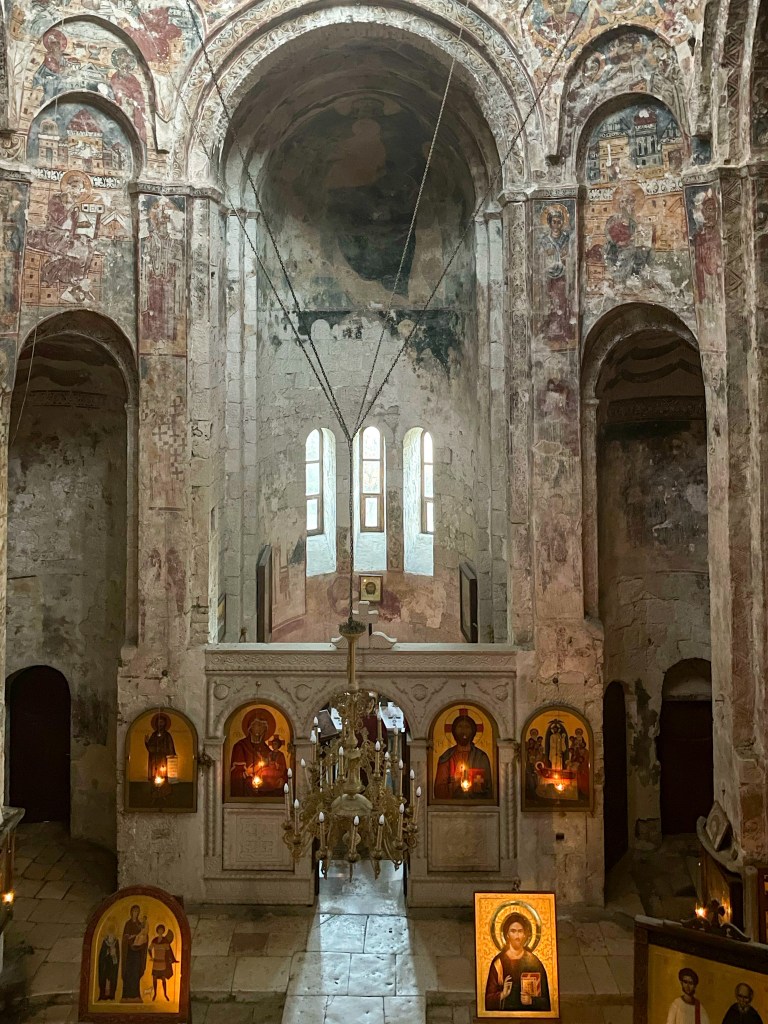
Small fragments of early fresco layers date back to the 10th–13th centuries (above the bema, the western arm and the porch). In the apse of the sanctuary, in the bema and in the western arm of the porch there are frescoes of the mid-14th century in the Paleologan artistic style. The main rooms of the church were repainted in the 16th century. Frescoes 17th century are found in the southern and northern cross arms.
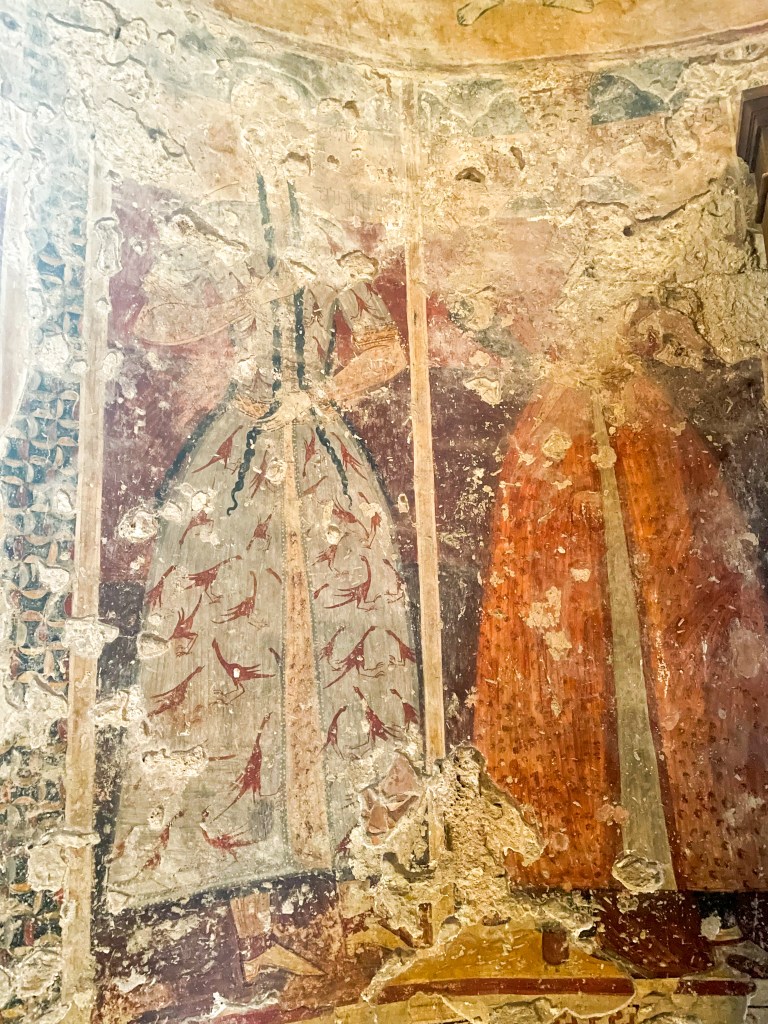
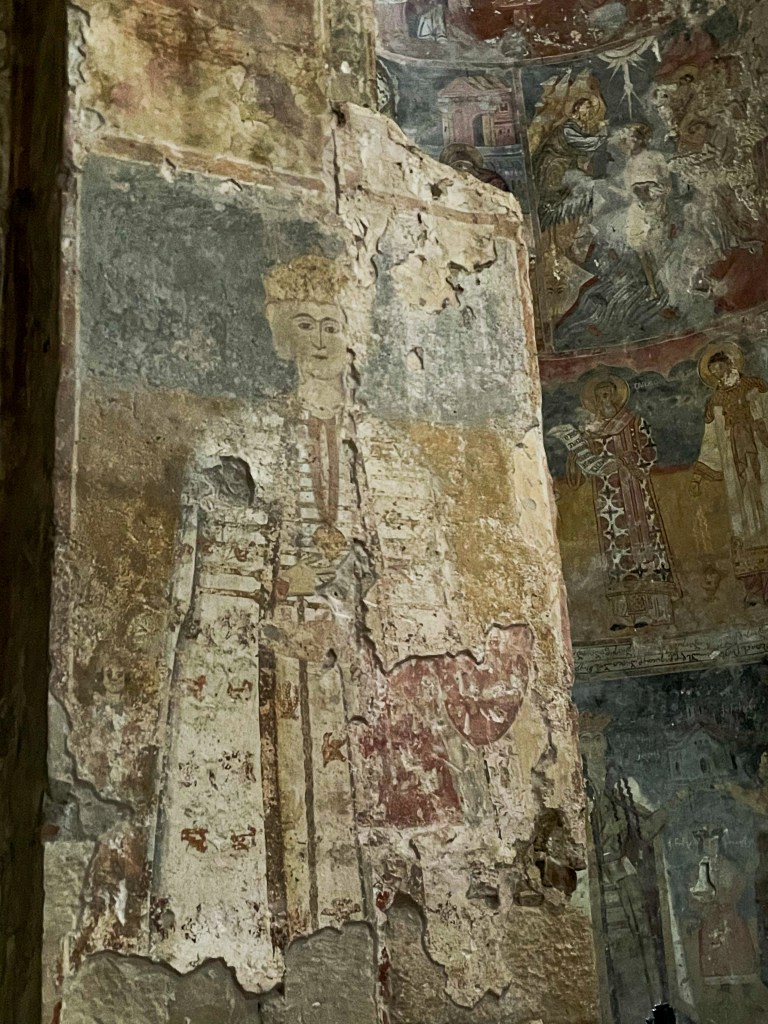
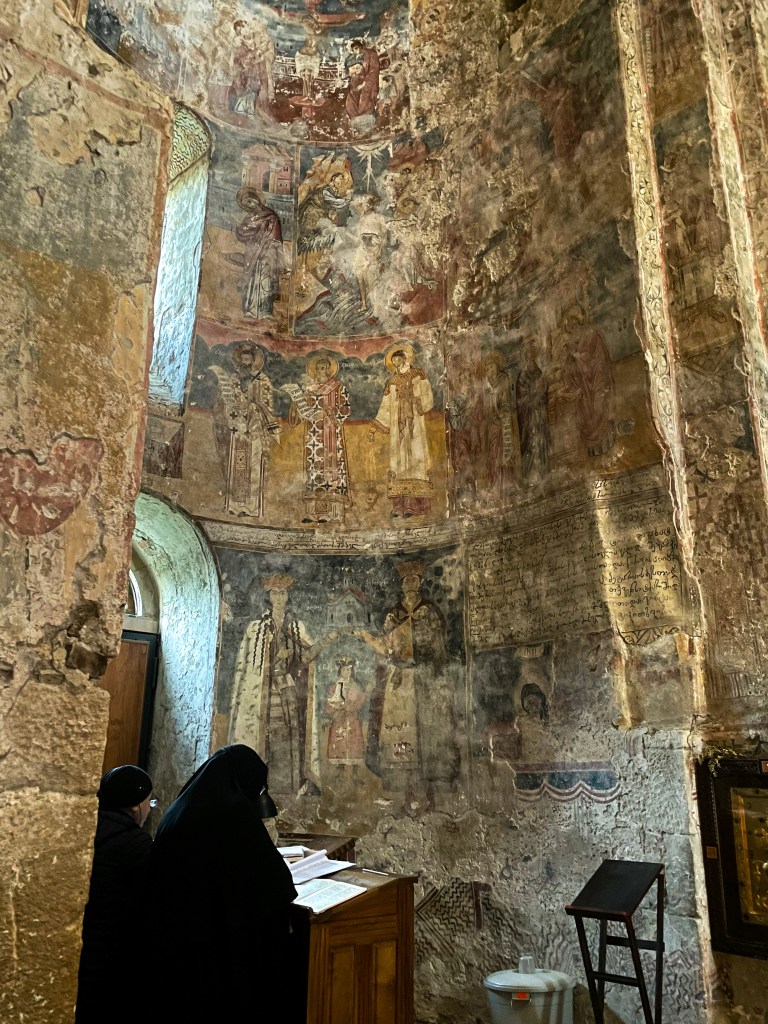

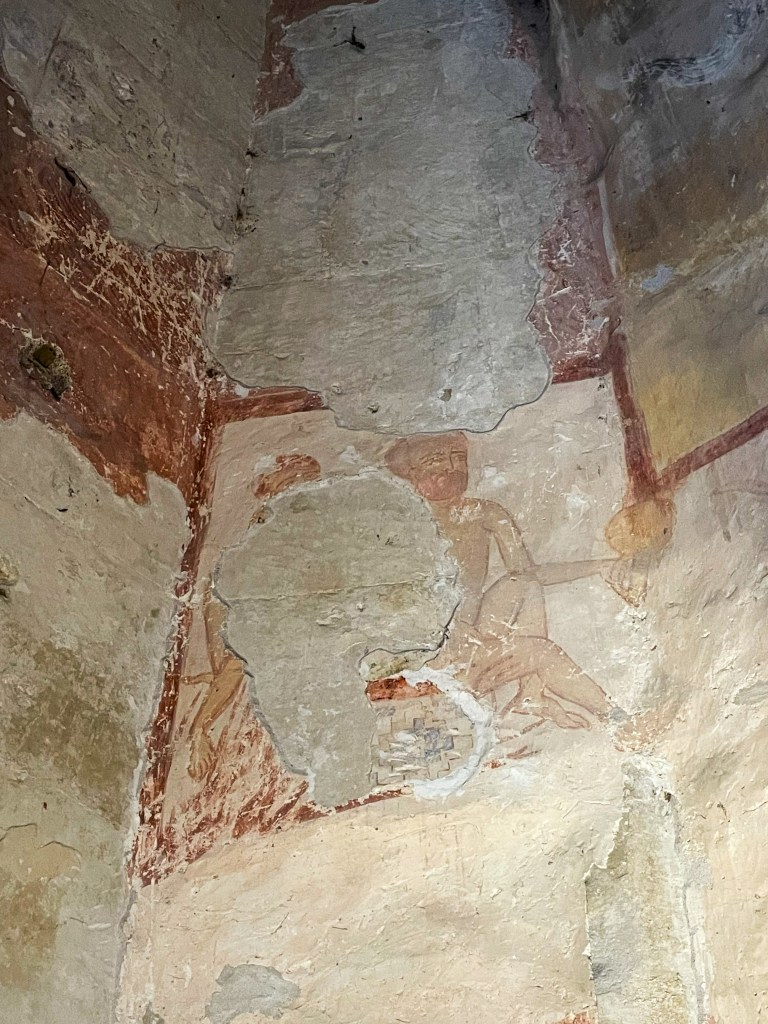

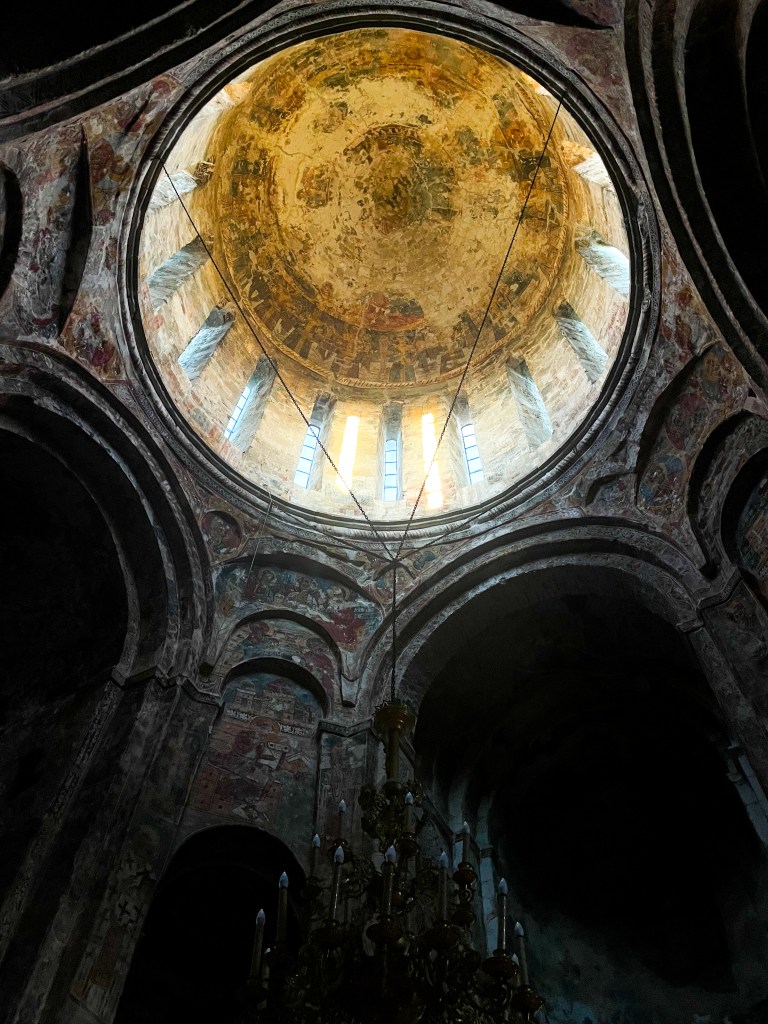
The monastery complex also includes a smaller 2-story church north of the cathedral, known as the Chikovani Chapel after a noble family that ruled Mingrelia from the late 17th century until the late 19th century. It has a cross-domed structure and is probably dated to the 10th century.
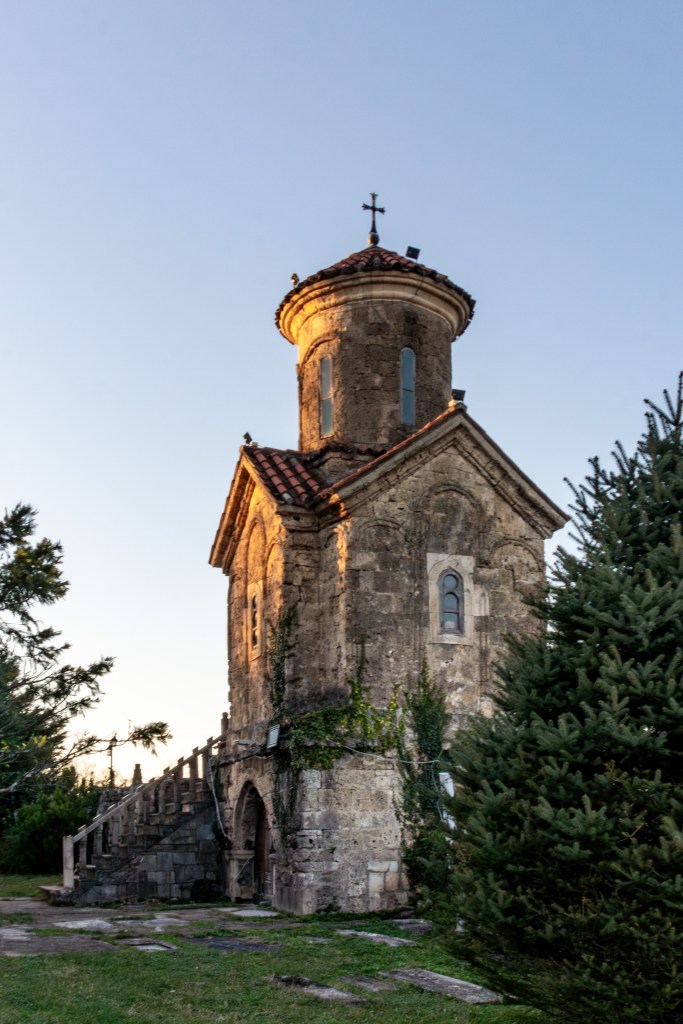
There is a 3-story tower from the 11th century adjacent to the cathedral to the southwest. It was used to house hermits and functioned as such until the mid-19th century. After collapsing in 1922, the tower was restored in 1980. Nearby, there is a contemporary bell tower.
Sources and Further Reading
Aladashvili, N. Monumental’naya skul’ptura Gruzii: Figurnye reliefy V–XI vekov [Monumental Sculpture of Georgia: Figural Reliefs of the 5th–11th Centuries]. Moscow, 1977. [in Russian]
Chubinashvili, G. Pamyatniki tipa Dzhvari [Monuments of the Jvari Type]. 1948. [in Russian].
Chikhladze, N. Martvili Cathedral: Fragments of Murals in the Palaeologan Artistic Style, in: P. Skinner, D. Tumanishvili, A. Shanshiashvili (Eds.), Proceedings of the International Symposium of Georgian Art, Tbilisi, Georgia, pp. 277–279.
Khoshtaria, D. Medieval Georgian Churches: A Concise Overview of Architecture. Tbilisi, 2023.
Khoshtaria, D. Martvili. Published online by Atinati, 30 September 2024. Available at ATINATI
text and photos by Elena Lisitsyna
 bureau MARKA