
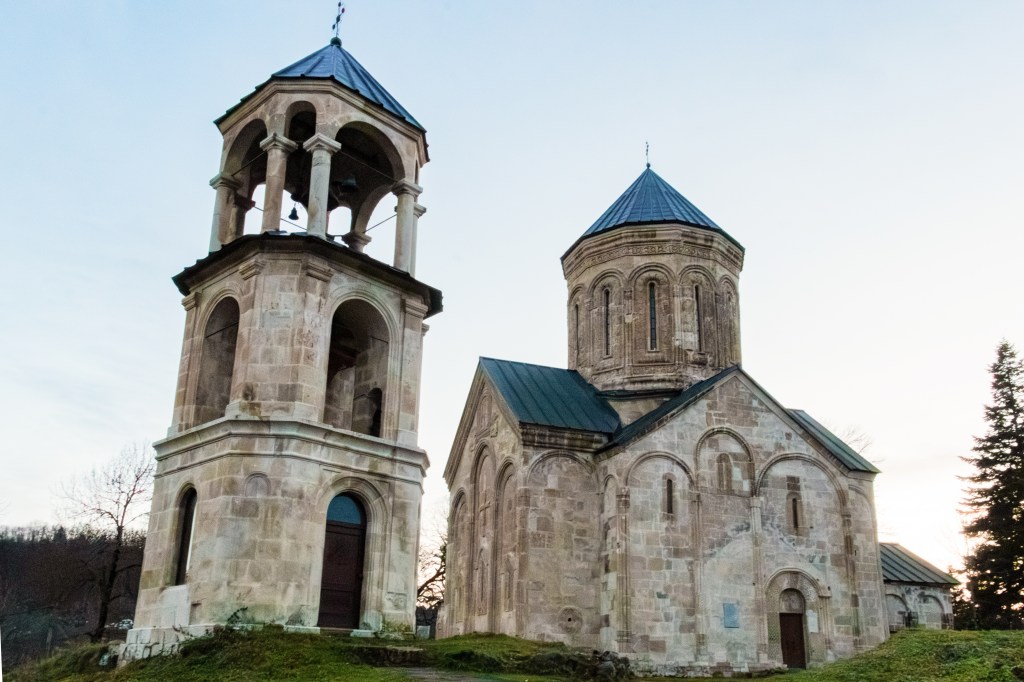
1010–1014
location: 42.46024033140857, 43.09071769886861
The Church of St. Nicholas is located in the village of Nikortsminda, in the Racha region. According to an inscription on its western façade, the church was constructed during the final years of King Bagrat III’s reign, in 1010–1014. Despite 16th century restorations, the church has largely preserved its original form. Notably, the dome of Nikortsminda is one of the few examples from this period where the initial 11th-century structure has been retained, even though it suffered damage from earthquakes. A three-story bell tower, standing next to the church, was added in 1863.
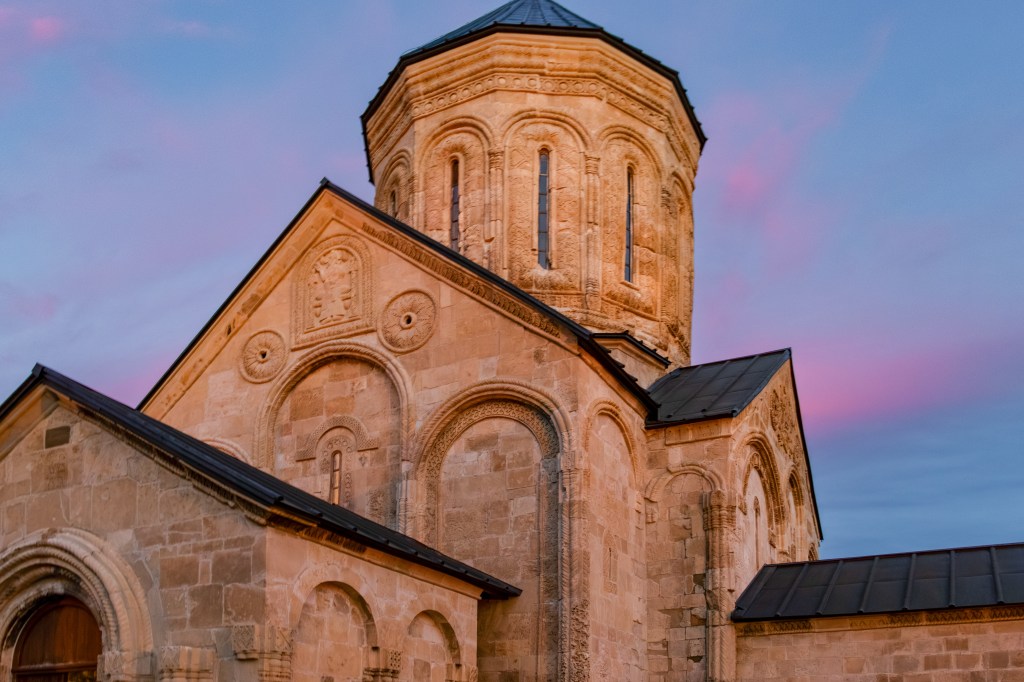
Nikortsminda Church has a distinctive architectural structure. Externally, it appears as a cross-domed building.
Internally, however, its design is unique: five apses are arranged radially around the central bay under the dome, with a sixth rectangular arm extending on the western side.
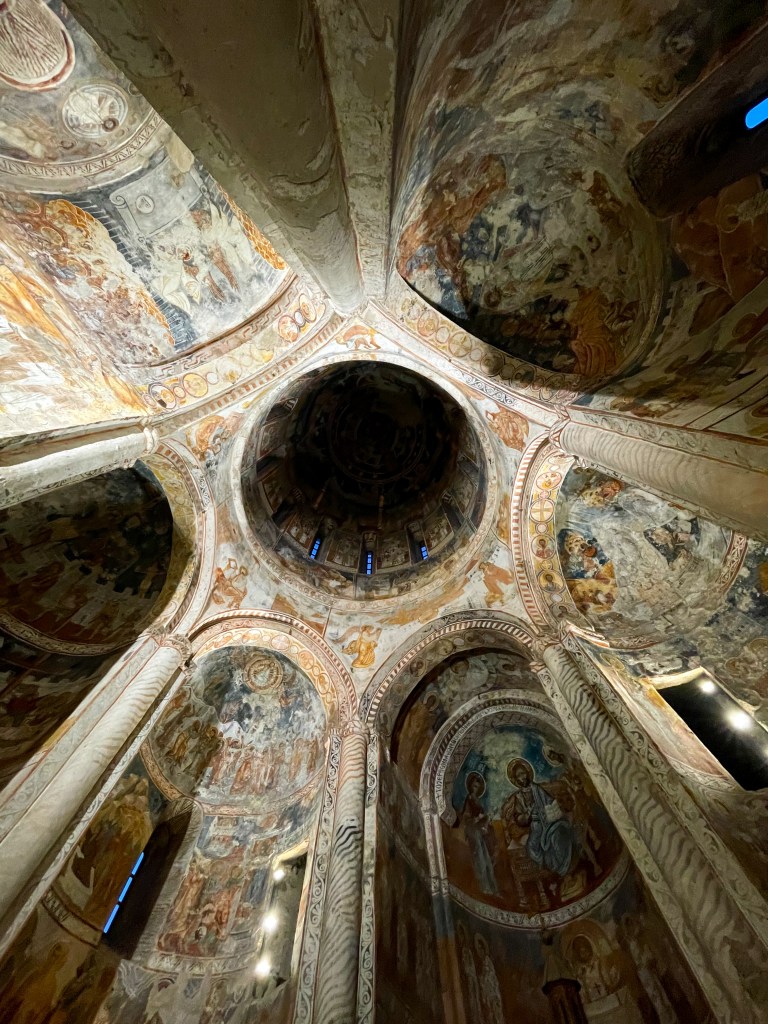
Similar to the Jvari-type tetraconchs, four small pastophoria are located in the corners. However, unlike tetraconchs, Nikortsminda features two apses on both the southern and northern sides, rather than just one. Later, southern and western porches were integrated into the church’s body.
This almost hexafoil (i.e., a design with six semicircular petals stemming from a central circle) centralized domed church design emerged in Georgian ecclesiastical architecture in the 10th and early 11th centuries. Several churches share a similar hexafoil plan, with six apses radiating from a central hexagonal bay. Examples include the Church of Katskhi in Imereti and the church in the Bochorma Fortress in Kakheti. However, unlike Nikortsminda, these churches’ hexafoil plans are evident externally, as their ground plans are inscribed in dodecagons (i.e., polygons with 12 sides and angles). In contrast, Nikortsminda’s architecture leans towards the more widespread Georgian church designs of the time, with rectangular ground plans that conceal its six apses.
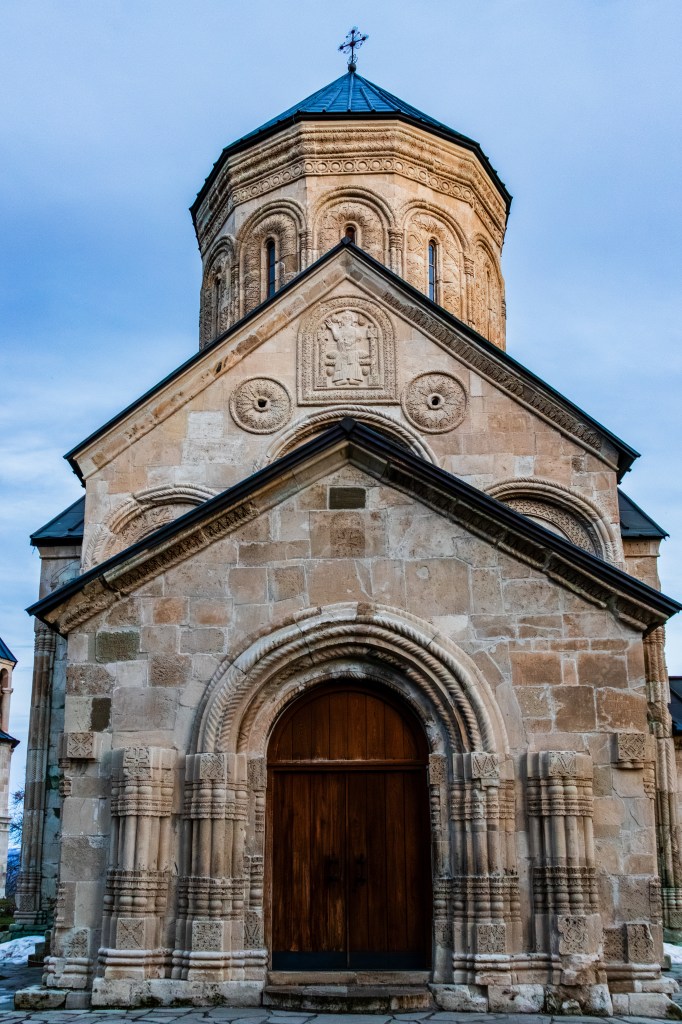
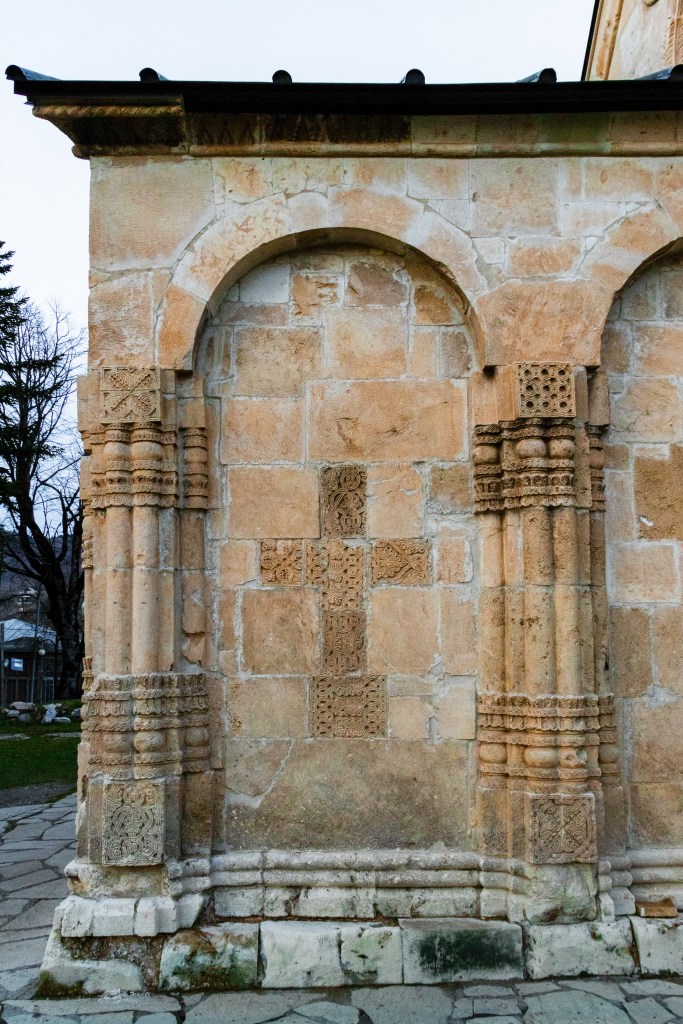
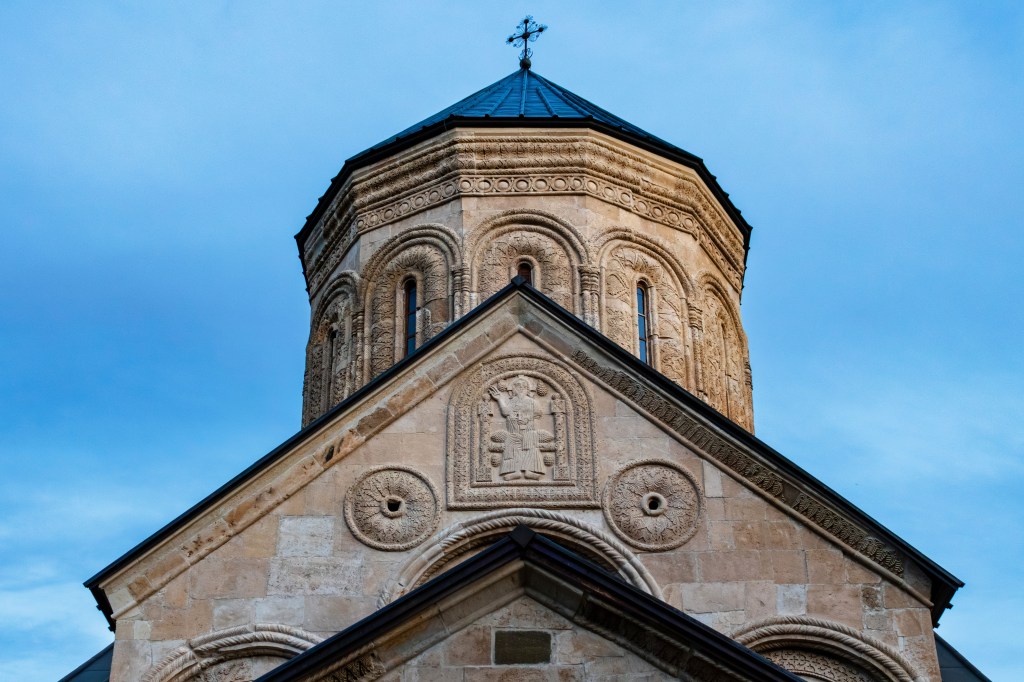
What distinguishes the Nikortsminda church is its richly decorated façades, adorned with blind arches and various stone reliefs, including both patterns and figural compositions. While ornamental decorations cover the entire exterior, sculptural figures are concentrated in the upper sections.
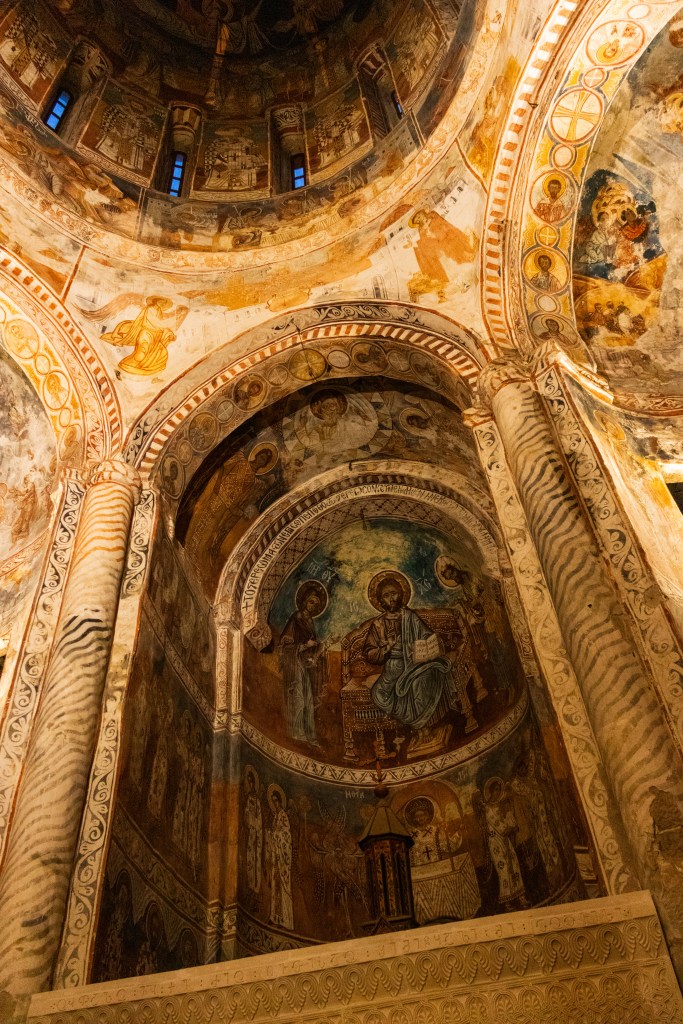
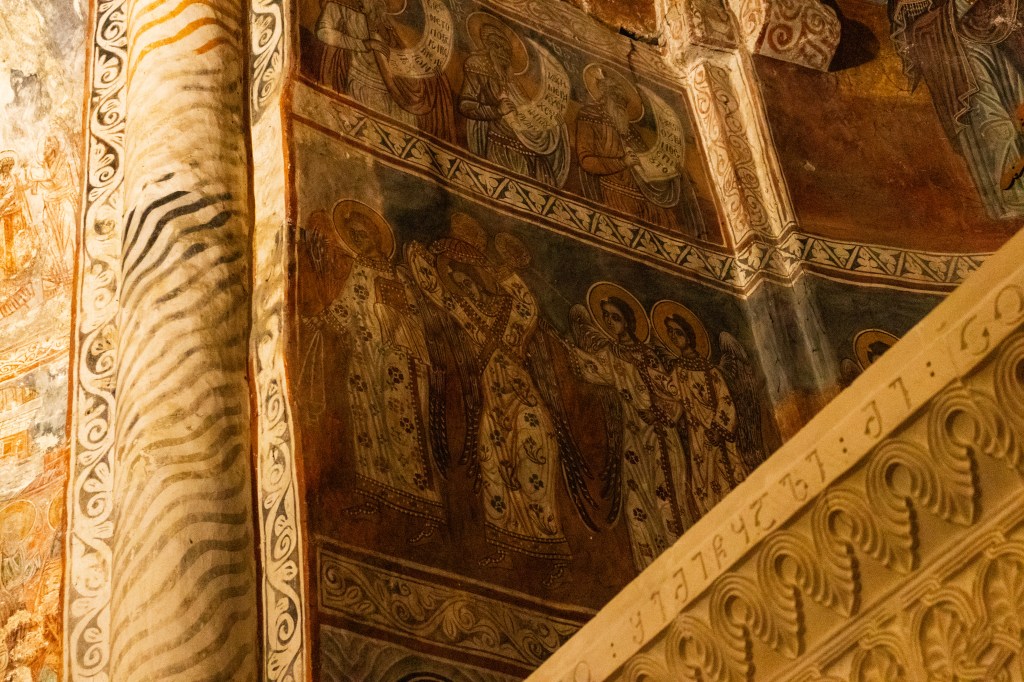
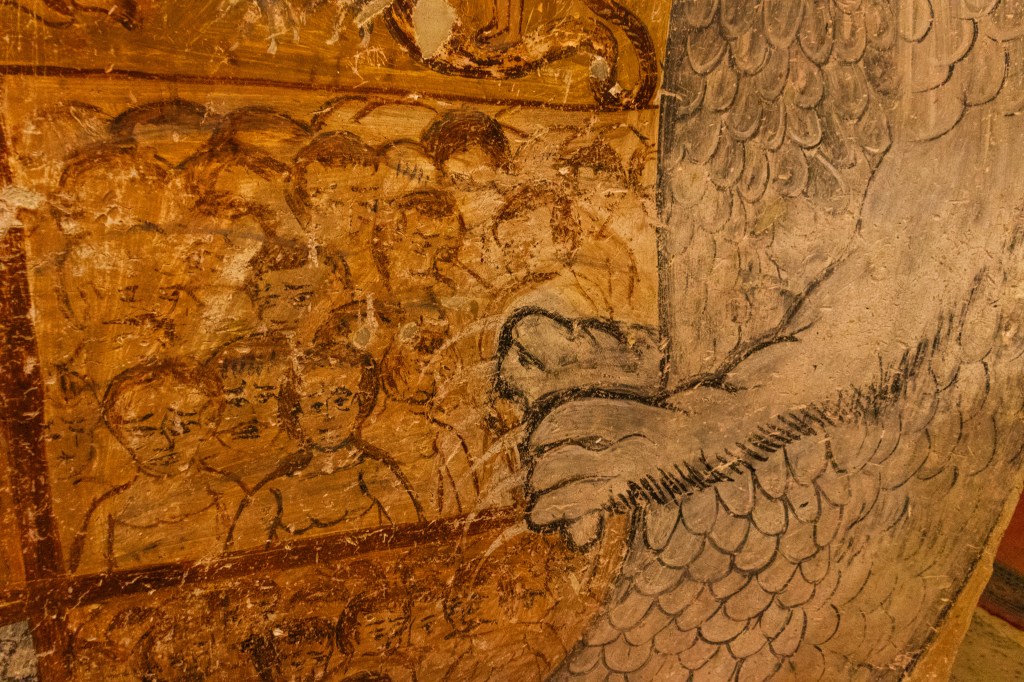
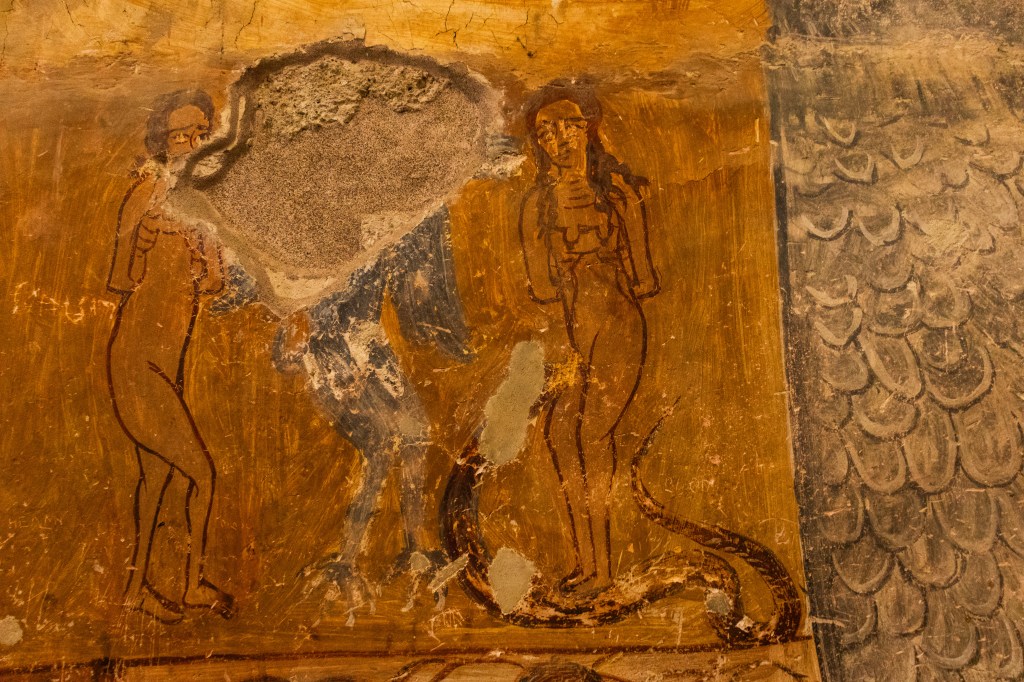
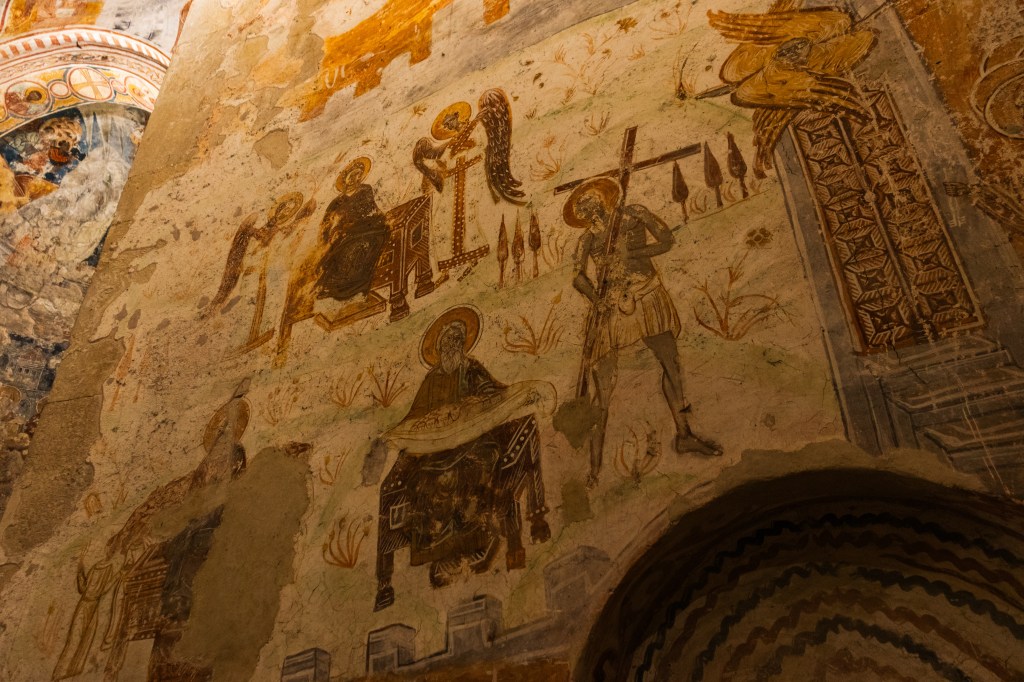
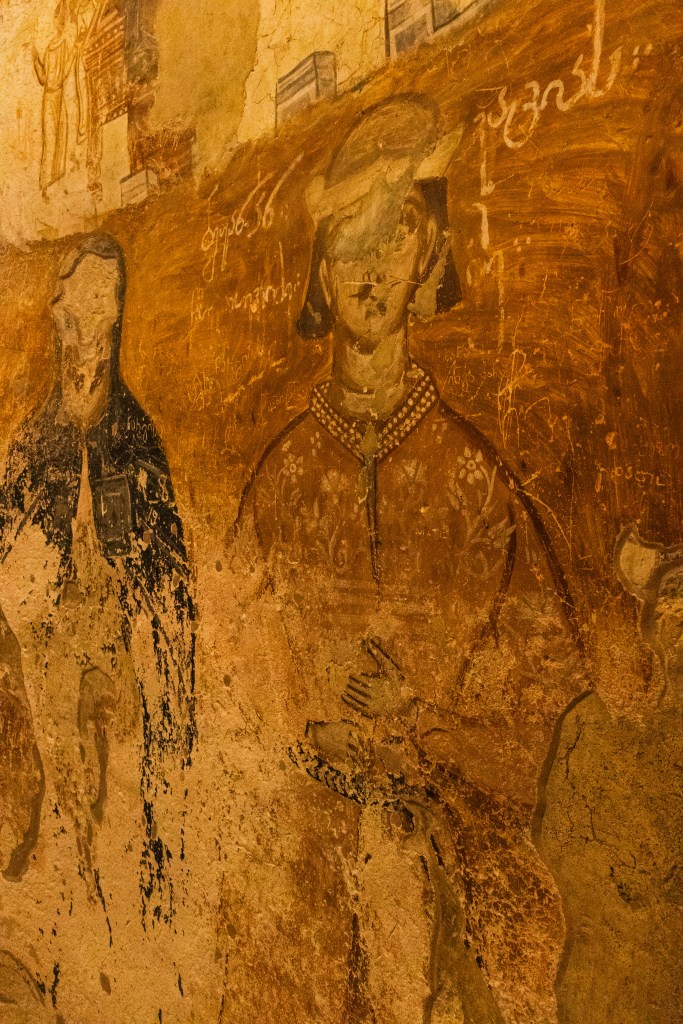
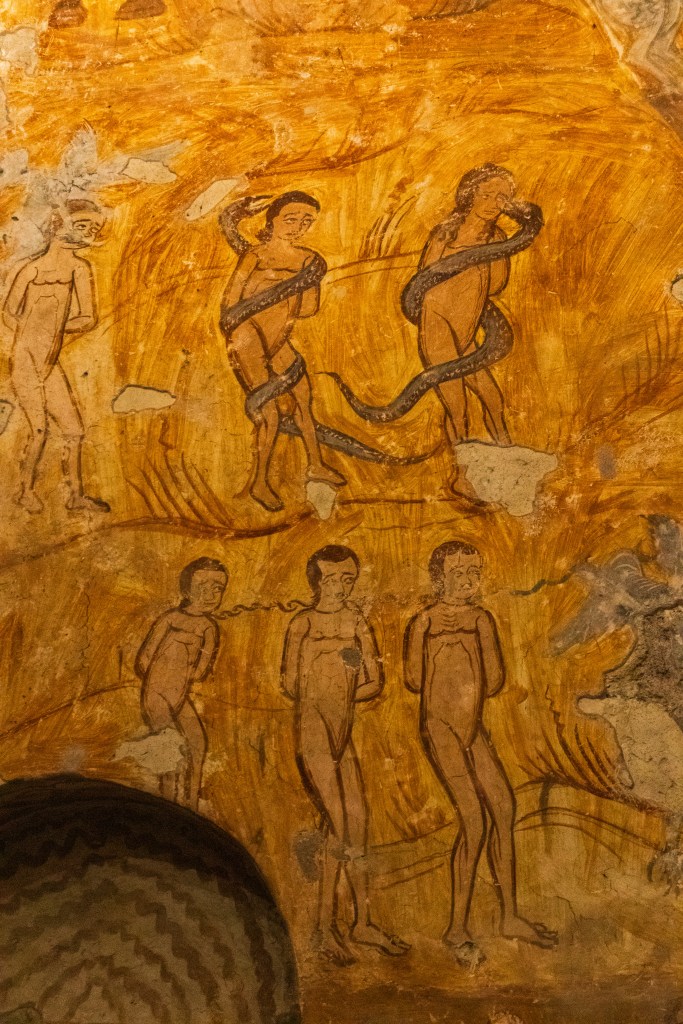
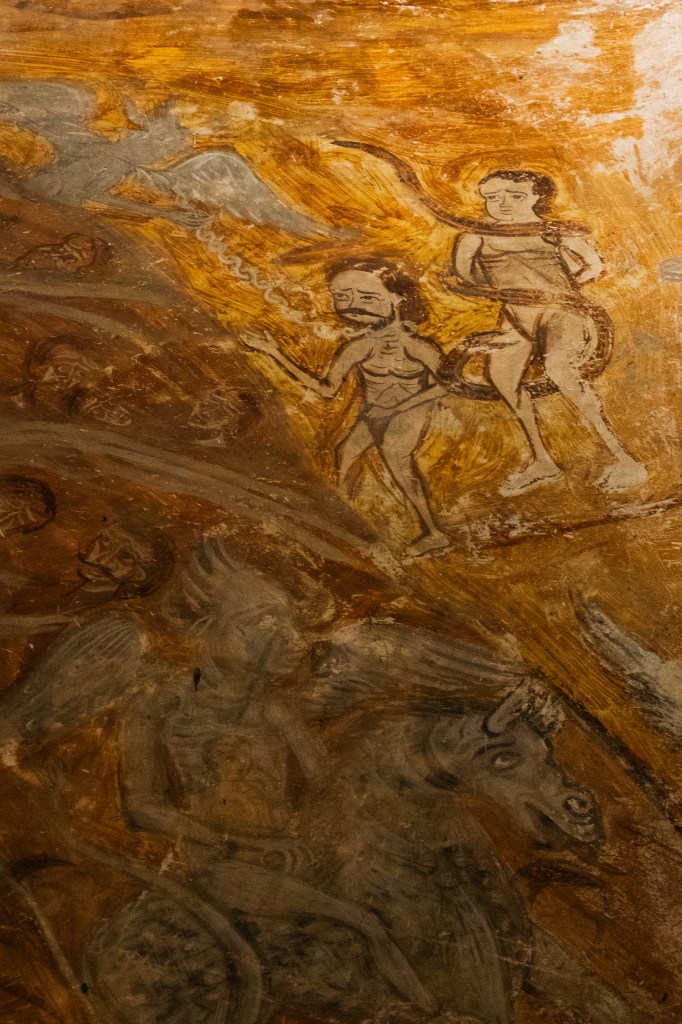
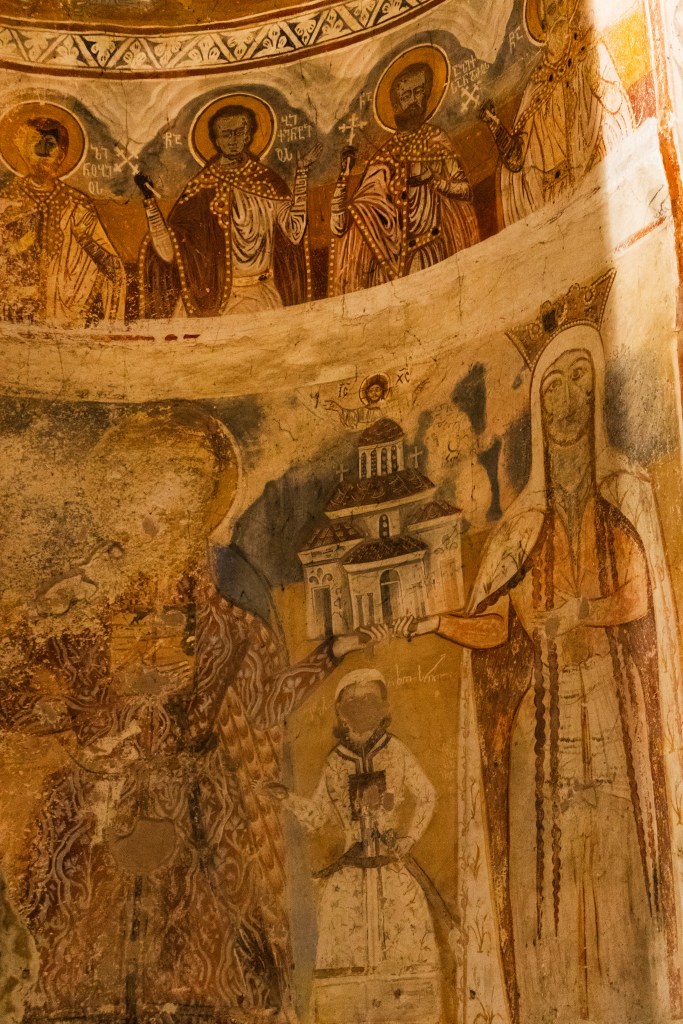
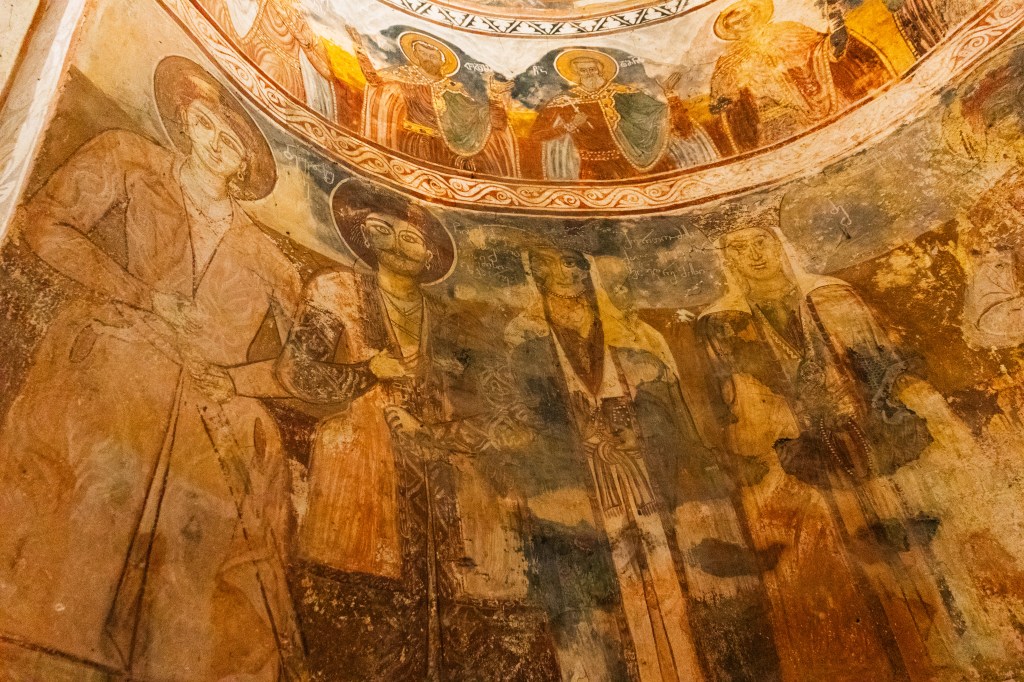
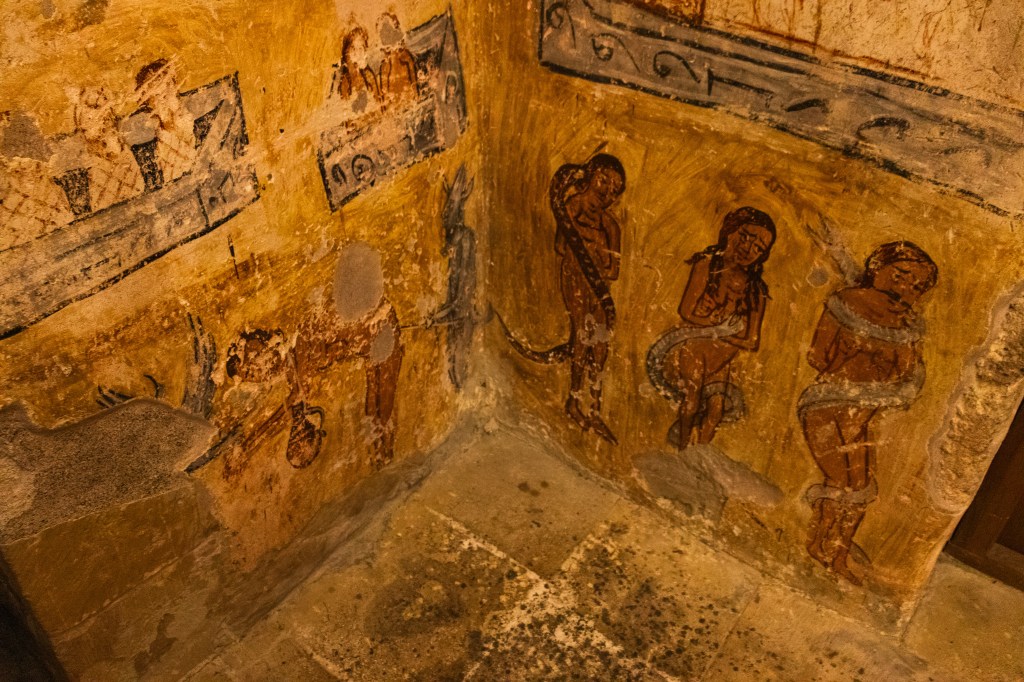
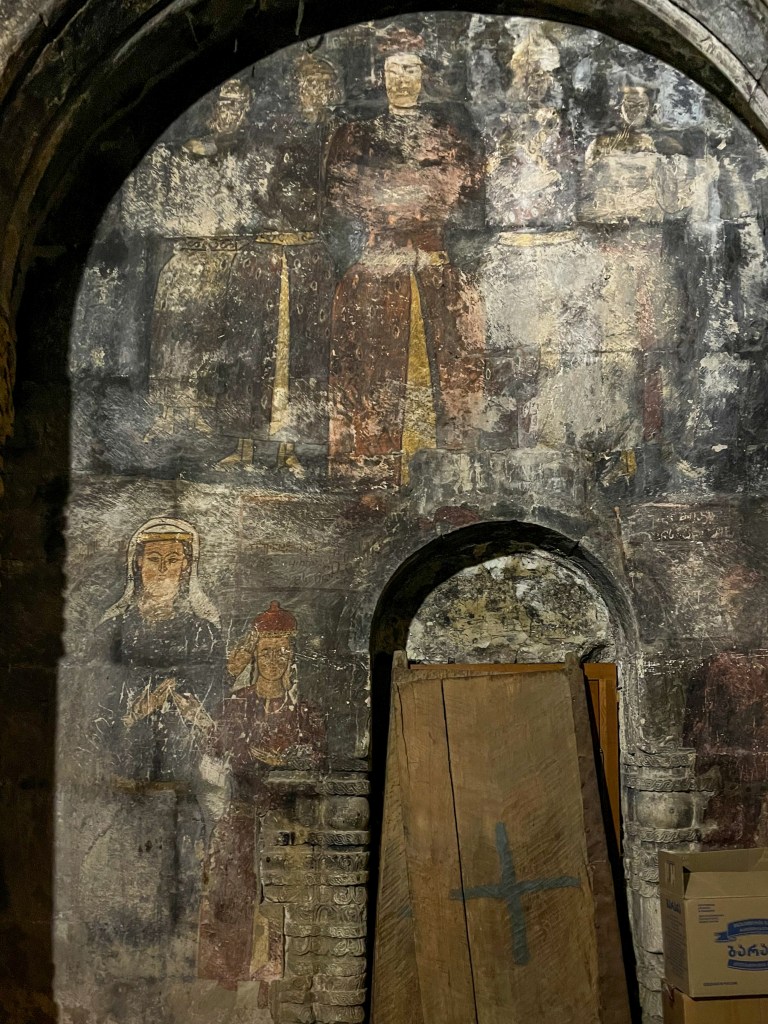
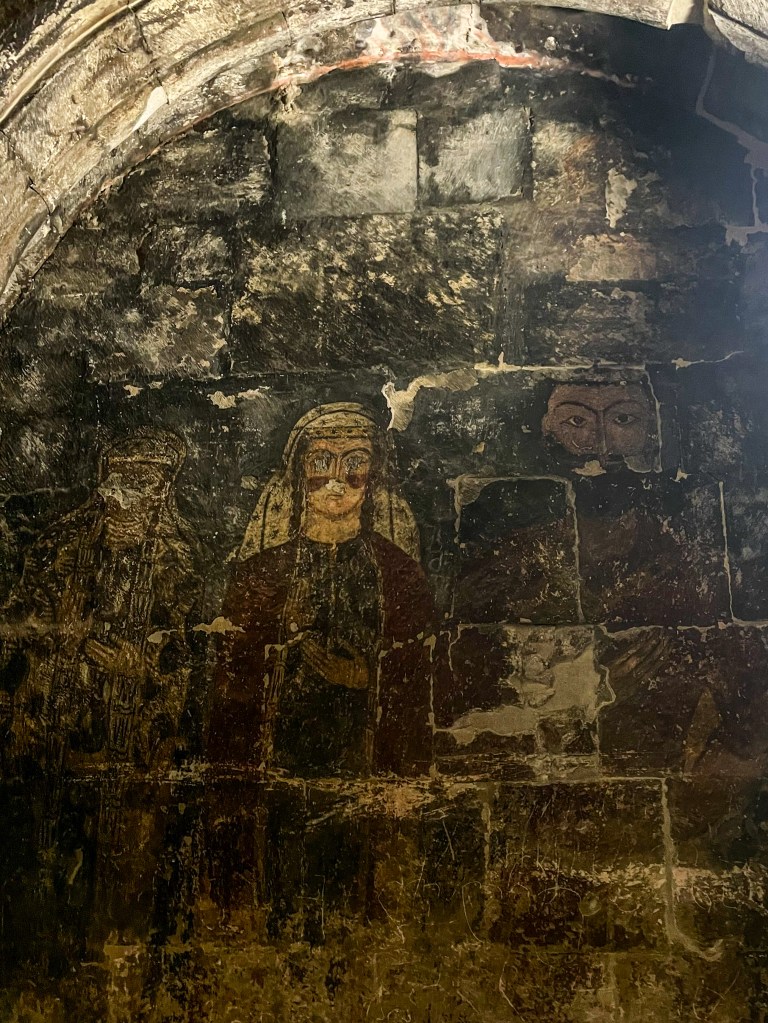
The intricate interior wall paintings were not part of the original design. These murals, which cover the entire church space, date to the 17th century, a period when significant restoration was undertaken. Parts of these frescoes were renovated in the 18th and 19th centuries. The frescoes also feature portraits of local nobles from the Tsulukidze family.

Since 2007, Nikortsminda Church has been included in UNESCO’s Tentative List.
Sources and Further Reading
Khoshtaria, D. Medieval Georgian Churches: A Concise Overview of Architecture. Tbilisi, 2023.
Mikeladze, K. Nikortsminda Church of St. Nicolas. Available at ATINATI
text by Elena Lisitsyna
 bureau MARKA