
also known as Treaty of Georgievsk Monument, Friendship of Peoples Arch, or Gudauri Panorama

location: 42.4927560559365, 44.455200432339446
architect: Giorgi Chakhava (project by Zurab Tsereteli)
date: 1983
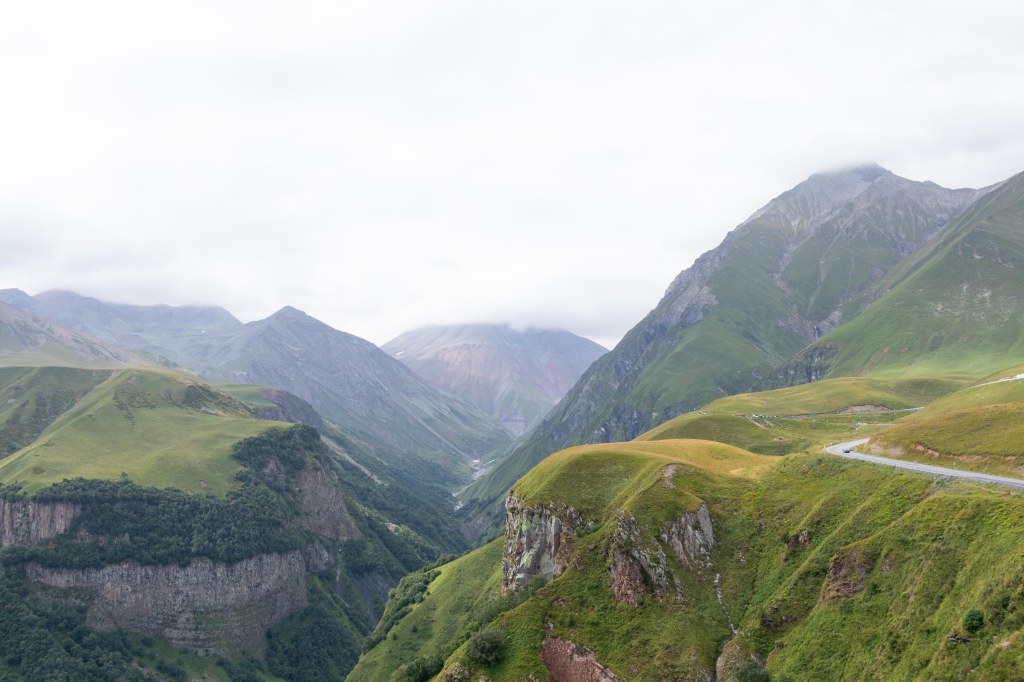
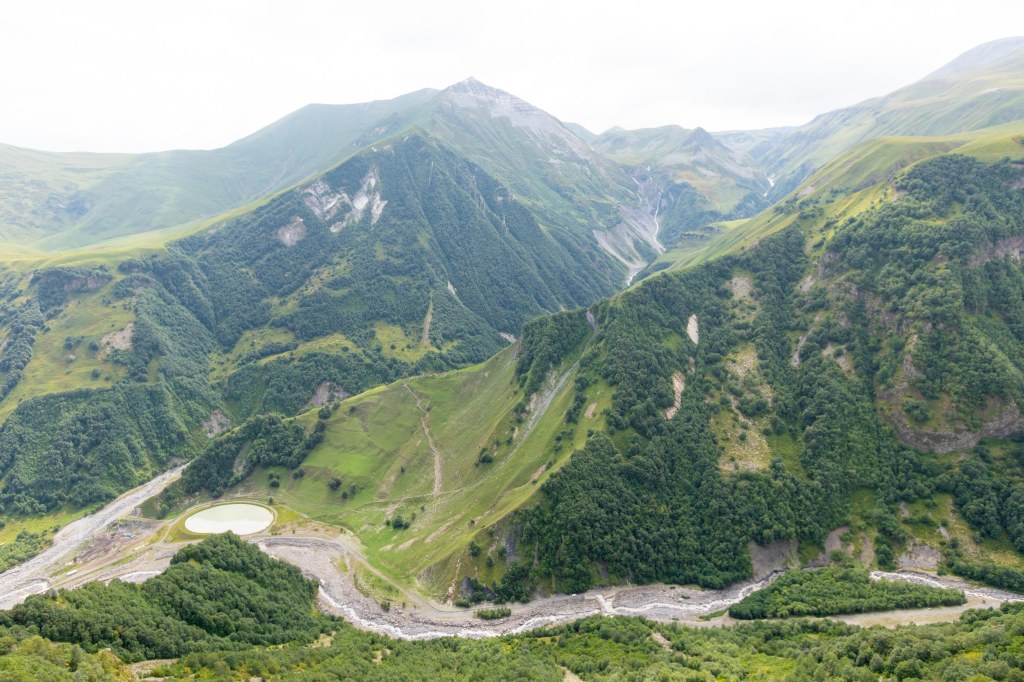
The Russia–Georgia Friendship Monument, or the Friendship Arch remains one of the most iconic sites along the Georgian Military Highway. It stands on the edge of a dramatic cliff at 2,384 meters high, just north of Gudauri, offering panoramic views over the surrounding Caucasus Mountains. The monument was constructed in 1983 to commemorate the bicentennial of the Treaty of Georgievsk, an agreement that in 1783 established the Kingdom of Kartli-Kakheti as a protectorate under the Russian Empire. The Arch project was designed by Zurab Tsereteli, known for his large-scale monumental works, and Giorgi Chakhava, recognized for his complex architectural interventions in difficult terrain, such as his work on the Ministry of Automobile Roads.
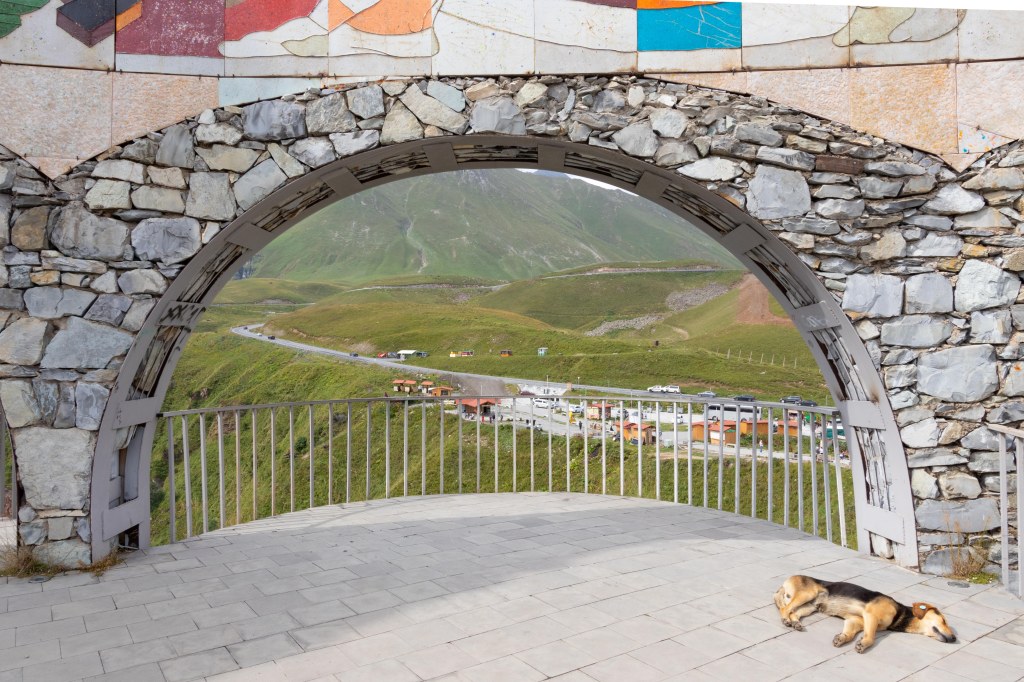
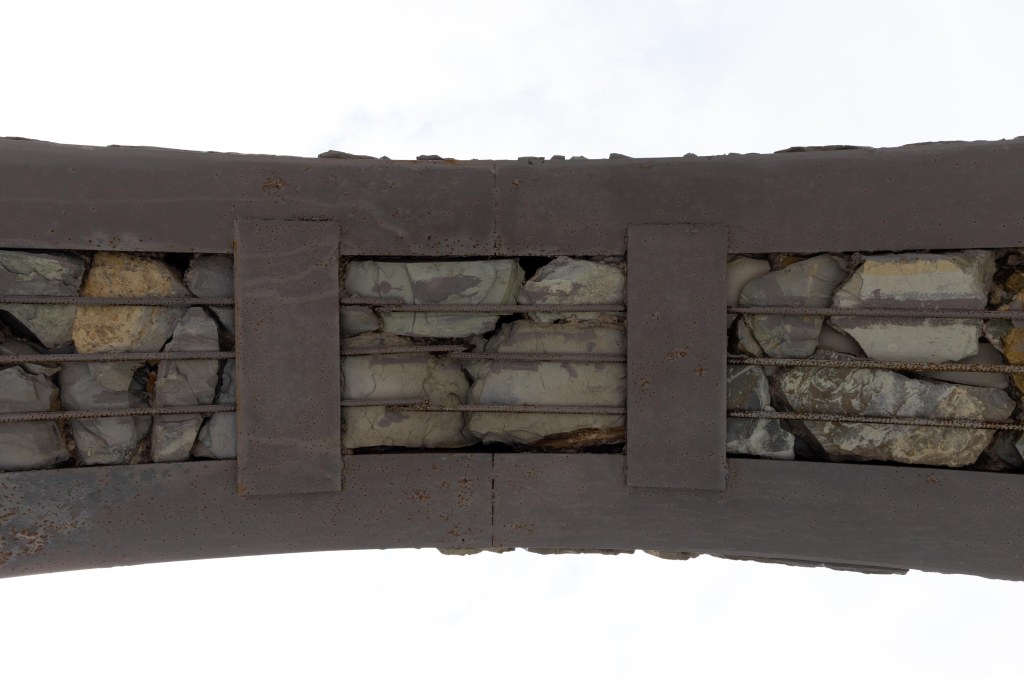
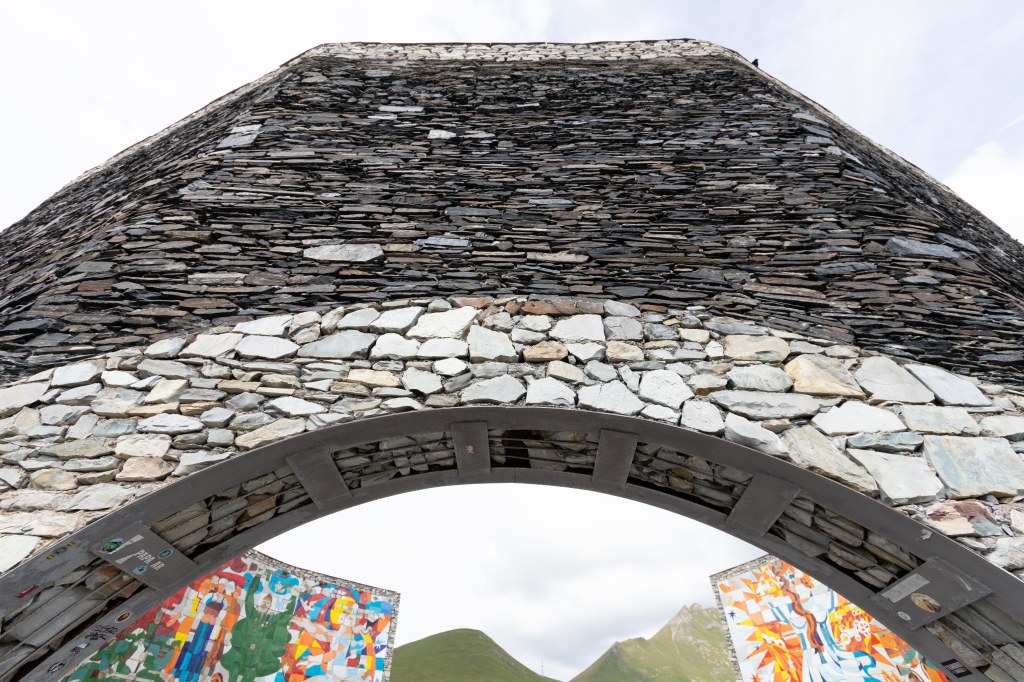
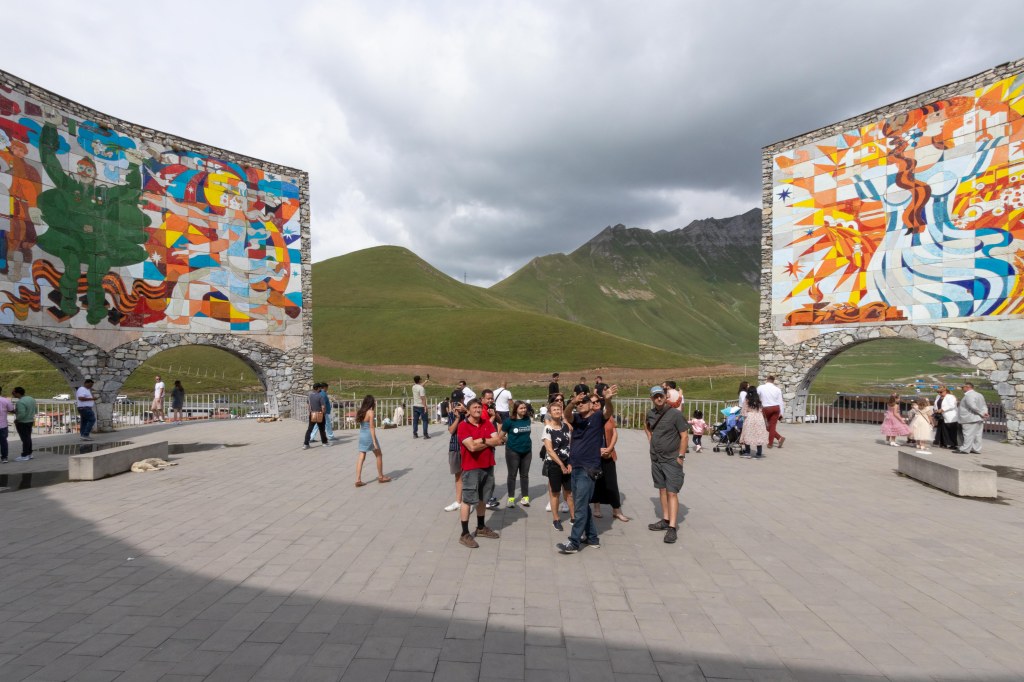
The Friendship Arch is not a traditional arch but a semi-circular structure, embodying elements of Soviet modernist and brutalist design. Despite its curved form, it is a permeable structure due to the presence of 12 smaller arches along the base, supported by metal tie rods that reinforce the stability of the structure from above. The arch features 12 balconies between its columns, some of which hang precariously over the cliff. The use of metal ties at the base, though subtle, ensures the monument’s structural integrity. Unlike many modernist buildings, which are typically constructed from concrete, the arch is built from numerous stones held together by mortar. The use of stone adds a tactile and organic feel to the structure, grounding its monumental scale in the natural landscape. This material choice creates a reference to traditional Georgian buildings while the modernist form lends it a contemporary aesthetic.
The internal wall of the monument holds a colorful mosaic mural, created by artists Zurab Kapanadze, Zurab Lezhava, and Nodar Malazoni. The mural is divided into two parts: on the left, it depicts figures from Georgian history and mythology, while on the right, Russian characters are represented. At the center of the mural is the image of a mother holding her child, probably symbolizing future generations and the unity between the Russian and Georgian peoples. The mural also features lines from Shota Rustaveli’s 12th-century epic, The Knight in the Panther’s Skin: “A faithful friend will come to help a friend. He will fear no danger. He will give his heart for a heart, and love will be his guide.” The vibrant visual style of the mural, rich in symbolism and allegory, contrasts with the otherwise austere and minimalist form of the arch itself.
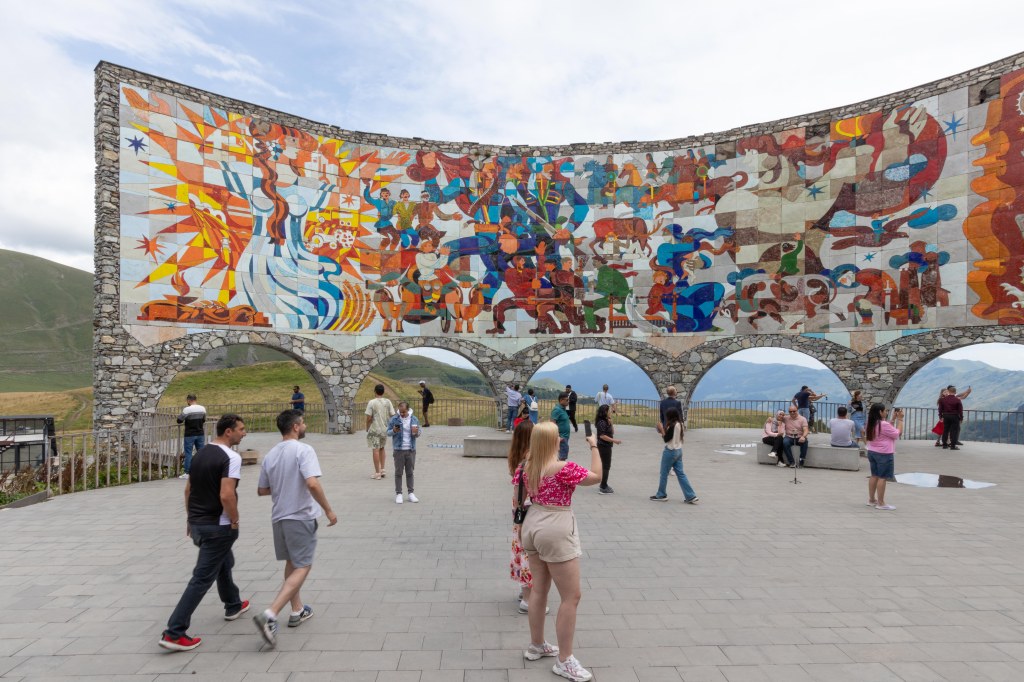
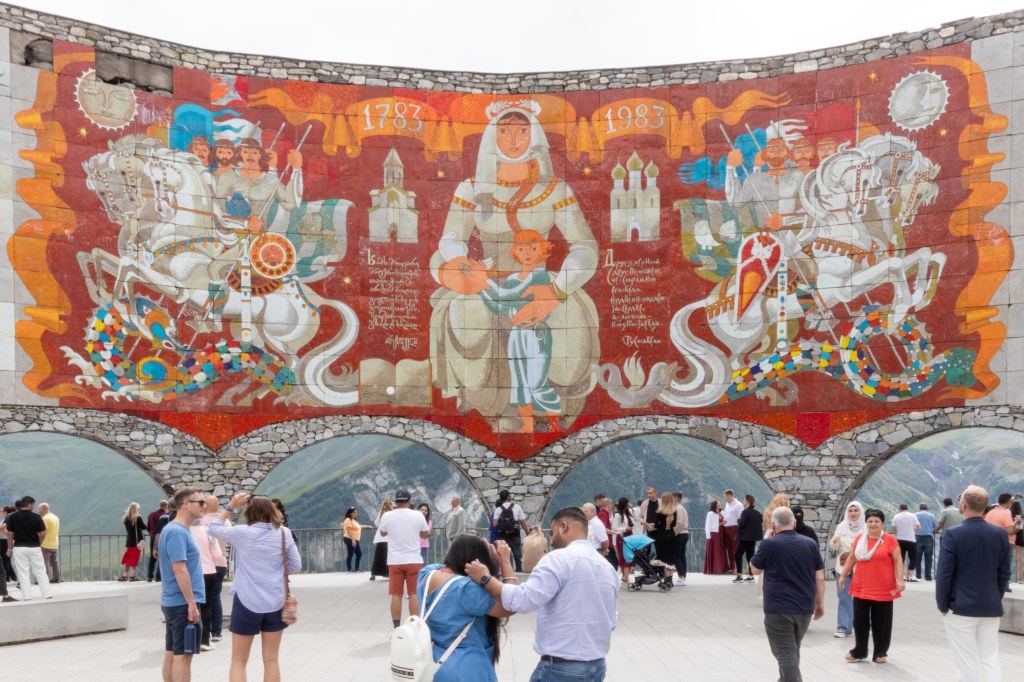
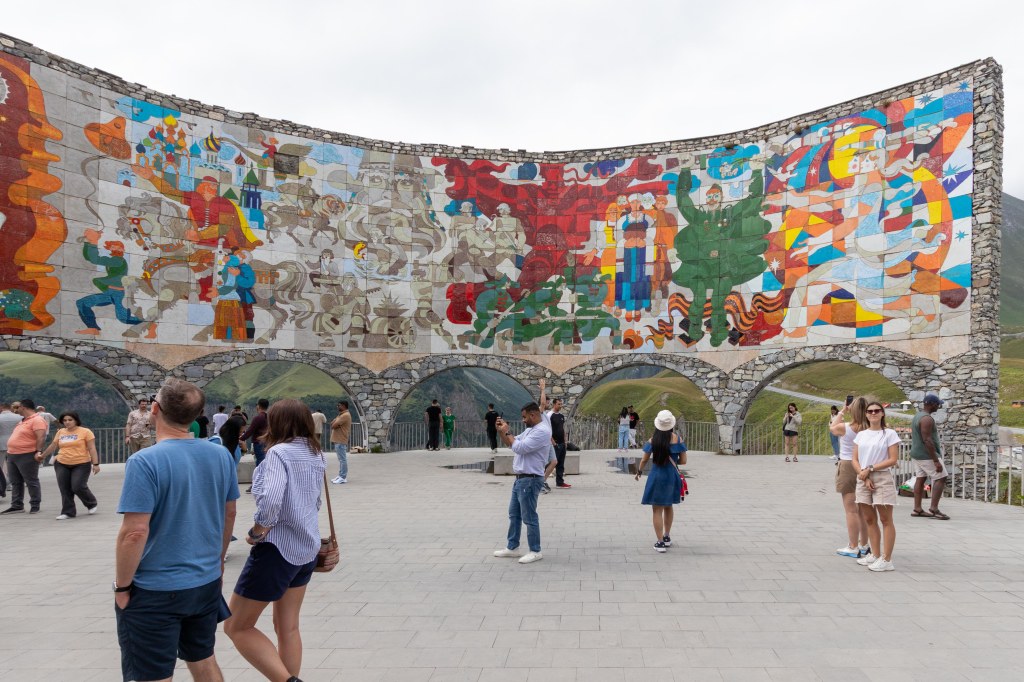
The Friendship Arch embodies late Soviet modernism in its integration of monumental architecture with narrative art. The bold semi-circular form, the sweeping openness beneath the structure, and the functional yet symbolic use of space reflect modernist principles of minimalism, functionality, and the rejection of excessive ornamentation. The mosaic serves not as decoration, but as an ideological narrative embedded in the structure. Its monumentality and integration with the rugged natural environment further emphasize the modernist nature of the design, making the arch a significant example of how structure and storytelling can merge into one cohesive experience.
Actually, the Friendship Arch was one of three monuments created to commemorate the bicentennial of Russian-Georgian relations. In the same year, another monument by Zurab Tsereteli, Friendship Forever, was erected in Moscow, featuring a vertical stele where the Georgian and Russian alphabets intertwine to form words like “Peace,” “Labor,” “Unity,” and “Brotherhood.” A third monument, also by Tsereteli, was installed at the outskirts of Tbilisi on the Georgian Military road leading to Russia. This monument featured a massive golden knot symbolically binding the fates of the Georgian and Russian peoples, with a scroll containing the text of the Treaty of Georgievsk. However, this monument, known as the Knot of Friendship, was destroyed in 1991 by order of Georgia’s first president, Zviad Gamsakhurdia, as a symbol of the country’s independence.
In recent years, the Friendship Arch has shifted from a symbol of Soviet unity to a place of reflection, representing both the historic ties and ongoing tensions between Georgia and Russia. Restored by the Saxon company in 2017, the arch remains a popular destination for visitors, offering a scenic lookout and a distinctive example of late Soviet architecture and monumental art.
text by Elena Lisitsyna
 bureau MARKA