
location: 41.763967230980846, 44.7670904060439
architects: Shota Kavlashvili, Shota Gvantseladze
date: 1988
The photographs were provided by Pavel Ogorodnikov, who explores abandoned places in Georgia (IG: @pavelog) and curates an archive of Georgian mosaics (IG: @georgian_mosaic).
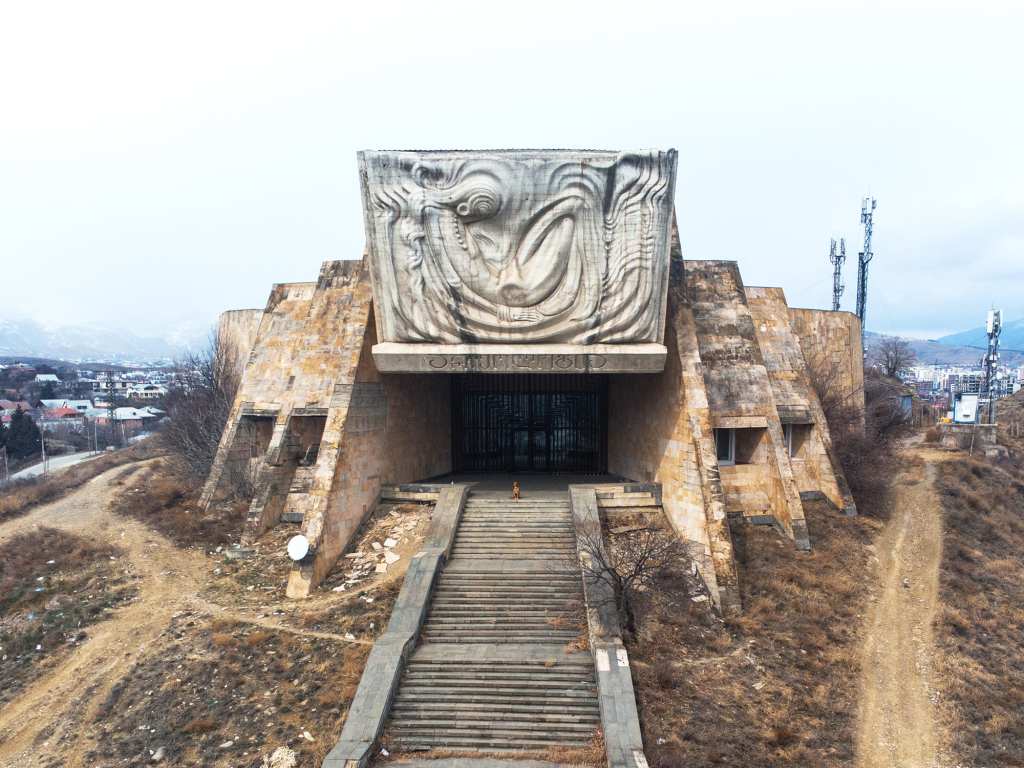
The Tbilisi Archaeological Museum was designed by the chief architect of Tbilisi, Shota Kavlashvili, together with the architect Shota Gvantseladze. Located in the Dighomi district in the western part of Tbilisi, this area has undergone significant development since the 1960s, with special attention to the sloping terrain in the 1980s. Notable projects from this period include the construction of Zurab Tsereteli’s 45-meter-high “Happiness to the Peoples” monument at the intersection of Grigol Robakidze Avenue and Davit Aghmashenebeli Alley, and plans for a tourist hotel and archaeological museum there.
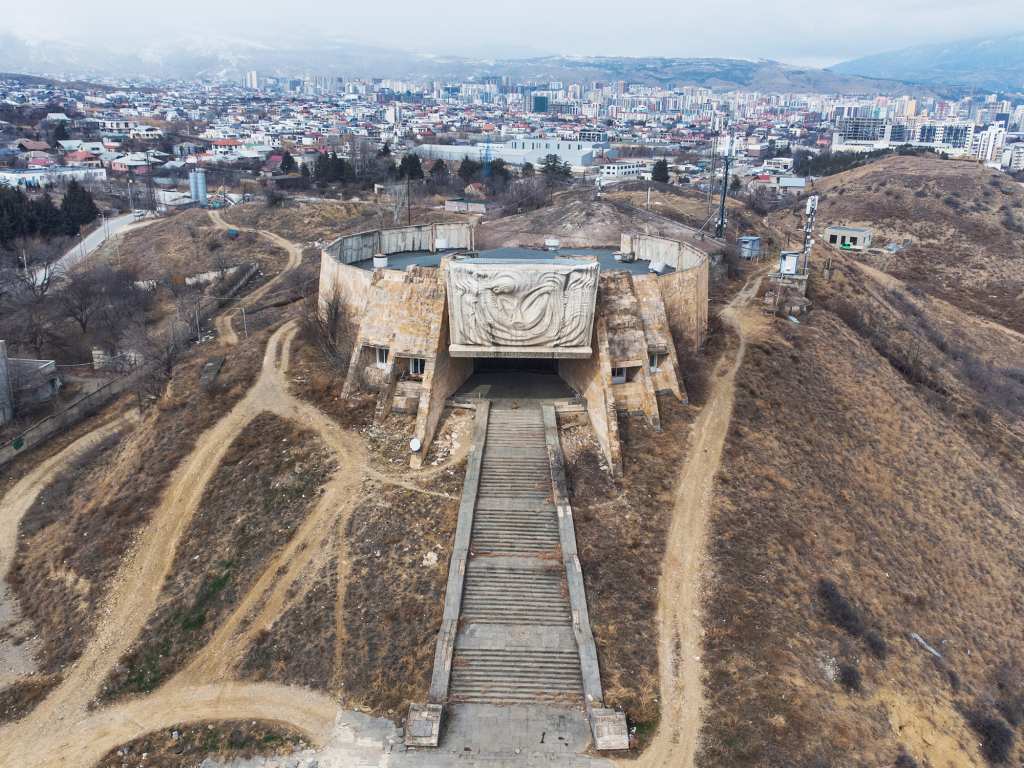
The location of the museum was chosen not only for its urban development potential, but also for its proximity to the Treli burial mound, a significant archaeological site dating from the late 2nd to early 1st millennium BC. The museum building itself is an example of adaptive reuse, utilizing an elongated cylinder that was originally a water reservoir. Of the three reservoirs originally present, two remain unused. This design choice distinguishes the museum from many modernist projects that emphasize open spaces; conversely, the Archaeological Museum is an intentionally closed structure. The entrance, located inside the first cylinder, resembles a cave found in ancient mountain settlements. In addition, the building is clad in yellow Bolnisi tuff, further distinguishing it from the typical modernist reliance on concrete as the primary building material.
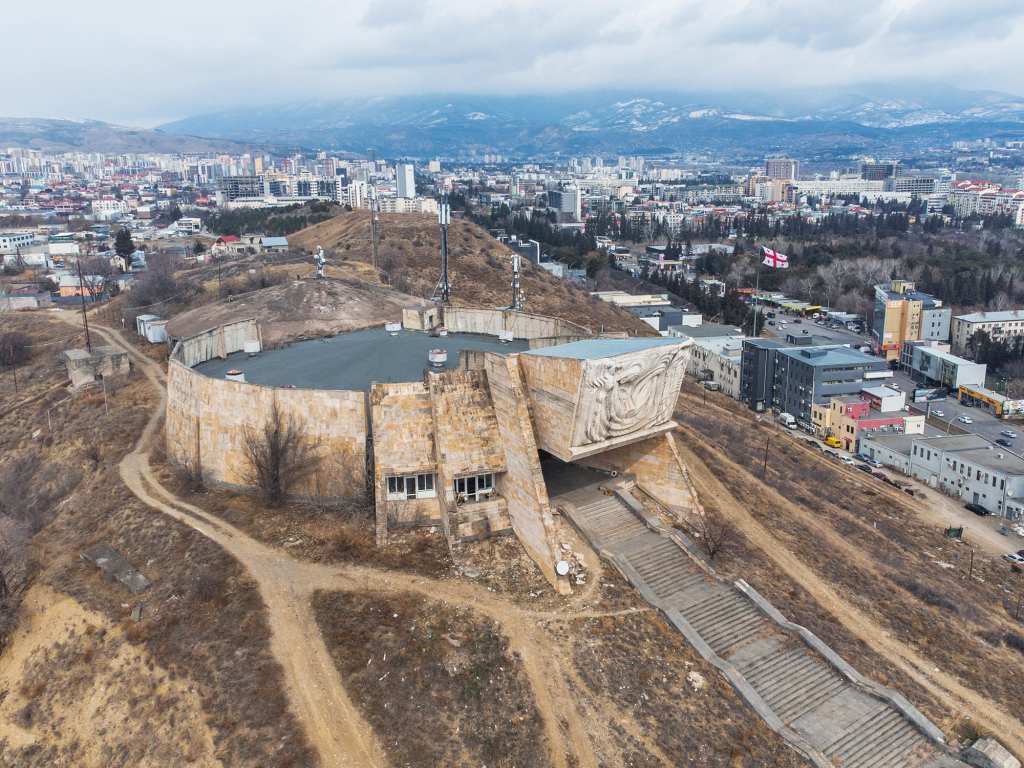

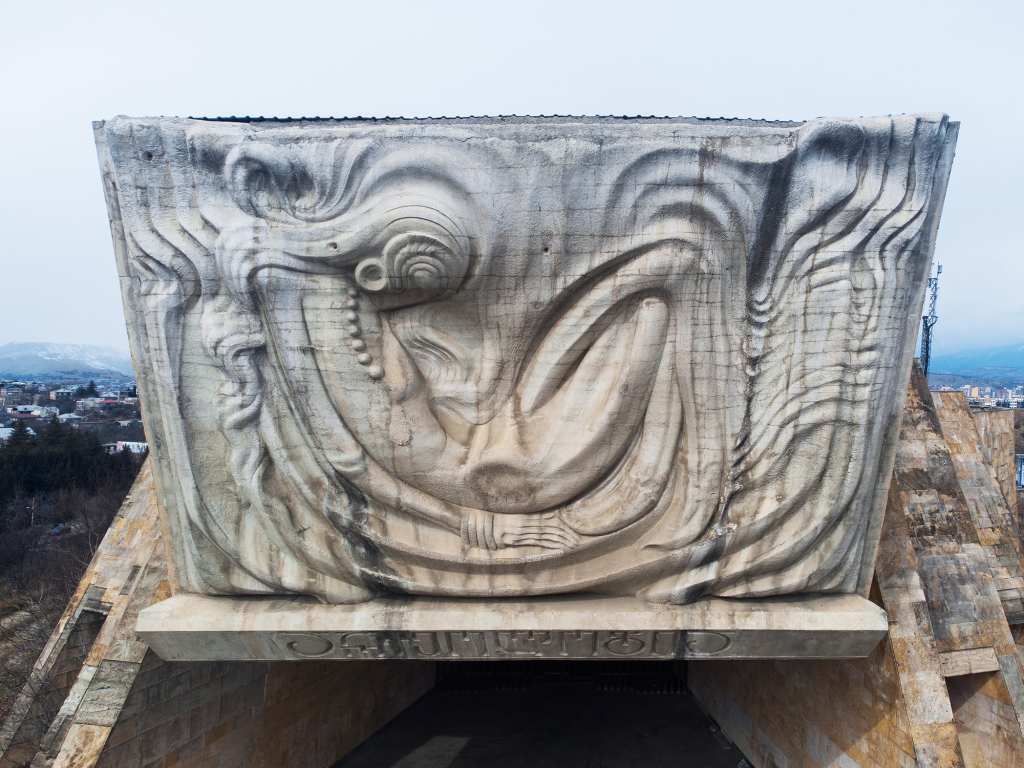
Flanking the entrance, the cylindrical form is symmetrically complemented by buttresses that serve the practical purpose of protecting the walls from external forces. This design reinforces the building’s fortress-like appearance, which is organically in line with the museum’s theme of archaeology, as it metaphorically protects its exhibits and immerses visitors in the narrative of a dark and largely unknown ancient past. The entrance is also adorned with a massive bas-relief by Tengiz Kikaleshvili depicting an individual in an ancient burial scene. As a result, the entire complex, perched on a hill, resembles a fortress or ancient temple when viewed from Grigol Robakidze Avenue.
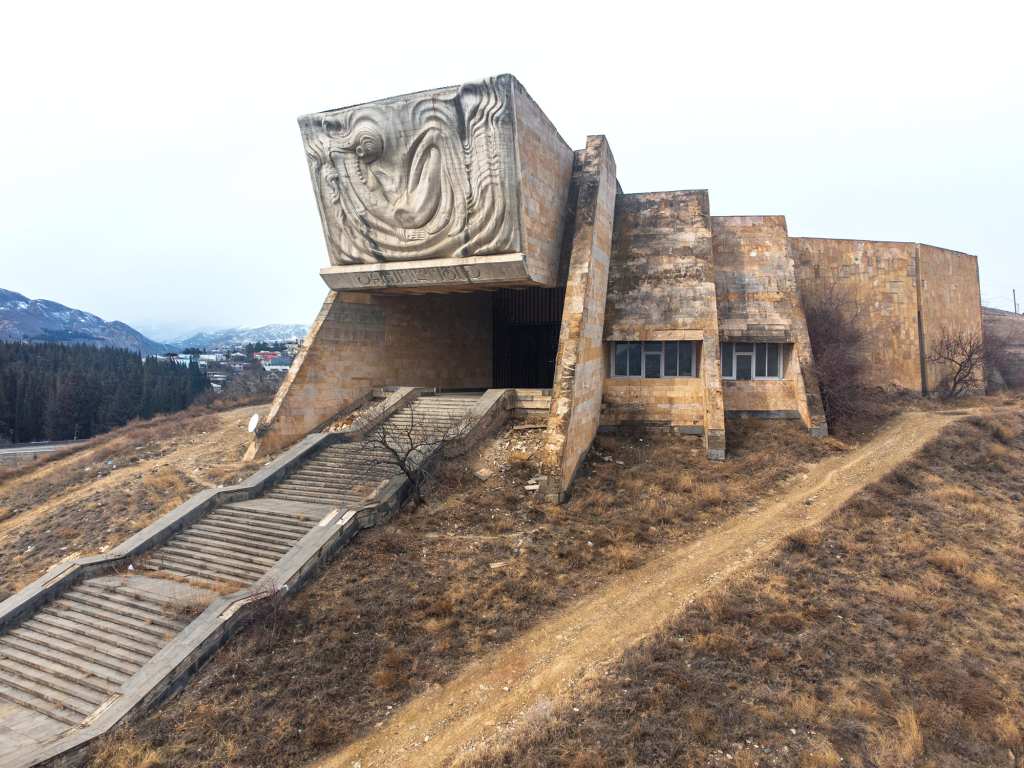
Despite its imposing architecture, however, the museum has not functioned as intended for many years. Since the 1990s, it has served primarily as a storage facility for some 10,000 artifacts discovered during archaeological excavations in Tbilisi, dating from the 5th century BC to the feudal period. The museum building has fallen into disrepair, despite official claims of ongoing renovations. Nearby, the “Happiness to the Peoples” monument collapsed in the early 1990s and was replaced by a bronze statue of Saint Nino in 1994.

text by Elena Lisitsyna
photos by Pavel Ogorodnikov
 bureau MARKA