

location: 41.717369770878015, 44.72773430709432
architects: Shota Kachkachishvili, Zurab Kopaladze, Bidzina Maminaishvili, Nodar Mgaloblishvili, Aleksandre Sabashvili, Devi Chopikashvili
date: 1971
The construction of the new campus of Tbilisi State University near the western edge of the city, beyond the Saburtalo cemetery, marked one of the largest modernist endeavors of the 1970s-1980s. Spanning 240 hectares across both sides of the Vere River, in the Saburtalo and Bagebi districts, the complex was designed to accommodate 8,000 students. The Saburtalo side, with its more accessible and stable terrain, housed academic and administrative buildings, while the student dormitories were positioned on the opposite bank.
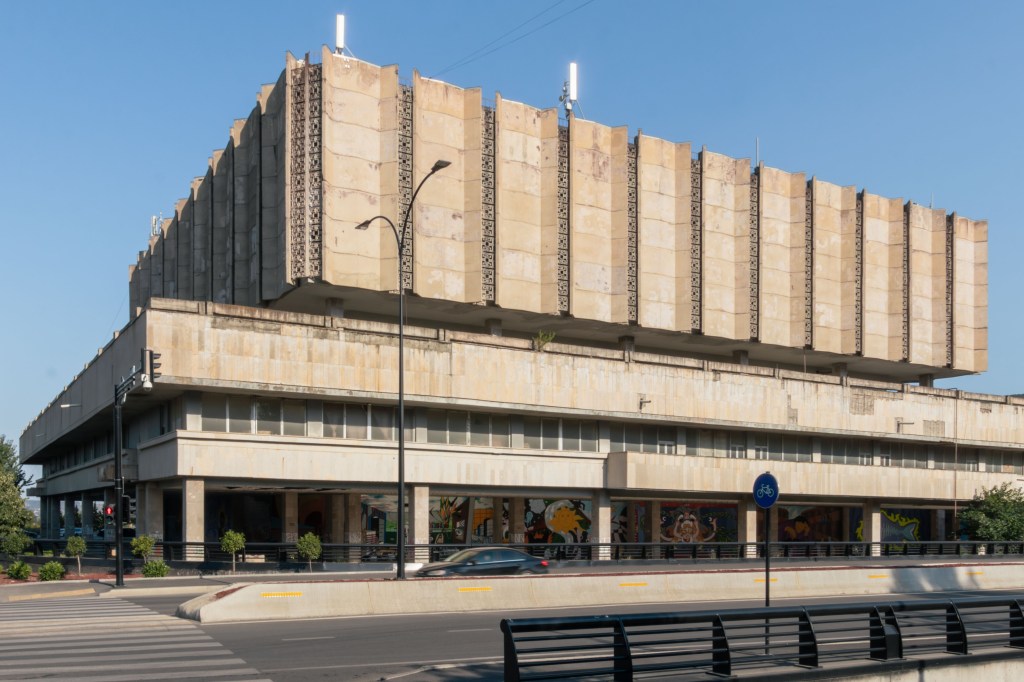
The project was ambitious, encompassing a wide range of facilities: a rectorate, a museum, a 1,300-seat auditorium, a dining hall, sports complexes, biological and meteorological stations, and laboratories. The academic buildings followed a unified design model: three- to four-story blocks arranged around internal courtyards. In line with modernist principles, particularly the ideas of leaving the ground floor open to blend indoor spaces with the natural environment, these structures sought to integrate the courtyards with their surroundings.
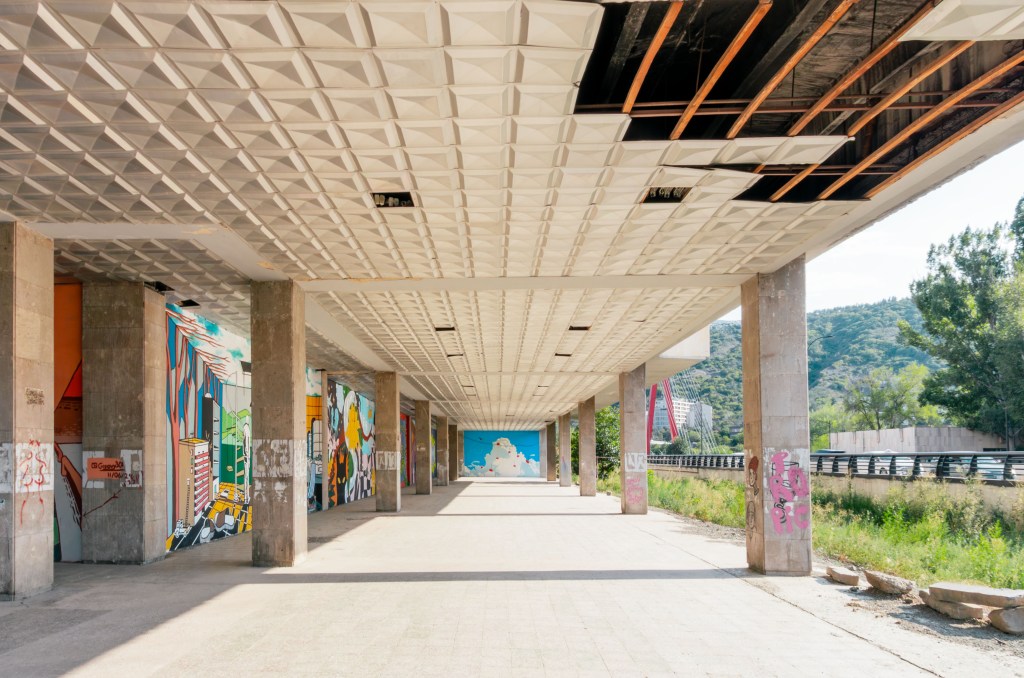

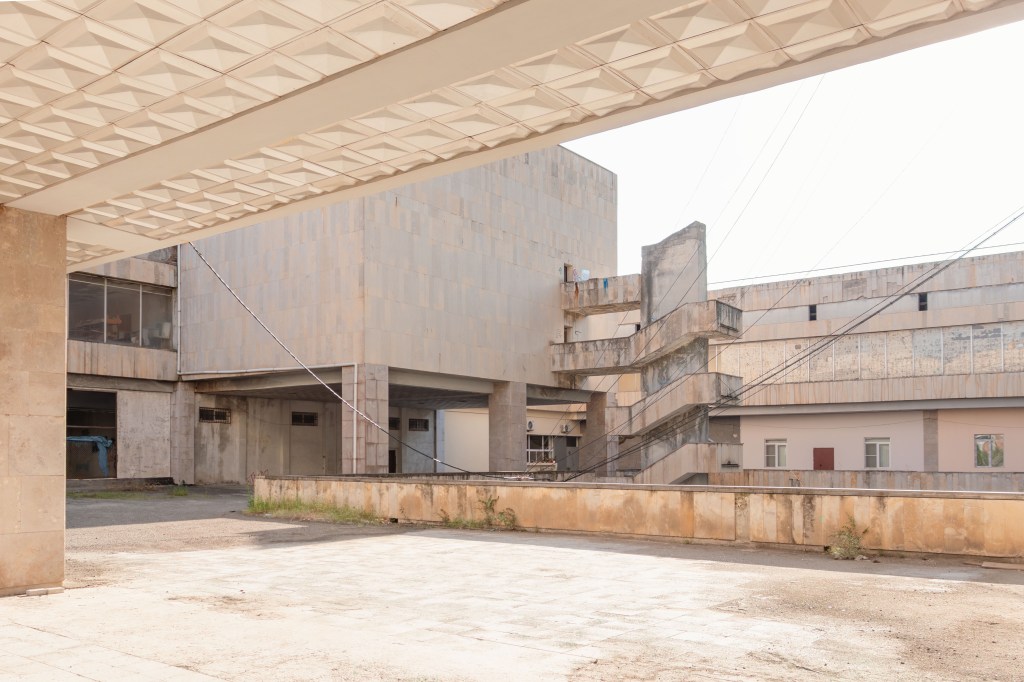
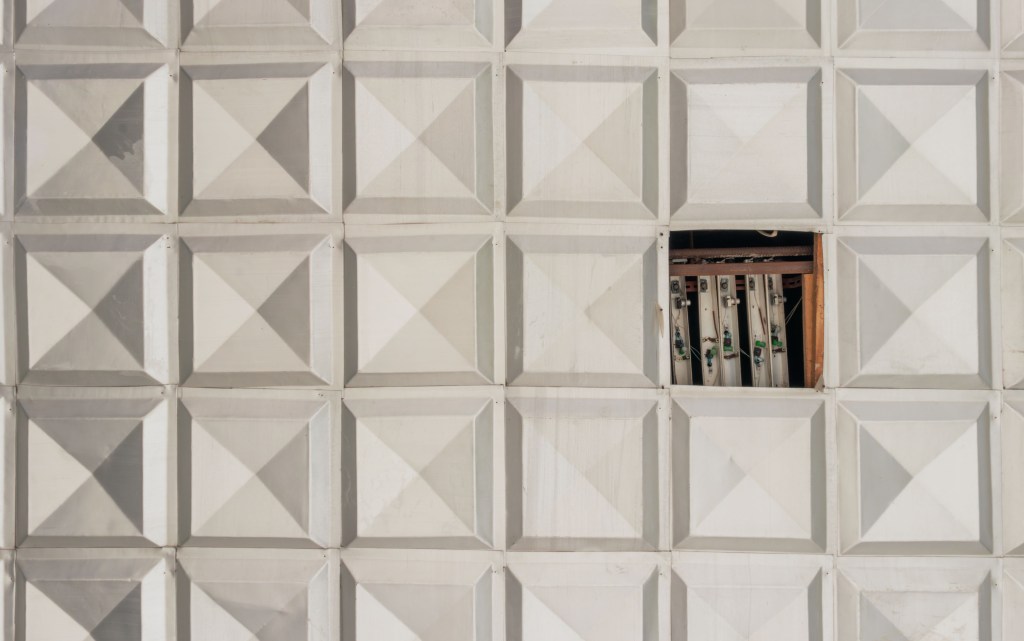
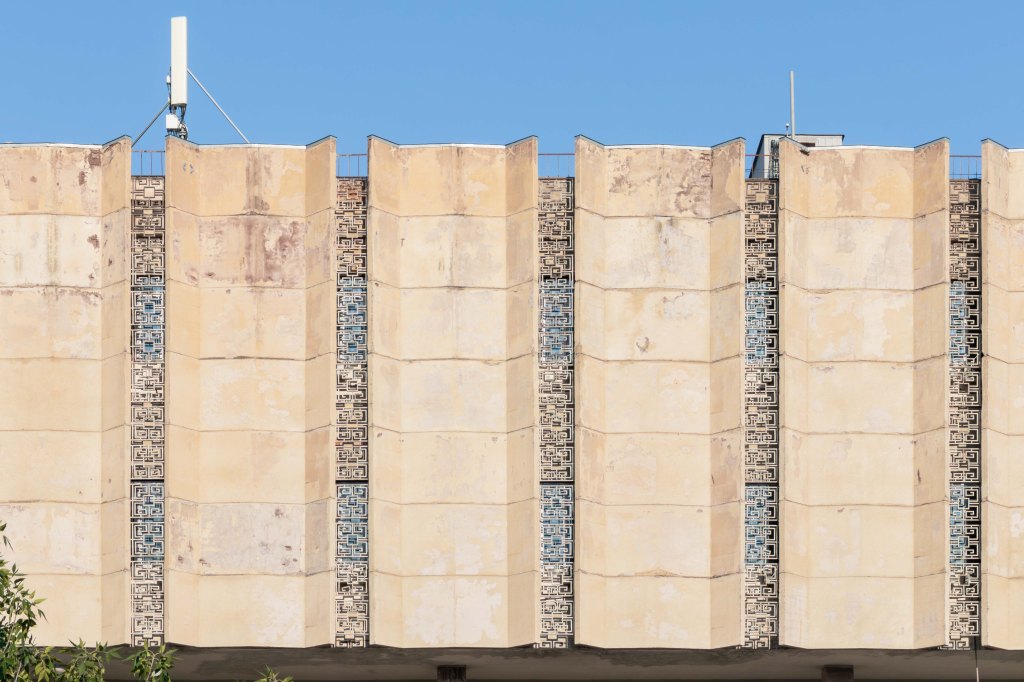
One of the major completed elements of the campus is the scientific library, designed to house five million books. Envisioned as the geometric and compositional center of the complex, this library features a striking modernist design. At its core lies a cubic form that serves as the main structural element around which the building is organized. This cube is enhanced by covered galleries on the second floor and open galleries supported by pillars on the first floor, creating a harmonious balance between enclosed and open spaces. Notably, there is an asymmetry between the cube and the lower structures, as the cube is shifted toward the right side of the gallery layer. Despite this shift, the relationship between the two parts remains predominantly harmonious. The façades of the upper cube are adorned with concrete panels and metal ornamental inserts, adding a subtle layer of geometric detail and Georgian decorative motifs to the clean modernist forms.
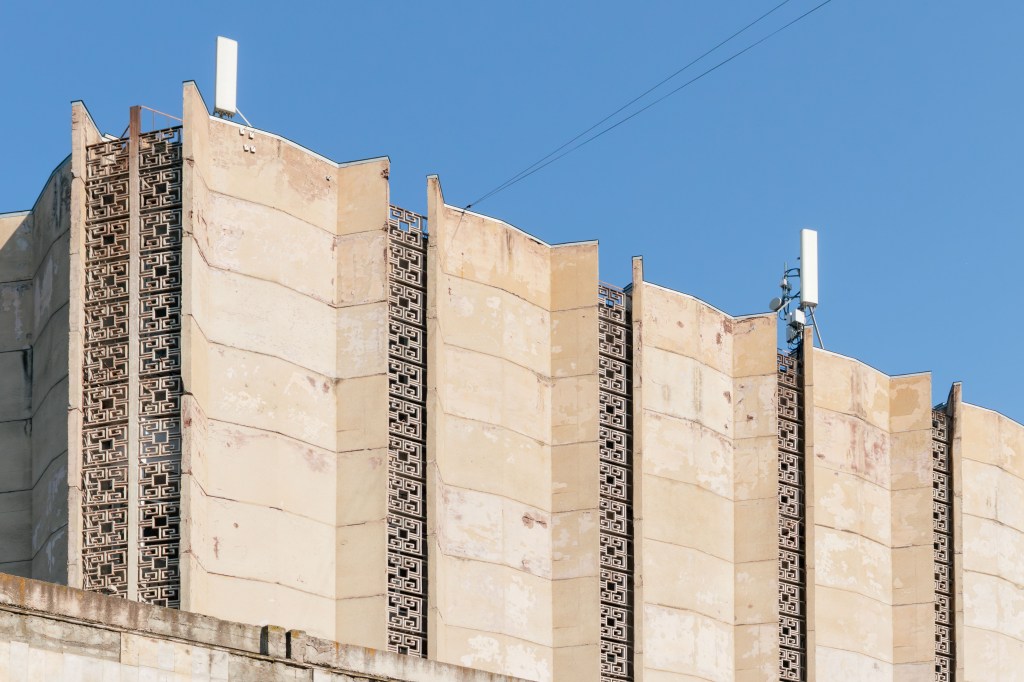
Unfortunately, the whole project of the new university campus was only partially completed. Some facilities, such as the stadium and additional buildings, were never constructed. While a bridge over the Vere River was built, plans for a dam and the creation of a landscaped reservoir surrounded by green recreational spaces downstream were never realized. However, the library continues to serve as the Central Library of Ivane Javakhishvili Tbilisi State University.
Further Reading
To discover more historical photos and plans of the New Campus of Tbilisi State University, explore the special Tbilisi Architectural Archive webpage.
text and photos by Elena Lisitsyna
 bureau MARKA