
also known as Sarajishvili House or Writers’ House
location: 41.690226585280996, 44.79966427791045
architect: Carl Zaar
date: 1903–1905
illustration focus: interiors
If you would like to learn more about Sololaki, our partner FAHU travel offers a walking tour of the district with historical entrance halls and a visit to an early 20th-century apartment; more details here.
The house at 13 Ivane Machabeli Street – known as Sarajishvili’s house or the Writers’ House – condenses Sololaki’s moderni moment into one address. Built in 1903–1905 for Davit Sarajishvili (1848–1911) – chemist, entrepreneur, philanthropist and founder of spirits plants – the commission was for a single-family maison rather than a revenue house. The architect was the Berlin-trained Carl Zaar, working with Tbilisi partners Aleksander Ozerov and Korneli Tatishev. Much of the interior woodwork was executed by master joiner Ilia Mamatsashvili (1878–1966). In Tbilisi terms, the house is Art Nouveau filtered through local craft: European training and imported materials on the one hand; workshop intelligence and Georgian joinery on the other.
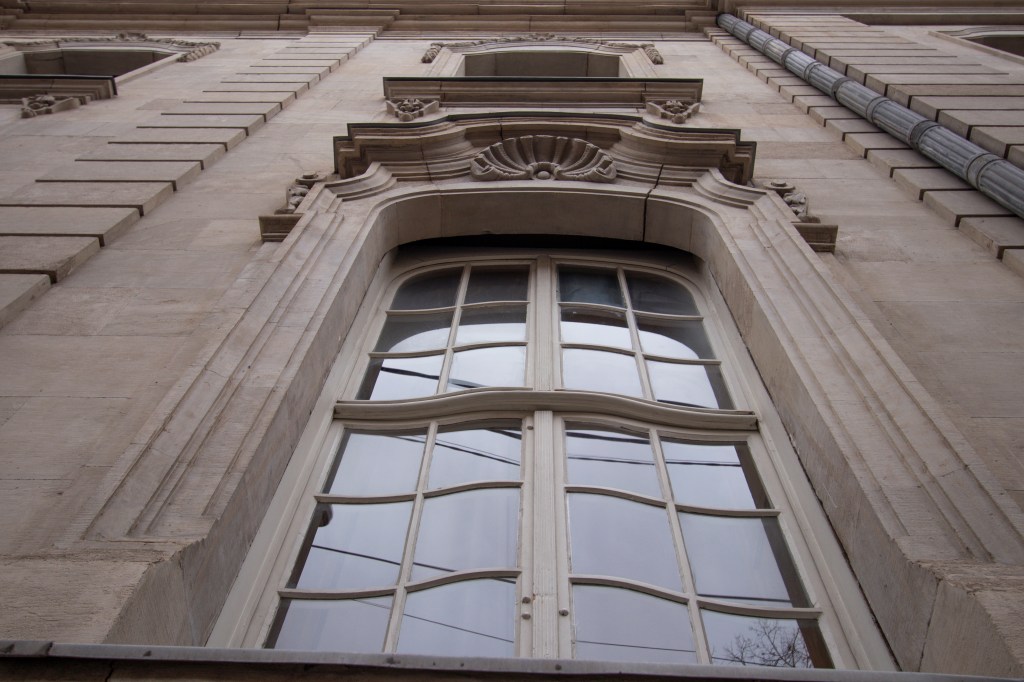
The street front keeps a composed axis: an arched portal with a mascaron and tight, scrolling foliage; above it, a deep balcony set on sculpted corbels, including female figures in high relief. Shells and foliate panels articulate the spandrels and window bays, and the axis culminates in an arched dormer with an oculus and a framed cartouche recording the completion date.
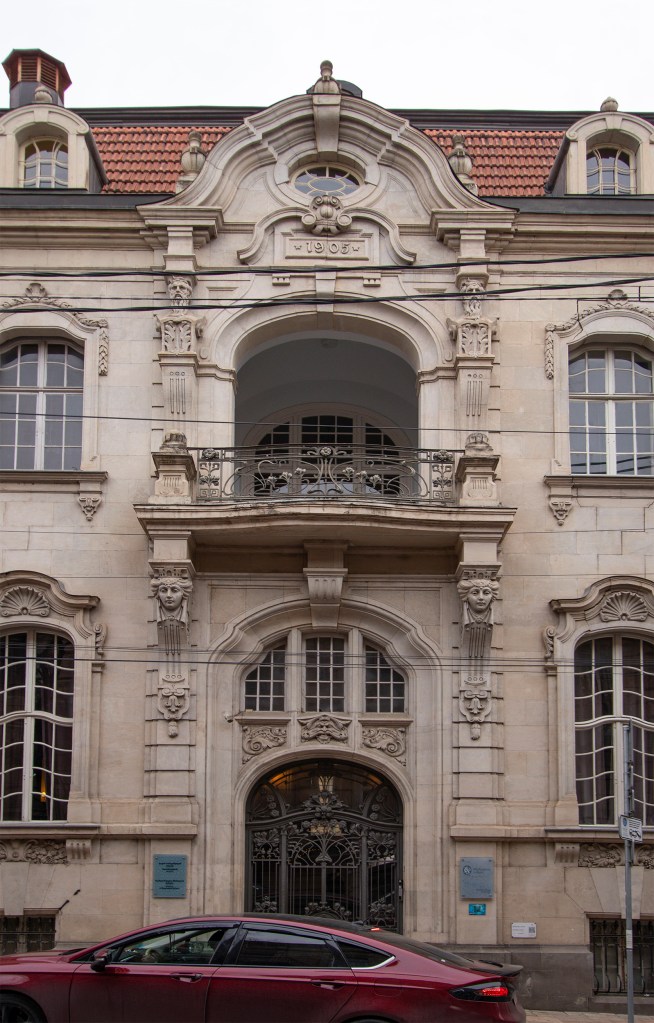
Zaar’s elevation speaks a measured Art Nouveau with neo-Baroque inflection – wavy cornice lines, fine ironwork, plastic stucco – laid over an artificial-stone facing and capped by a tall mansard.
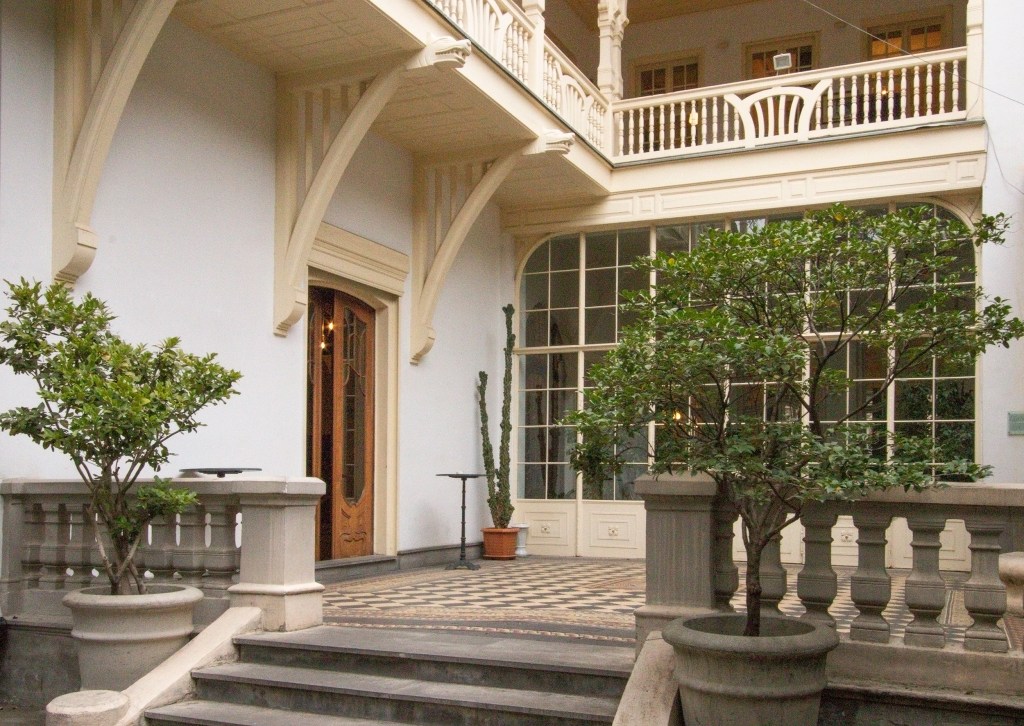
The garden side turns the language inward. Another reading is an ayvani translated into moderni – a projecting open balcony that resembles the traditional Tbilisi gallery in form but follows Art Nouveau in the profile details of the balustrade. Timber corbels with carved lion heads carry the balcony.
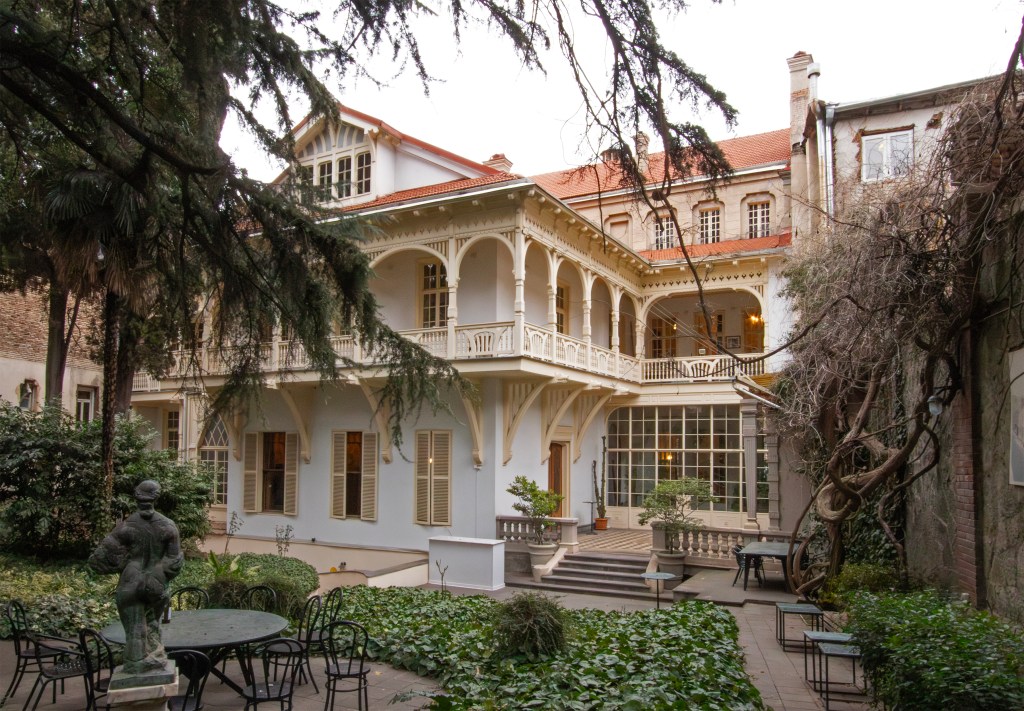
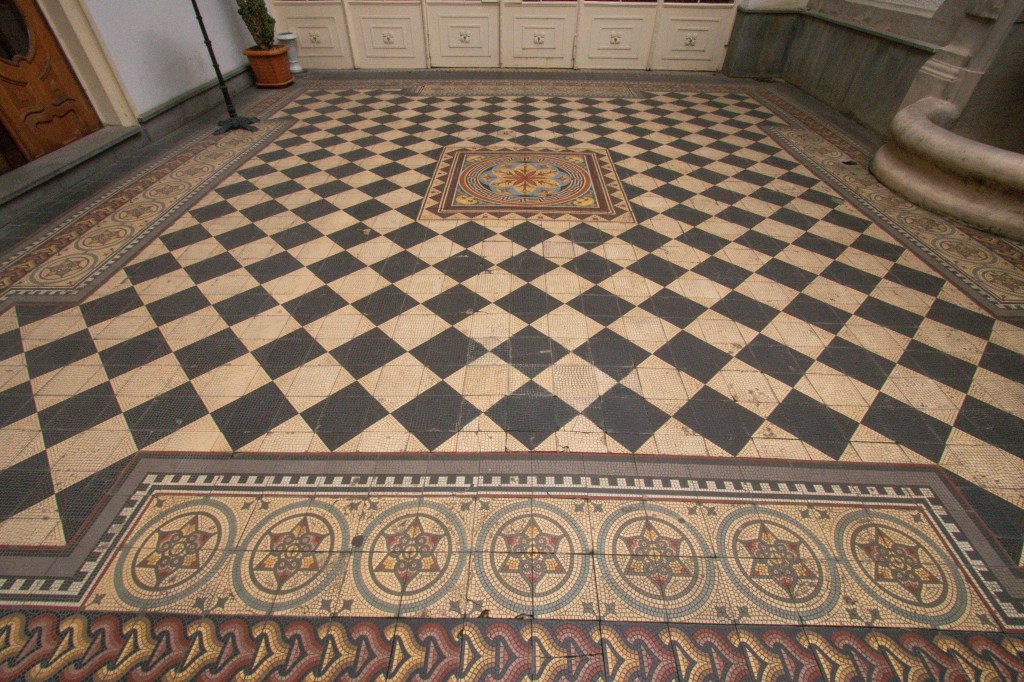
A veranda paved with a special-order set of Villeroy & Boch tiles mediates between house and greenery; glazed doors soften light. The overall composition of the courtyard space transfers an international decorative vocabulary that still registers Tbilisi’s inward, courtyard life.
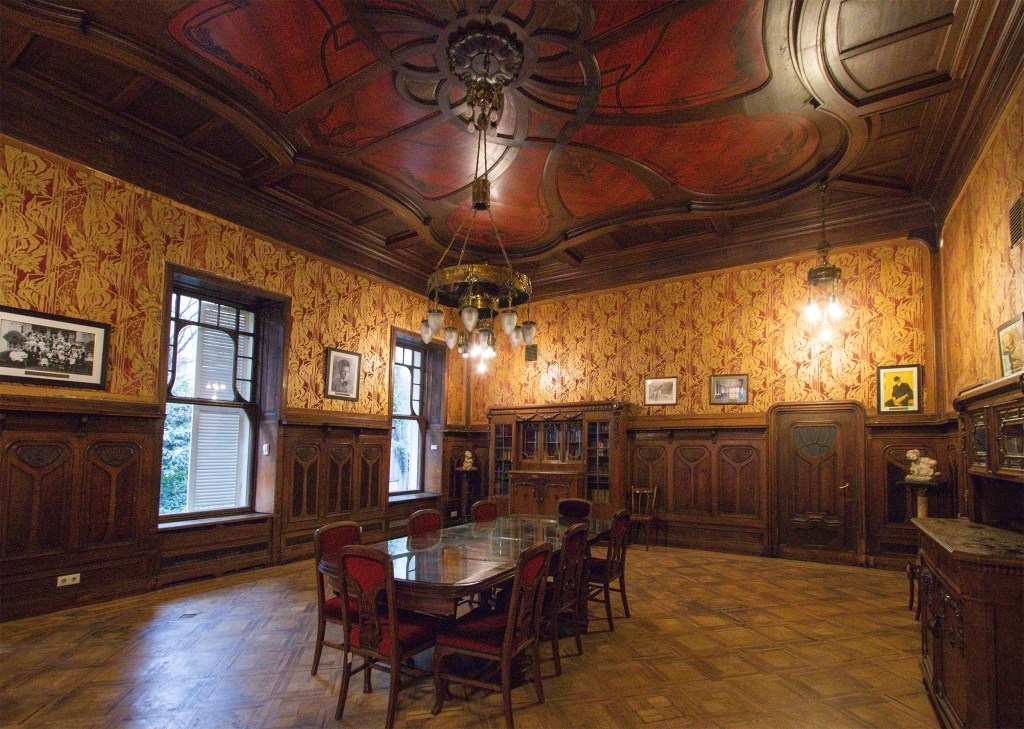
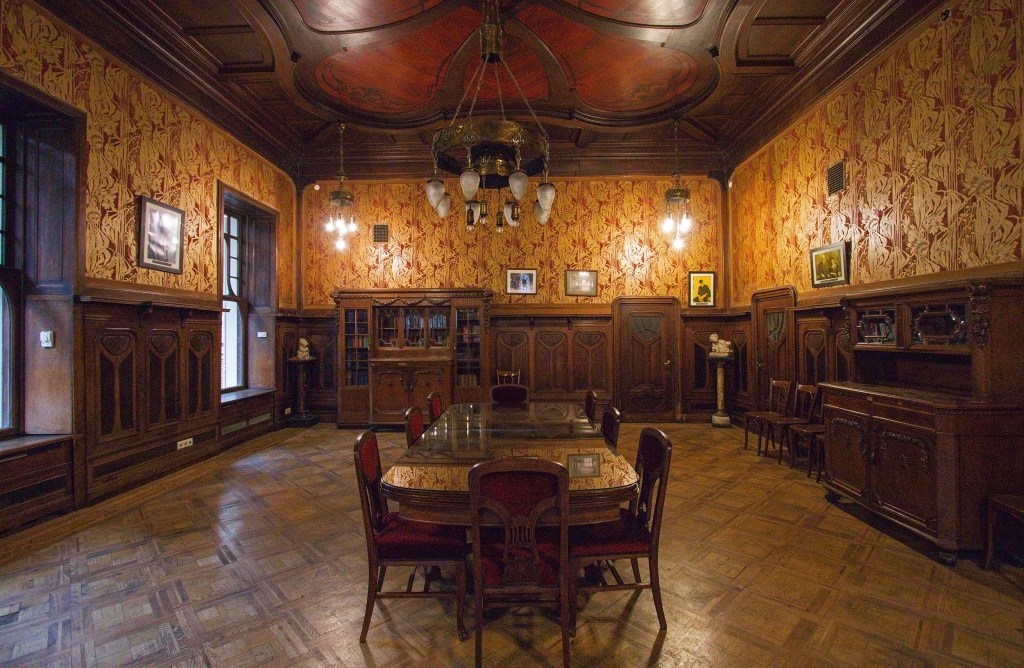
What sets the house apart is the survival and completeness of its interior décor. Mamatsashvili’s carpentry binds rooms into a sequence – doors in deep relief, stair balustrades, panelled walls and ceilings. The principal salon – the drawing in the coloring book – is calibrated for reception: the joinery’s flowing wall and ceiling profiles carry Art Nouveau’s wavy lines and interplay with dark wooden furniture and wall ornament.
In a contrasting key, the so-called Akaki’s Room (after the poet Akaki Tsereteli) stages late-imperial taste for themed interiors. The Moorish effect is created by a carpentered muqarnas cornice (stalactite frieze) running the perimeter under a painted arabesque ceiling, with a pointed-arched fireplace niche below. Even with this thematic room, the house’s décor and architecture read as a whole rather than scattered fragments.
After its construction, the new mansion quickly became a cultural address. In 1919 the property passed to the entrepreneur-philanthropist Akaki Khoshtaria; in 1921 it housed the Artists’ Committee and from 1923 became the Writers’ Union – functions it maintained through the Soviet decades, fixing the address in the literary memory of the city (Paolo Iashvili’s 1937 suicide belongs to that hard biography). Today the house functions simultaneously as Museum of Repressed Writers, events venue, restaurant, and residency; regular public programs keep the preserved finishes visible and in service.
In the 21st century, the building’s reuse led to phased rehabilitation. After the re-orientation to literary use in the late 2000s, works in 2011–2013 stabilised the structure and cleaned the Art Nouveau ensemble. In 2017 five third-floor residency rooms were restored and fitted out – a precise instance of conservation through active use. Now a Sololaki artifact and a living interior, rare in its completeness, it is accessible to the public and exemplary for understanding Tbilisi Art Nouveau, both as an artistic phenomenon and as a special period of Georgian history.
Sources and Further Reading
Beridze, Vakhtang. Architecture of Tbilisi, 1801–1917, 2 vols. [tbilisis khurotmodzghvreba, 1801–1917]. Tbilisi, 1960–1963. [in Georgian]
Chanishvili, Nino. Nineteenth-Century Architecture of Tbilisi as a Reflection of Cultural and Social History of the City. FaRiG Rothschild Research Grant Report, 2007.
Khoshtaria, David. Writer’s House in Tbilisi (online entry). Available at: atinati.com
Kvirkvelia, Tengiz. Old Tbilisi [dzveli tbilisi]. Tbilisi, 1984. [in Georgian]
Kutateladze, Tea. Interiors of Residential and Public Buildings in Tbilisi, 19th–20th Centuries [satskhovrebeli da sazogadoebrivi shenobebis int’erierebis monument’ur-dek’orat’iuli perts’era k. tbilisshi XIX-XX sauk’uneebis mijnaze]. Tbilisi, 2015. [in Georgian].
Mania, Maia. German Architects in Tbilisi. Tbilisi, 2018.
Meskhi, Maia. Architectural-feature Analysis, Problems and Paradigms of Sololaki Area’s Spatial-Volumetric Structure [sololak’is sivrtsit – motsulobiti st’rukt’uris arkit’ekt’urul – mkhat’vruli analizi, problemebi da paradigmebi. Tbilisi, 2019. [in Georgian].
Wheeler, Angela. Architectural Guide: Tbilisi. 2023.
text and photos by Elena Lisitsyna
 bureau MARKA